
- Trivy is free (Apache 2.0, 36,500+ GitHub stars) with no limits across containers, SCA, IaC, secrets, and filesystems; Snyk Team starts at $25/dev/month with base-image fix PRs and reachability analysis.
- Snyk’s curated database added 24,000+ new vulnerabilities in 2024 (per Snyk’s annual report) and often publishes advisories before NVD; Trivy uses Aqua’s trivy-db with daily pulls from NVD, GitHub Advisory DB, and vendor sources.
- Snyk recommends alternative base images that resolve the most CVEs and opens fix PRs automatically; Trivy reports vulnerabilities and leaves remediation to your team.
- Trivy Operator runs as an in-cluster Kubernetes scanner and admission controller; Snyk Monitor watches deployed images through registry integrations.
- Many teams run Trivy in CI for fast free scanning on every build and Snyk for continuous registry monitoring, fix-PR automation, and reachability-driven prioritization.
Which Is Better: Trivy or Snyk?#
Trivy is better for free, open-source scanning across containers, SCA, IaC, and secrets in one Apache 2.0 binary (36,500+ GitHub stars). Snyk is better for base-image fix PRs, reachability analysis, and a curated vulnerability database, starting at $25 per developer per month.
Trivy and Snyk are the two most common ways to scan containers and dependencies for vulnerabilities. One is open-source tooling you run yourself, the other a managed commercial platform that guides remediation.
Trivy scans container images, OS packages, language dependencies, IaC manifests, secrets, and Dockerfile misconfigurations from a single Apache 2.0 binary at zero cost.
Snyk is a developer security platform that adds capabilities Trivy does not offer: base image upgrade recommendations, automatic fix pull requests, reachability analysis on dependencies, and a curated vulnerability database with exploit maturity metadata.
The trade-off is straightforward. Trivy gives you raw scan results and leaves remediation to your team. Snyk gives you a managed platform that tells you which base image upgrade closes the most CVEs, opens the PR for you, and surfaces only the dependency vulnerabilities your code actually reaches.
Pick Trivy if budget is the constraint and CLI-driven automation fits your pipeline. Pick Snyk if automated remediation and reachability-driven prioritization will save more developer hours than the subscription costs.
What Are the Key Differences?#
| Feature | Trivy | Snyk |
|---|---|---|
| License | Open Source (Apache 2.0) | Commercial (Freemium) |
| Pricing | Free | Free tier; Team $25/dev/month; Enterprise custom |
| GitHub Stars | 36,500+ | N/A (proprietary) |
| Maintained By | Aqua Security | Snyk Ltd |
| Container Image Scanning | Yes | Yes (Snyk’s container product) |
| SCA / Dependency Scanning | Yes | Yes (flagship product) |
| IaC Scanning | Yes (Terraform, CloudFormation, Helm, Kubernetes) | Yes (separate Snyk module) |
| Secret Detection | Yes | No (separate Snyk product) |
| Base Image Recommendations | No | Yes (core feature) |
| Automated Fix PRs | No | Yes (base image + dependency upgrades) |
| Reachability Analysis | No | Yes (SCA differentiator) |
| AI Fix Suggestions | No | Yes (via DeepCode AI in Snyk Code) |
| Vulnerability Database | Aqua trivy-db (daily public sources) | Snyk-curated DB (24k+ new vulns added in 2024) |
| Risk Prioritization | Severity-based (CVSS) | Reachability + exploit maturity + EPSS/CVSS |
| Language Ecosystems | Go, Java, Node.js, Python, Ruby, Rust, PHP, .NET, Dart, Elixir, Swift | npm, Maven, Gradle, pip, Go modules, NuGet, RubyGems, Composer, Cocoapods, Cargo, Hex |
| Kubernetes Integration | Trivy Operator (in-cluster scanning) | Snyk Monitor (watches deployments) |
| Container Registry Scanning | Yes (Docker Hub, ECR, GCR, ACR) | Yes (Docker Hub, ECR, GCR, ACR) |
| IDE Integration | VS Code, JetBrains | VS Code, IntelliJ, Eclipse |
| CI/CD Integration | GitHub Actions, GitLab CI, Jenkins, any CLI pipeline | GitHub, GitLab, Jenkins, Azure DevOps, CircleCI |
| Output Formats | JSON, Table, SARIF, CycloneDX, SPDX | Dashboard, JSON, SARIF, Jira integration |
| SBOM Output | CycloneDX, SPDX | CycloneDX |
| Web Dashboard | No (CLI-only; Aqua commercial platform for UI) | Yes (Snyk web dashboard) |
| Continuous Monitoring | Via Trivy Operator in Kubernetes | Yes (monitors registries and deployments) |
Trivy vs Snyk: How Do They Compare?#
Container Image Scanning#
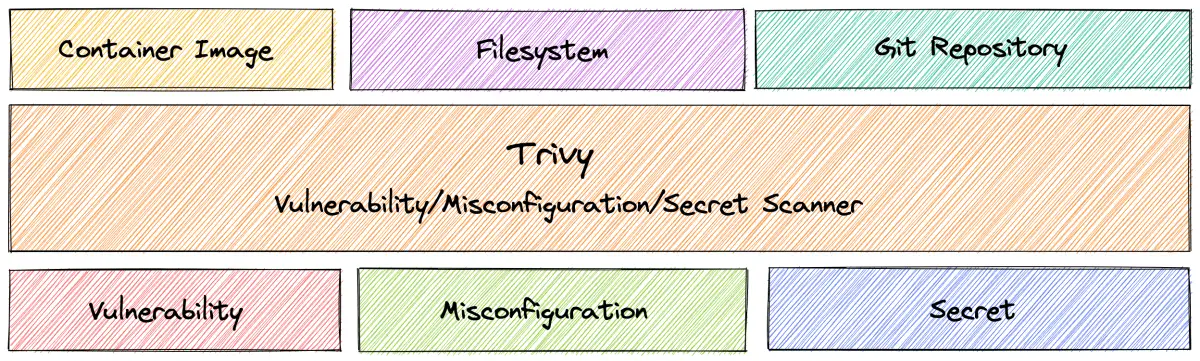
Trivy is a unified security scanner maintained by Aqua Security that covers six scan target types in one binary. A single Trivy binary scans container images , filesystems, Git repositories, Terraform files, CloudFormation templates, Helm charts, and Kubernetes manifests.
It detects OS package vulnerabilities, language dependency vulnerabilities, IaC misconfigurations, embedded secrets, and license violations. One tool replaces three or four specialized scanners.
Snyk’s container module focuses on container image security as part of the broader Snyk platform. It scans images for OS and application-level vulnerabilities , analyzes Dockerfiles, and provides base image upgrade recommendations.
IaC scanning, secret detection, and code scanning are separate Snyk modules. For teams wanting one tool that covers everything, Trivy is compelling. For organizations already using Snyk, the container module fits naturally alongside SCA, IaC, and Code.
SCA and Dependency Scanning#
Both Trivy and Snyk scan package manifests and lock files for vulnerable third-party dependencies; the difference is what happens after detection. Snyk adds reachability analysis and automatic fix pull requests, while Trivy reports raw CVE findings and stops there.
Trivy reads lock files (package-lock.json, go.sum, Gemfile.lock, requirements.txt, pom.xml, and others) and checks them against trivy-db. Run trivy fs --scanners vuln . on any project directory and get results immediately with no account required.
Snyk’s SCA module performs the same scan but adds automated fix pull requests and reachability analysis on top.
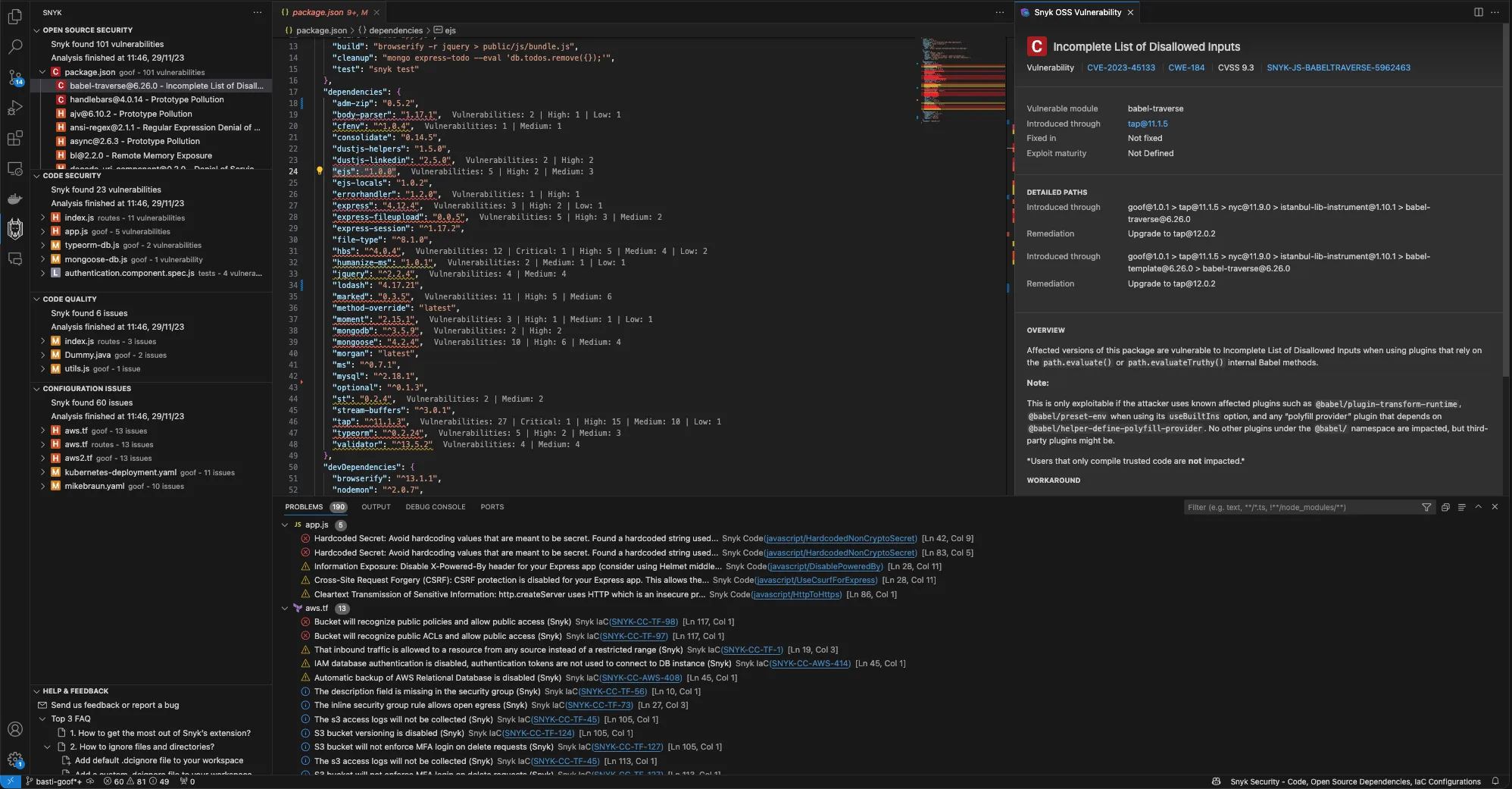
When Snyk finds a vulnerable dependency, it can open a PR in your Git repository with the exact version upgrade needed. Reachability analysis checks whether your code actually calls the vulnerable function. That matters because many flagged dependencies sit in code paths your application never touches.
Trivy reports what is vulnerable. Snyk reports what is vulnerable, whether it is reachable, and how to fix it.
Vulnerability Database and Intelligence#
Both tools deliver reliable detection with low false positive rates. Trivy draws from Aqua Security’s database, NVD, vendor advisories, and the GitHub Advisory Database, with auto-updating that requires no middleware.
Snyk uses its proprietary database curated by a dedicated research team that added 24,000+ new vulnerabilities in 2024, according to Snyk’s annual report.
The database adds proprietary metadata: exploit maturity, reachability data, and EPSS/CVSS composite scoring. Snyk evaluates over a dozen factors to rank findings by actual business impact.
Trivy’s trivy-db pulls from multiple public advisory sources and updates daily. A separate trivy-java-db handles JAR and WAR file identification. The database covers OS packages and language-specific advisories across major ecosystems.
The practical difference is triage speed. Snyk’s reachability and exploit maturity data narrow the list to vulnerabilities worth acting on. Trivy gives you the raw findings and lets you decide.
Coverage diverges at the long tail. Snyk’s curated database often surfaces CVEs days before they appear in NVD because Snyk’s research team publishes advisories independently. Trivy catches everything in NVD but lags on Snyk-only research disclosures.
For SBOM output, both produce CycloneDX. Trivy also exports SPDX , which matters when your compliance pipeline (FedRAMP, EU CRA) standardizes on SPDX.
Remediation and Developer Workflow#
Snyk automates remediation; Trivy does not. Snyk’s base image recommendation engine
suggests alternative base images that resolve the most vulnerabilities with the least disruption. For example, Snyk might recommend upgrading from node:16-bullseye to node:18-bookworm-slim with an exact count of resolved CVEs.
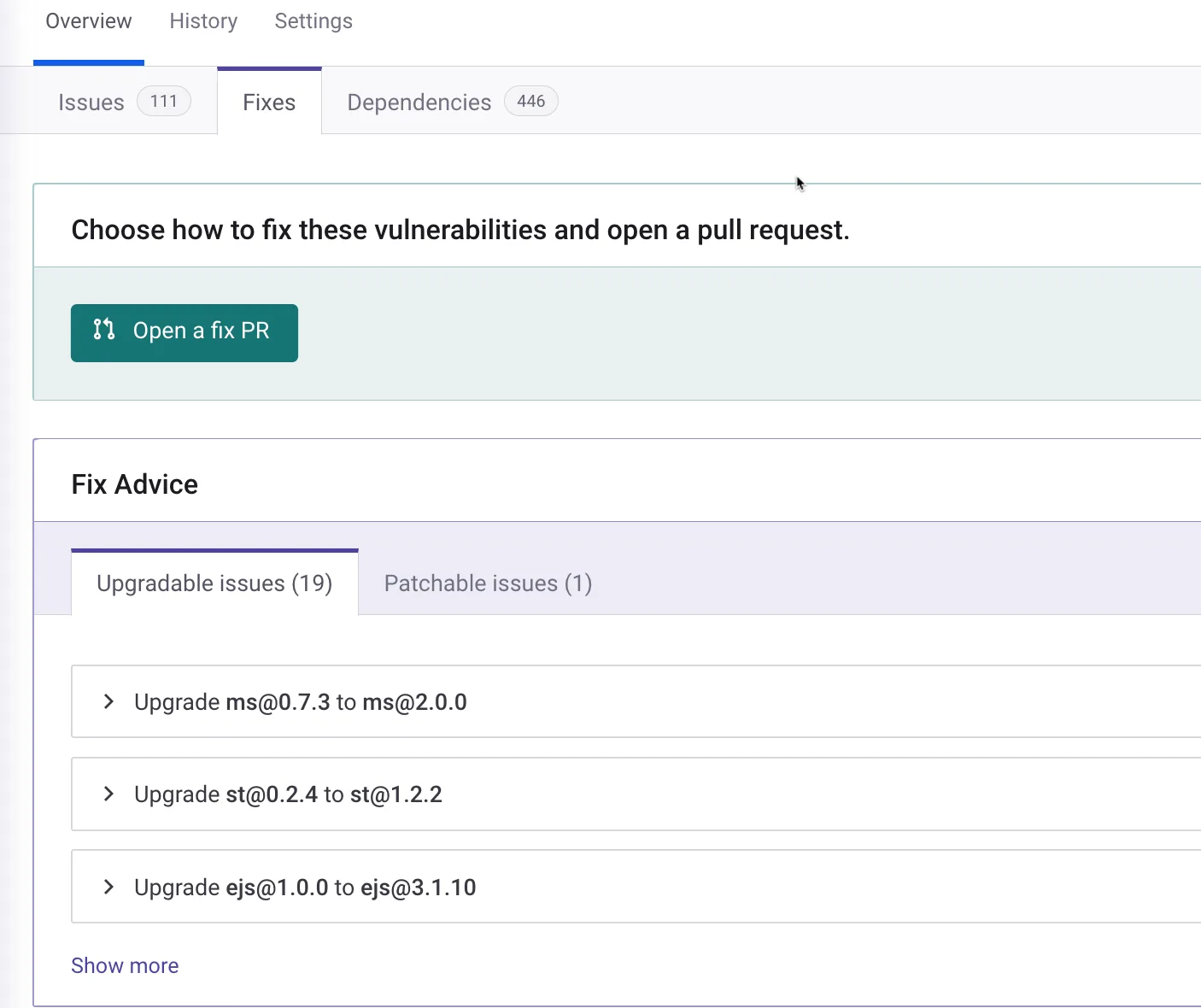
Snyk opens automatic fix pull requests with these changes, reducing remediation to a single click.
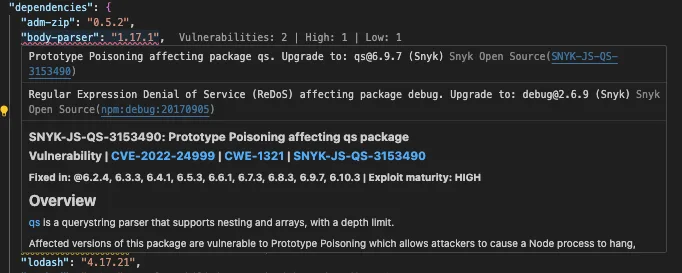
Snyk was built as a developer tool from the start, with IDE plugins for VS Code, IntelliJ, and Eclipse that surface vulnerabilities as you write code. Git integrations with GitHub, GitLab, and Bitbucket monitor repositories continuously and open fix PRs automatically.
Trivy tells you what is wrong but leaves remediation to you. No fix suggestions, no automatic PRs, no base image recommendations.
Trivy is a CLI-first tool. It runs in terminals and CI/CD pipelines. Aqua Security provides a VS Code extension and a JetBrains plugin for scanning directly in the IDE, though these are less mature than Snyk’s IDE integrations.
Teams with mature security engineering build their own remediation workflows around Trivy’s raw output. Teams that need guided remediation benefit from Snyk’s developer-facing approach.
CI/CD Integration and Operational Model#
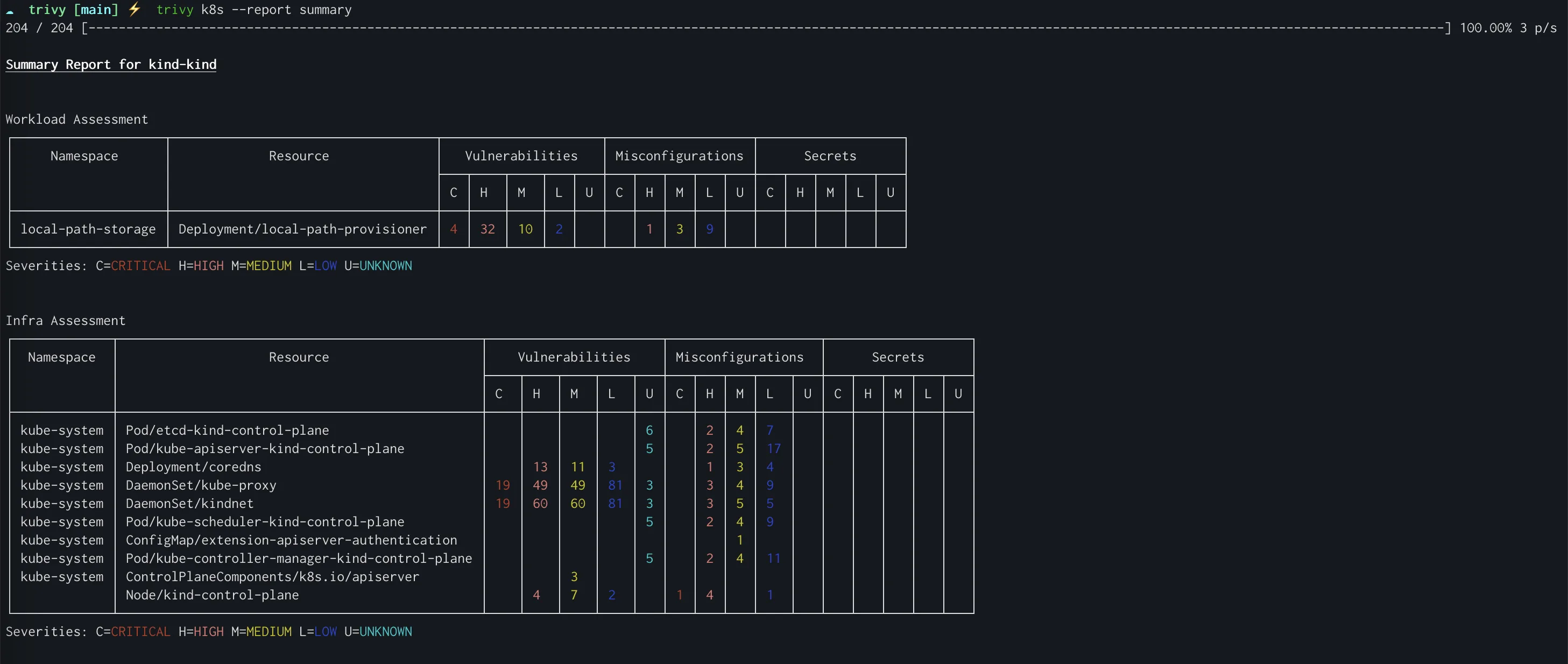
Trivy is CLI-first and runs anywhere a binary can execute, while Snyk is dashboard-first with managed infrastructure built around the scan engine. Trivy integrates with GitHub Actions (via aquasecurity/trivy-action
), GitLab CI, Jenkins, CircleCI, or any CLI-based pipeline. The Trivy Operator
extends this into Kubernetes as an in-cluster scanner.
Configuration is minimal. Point at an image or directory, get results.
Snyk integrates through similar channels but adds managed infrastructure. Results flow to the Snyk web dashboard for trend tracking, policy management, and remediation assignment.
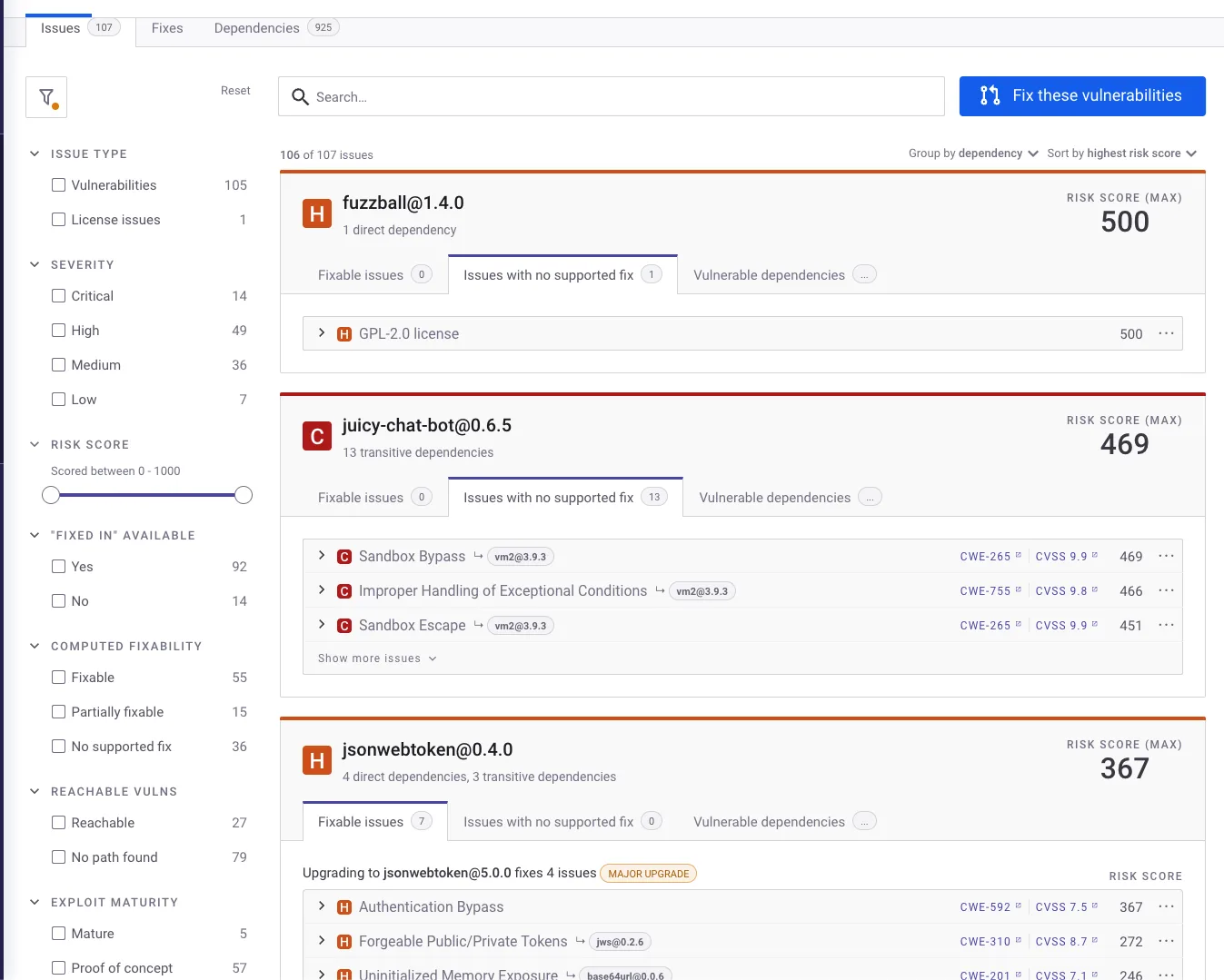
Registry integrations continuously monitor images in Docker Hub, ECR, GCR, and ACR.
The core difference is self-managed versus managed: Trivy requires you to build workflows around scan results, while Snyk provides dashboards, notifications, and Jira integration out of the box.
Pricing, Ecosystem, and Total Cost#
Trivy is free under the Apache 2.0 license with no usage limits or feature restrictions. The only cost is engineering time to integrate it into your pipeline and build workflows around its output.
Trivy has over 36,500 GitHub stars and growing market adoption. The Trivy Partner Connect program is expanding the commercial ecosystem with OEM partners integrating its engine.
Snyk is part of a paid platform. A free tier exists with limited scanning, the Team plan starts at $25 per developer per month, and Enterprise pricing is custom.
The investment buys base image recommendations, automatic fix PRs, reachability analysis, continuous monitoring dashboards, and reduced remediation time. Replicating these around Trivy would take significant engineering effort.
The calculation is straightforward: if your team’s time is more expensive than the Snyk subscription, Snyk is the better investment. If your team can build integrations around Trivy, the open-source path saves significant budget.
When Should You Choose Trivy vs Snyk?#
Choose Trivy if:
- You want a free, open-source scanner with no licensing costs or usage limits
- Scanning versatility matters — containers, SCA, IaC, secrets, and Kubernetes in one tool
- Your team has the expertise to interpret scan results and manage remediation
- CLI-based workflows and raw output formats (JSON, SARIF, SBOM) fit your pipeline
- You want in-cluster Kubernetes scanning with the Trivy Operator
- SPDX SBOM output is a compliance requirement (Snyk emits CycloneDX only)
- Budget is constrained and engineering time is available for integration work
Choose Snyk if:
- Base image recommendations and automatic fix PRs would save your team significant time
- Reachability analysis and exploit maturity scoring will cut your SCA triage time
- You want a managed web dashboard for tracking vulnerabilities across your portfolio
- Continuous monitoring of container registries for newly disclosed vulnerabilities is important
- IDE plugins for VS Code, IntelliJ, and Eclipse matter to your workflow
- Integration with the broader Snyk platform (Code SAST, SCA, IaC, Container) is valuable
- Enterprise features like SSO, audit logs, and Jira integration are required
Many teams use both: Trivy as a fast CLI scanner for free scanning across pipelines, and Snyk for managed remediation, reachability prioritization, and ongoing registry monitoring. The tools complement each other when budget allows.
For more options, browse AppSec Santa’s container security tools and SCA tools categories.
Decision Tree: Which One to Pick#
The Trivy vs Snyk decision usually comes down to four constraints: budget, scan volume, remediation automation needs, and whether you already pay for the Snyk platform.
Pick Trivy if:
- Your stack is OSS-heavy and your CI runs in air-gapped or self-hosted environments
- You have no budget for paid scanners
- You want container, SCA, IaC, and secret scanning bundled in one binary
- You scan more than ~100 images a day where Snyk’s free-tier limits would push you to the paid plan anyway
Pick Snyk if:
- Automatic base-image fix PRs and dependency upgrade PRs would meaningfully save developer time
- Managed monitoring with dashboards and Jira routing matters
- You already pay for Snyk and want one platform across Code, SCA, IaC, and Container
- Your security team wants reachability-style prioritization that Trivy does not produce
Pick neither if:
- The actual need is runtime threat detection (use Falco , Sysdig Secure, or NeuVector )
- Enterprise CNAPP coverage across cloud + workloads (Aqua Security , Wiz, Prisma)
- Registry-side scanning with policy gating (Harbor with the bundled Trivy plugin)
Image and dependency scanning are slices of the broader appsec problem. Trivy vs Snyk is the wrong axis when the budget is for runtime or CNAPP.
Related Comparisons#
- Trivy vs Grype — the two most popular open-source image and SBOM scanners head-to-head.
- Checkov vs Trivy — when Infrastructure-as-Code scanning is part of the same decision.
- Snyk vs Mend — commercial SCA head-to-head if Snyk is on your shortlist.
- Snyk Alternatives — broader alternatives list if Snyk isn’t the right fit.
- Container Security Tools — every image scanner I’ve reviewed, filterable by licensing and registry support.
- SCA Tools — every dependency scanner I’ve reviewed, filterable by language coverage.
Frequently Asked Questions
Is Trivy better than Snyk?
Is Trivy really free?
Can I use both Trivy and Snyk?
Which tool has a better vulnerability database?
Does Trivy support Kubernetes scanning?
What is reachability analysis and does Trivy have it?
What language ecosystems do Trivy and Snyk cover?

Written & maintained by
Suphi CankurtEight years on the vendor side of application-security sales — thousands of evaluations and demos. I started AppSec Santa in 2022 to put that insider view to work for buyers. Independent of any vendor, paid by none, and honest about what fits whom.