
- Trivy (36,500+ GitHub stars) scans containers, IaC, secrets, licenses, and Kubernetes clusters in one binary; Grype (12,400+ stars) focuses purely on vulnerability matching.
- Grype provides a composite risk score (0-10) combining CVSS, EPSS exploit probability, and CISA KEV catalog status; Trivy uses severity-based CVSS filtering only.
- Both are free (Apache 2.0) with no paid tiers or usage limits; Aqua Security maintains Trivy, Anchore maintains Grype.
- Trivy absorbed tfsec and scans Terraform, CloudFormation, Kubernetes, Helm, Docker, ARM, and Ansible for misconfigurations; Grype has no IaC scanning capability.
- Grype pairs with Syft for an SBOM-first workflow (generate once, rescan as databases update); Trivy both generates and consumes CycloneDX and SPDX SBOMs.
Which Is Better: Trivy or Grype?#
Trivy is the Swiss Army knife — one binary that handles vulnerability scanning, IaC misconfigurations, secrets detection, and license compliance across containers, filesystems, git repos, and Kubernetes clusters.
Grype is the sharpened blade — a focused vulnerability scanner with superior risk scoring that combines CVSS, EPSS exploit probability, and KEV catalog status.
Pick Trivy for breadth, Grype for depth in vulnerability prioritization.
What Are the Key Differences?#
| Feature | Trivy | Grype |
|---|---|---|
| License | Free (Apache 2.0) | Free (Apache 2.0) |
| GitHub Stars | 36,500+ | 12,400+ |
| Maintained By | Aqua Security | Anchore |
| Scan Targets | Container images, filesystems, git repos, VM images, Kubernetes clusters, SBOMs | Container images, filesystems, SBOMs |
| Vulnerability Scanning | Yes | Yes |
| IaC Misconfiguration Scanning | Yes (Terraform, CloudFormation, K8s, Helm, Docker, ARM, Ansible) | No |
| Secrets Detection | Yes | No |
| License Scanning | Yes | No |
| Kubernetes Cluster Scanning | Yes (trivy k8s) | No |
| SBOM Generation | CycloneDX, SPDX | No (use Syft) |
| SBOM Consumption | CycloneDX, SPDX | CycloneDX, SPDX, Syft JSON |
| Risk Scoring | Severity-based (CVSS) | Composite 0-10 score (CVSS + EPSS + KEV) |
| EPSS Integration | No | Yes |
| KEV Catalog Integration | No | Yes |
| OpenVEX Support | Limited | Yes |
| Language Ecosystems | Go, Java, Node.js, Python, Ruby, Rust, PHP, .NET, Dart, Elixir, Swift | 20+ (Go, Python, JS, Java, Rust, Ruby, PHP, .NET, Dart, Haskell, Elixir, R, Swift) |
| OS Package Support | Alpine, Debian, Ubuntu, RHEL, CentOS, Amazon Linux, SUSE, Photon, Windows | Alpine, Debian, Ubuntu, RHEL, CentOS, Amazon Linux, Oracle Linux, SUSE, Arch, Gentoo |
| Custom Policies | Rego (OPA) | .grype.yaml ignore rules |
| Output Formats | Table, JSON, SARIF, CycloneDX, SPDX, template | Table, JSON, SARIF, CycloneDX, template |
| GitHub Action | aquasecurity/trivy-action | anchore/scan-action@v7 |
| Written In | Go | Go |
Pick your next step
I want Grype vs commercial SCA
Grype against Snyk: free Anchore scanner with EPSS scoring versus the paid platform with auto-fix PRs and license risk.
→I'm evaluating Trivy
Six Trivy alternatives ranked — Grype, Snyk, JFrog Xray, and others. Use this if Trivy's IaC and secrets scope is more than you need.
→I want the full SCA shortlist
Every container and dependency scanner I track in one comparison page — free open-source picks plus commercial platforms.
→Trivy vs Grype: How Do They Compare?#
Scope#
This is the most fundamental difference between the two tools. Trivy is a multi-scanner: vulnerabilities, IaC misconfigurations, secrets, and licenses.
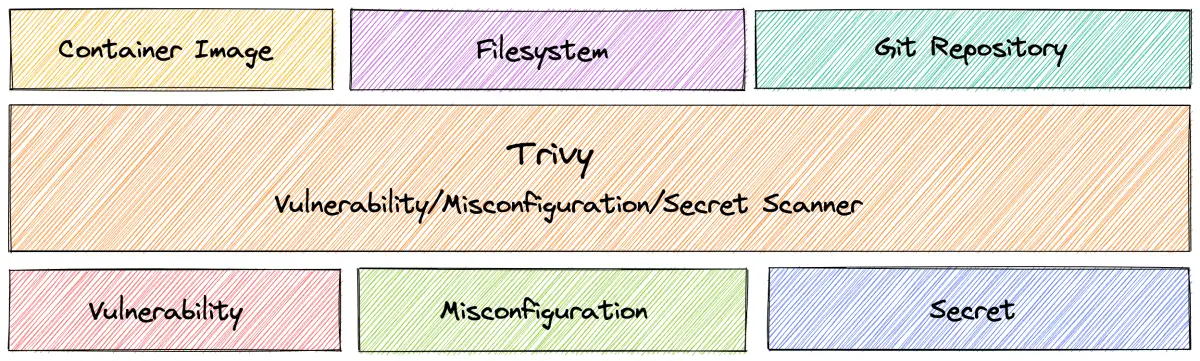
It scans containers, filesystems, git repos, VM images, and Kubernetes clusters. Run trivy fs --scanners vuln,secret,misconfig . and you get vulnerability matches, exposed credentials, and Terraform misconfigurations in a single pass.
Grype does one thing: vulnerability matching. It checks packages against known CVEs and reports what it finds.

No IaC checks, no secrets scanning, no license compliance. If you need those, you bring in additional tools.
Trivy absorbed tfsec (the Terraform security scanner) and inherited its full check library. For teams that need IaC scanning alongside container vulnerability scanning, this consolidation is Trivy’s biggest practical advantage.
Risk Scoring and Prioritization#
Grype has a clear edge here. Each finding includes a composite risk score from 0.0 to 10.0 that combines CVSS severity, EPSS score (30-day exploitation probability with percentile ranking), and KEV catalog status.
Default sorting puts the most actionable findings first. You can also sort by severity, epss, kev, package, or vulnerability.
EPSS is a meaningful signal that CVSS alone does not capture. A critical-severity CVE with a 0.1% EPSS score is less urgent than a high-severity CVE with a 95% EPSS score that appears in CISA’s Known Exploited Vulnerabilities catalog.
Grype surfaces this distinction clearly.
Trivy uses severity-based filtering (LOW, MEDIUM, HIGH, CRITICAL) from CVSS scores.
You can filter by severity threshold to focus on what matters, but there is no composite risk score or EPSS integration.
For teams that want to move beyond severity-only triage, Grype’s risk scoring is more useful.
SBOM Workflow#
Both tools work with SBOMs, but Grype’s ecosystem is more tightly designed around them. Grype pairs with Syft , Anchore’s SBOM generator.
The recommended workflow is: generate an SBOM with Syft once, then rescan it with Grype whenever the vulnerability database updates.
This avoids re-analyzing the original image every time and makes scanning faster.
Grype accepts SBOMs in CycloneDX, SPDX, and Syft JSON formats. OpenVEX support lets you attach exploitability assessments to suppress findings your security team has already evaluated.
Trivy both generates and consumes SBOMs. It outputs CycloneDX and SPDX directly, which is useful for compliance and supply chain tracking.
However, Trivy’s scanning workflow is more image-centric — most teams point it at an image rather than a pre-generated SBOM.
Container Image Scanning#
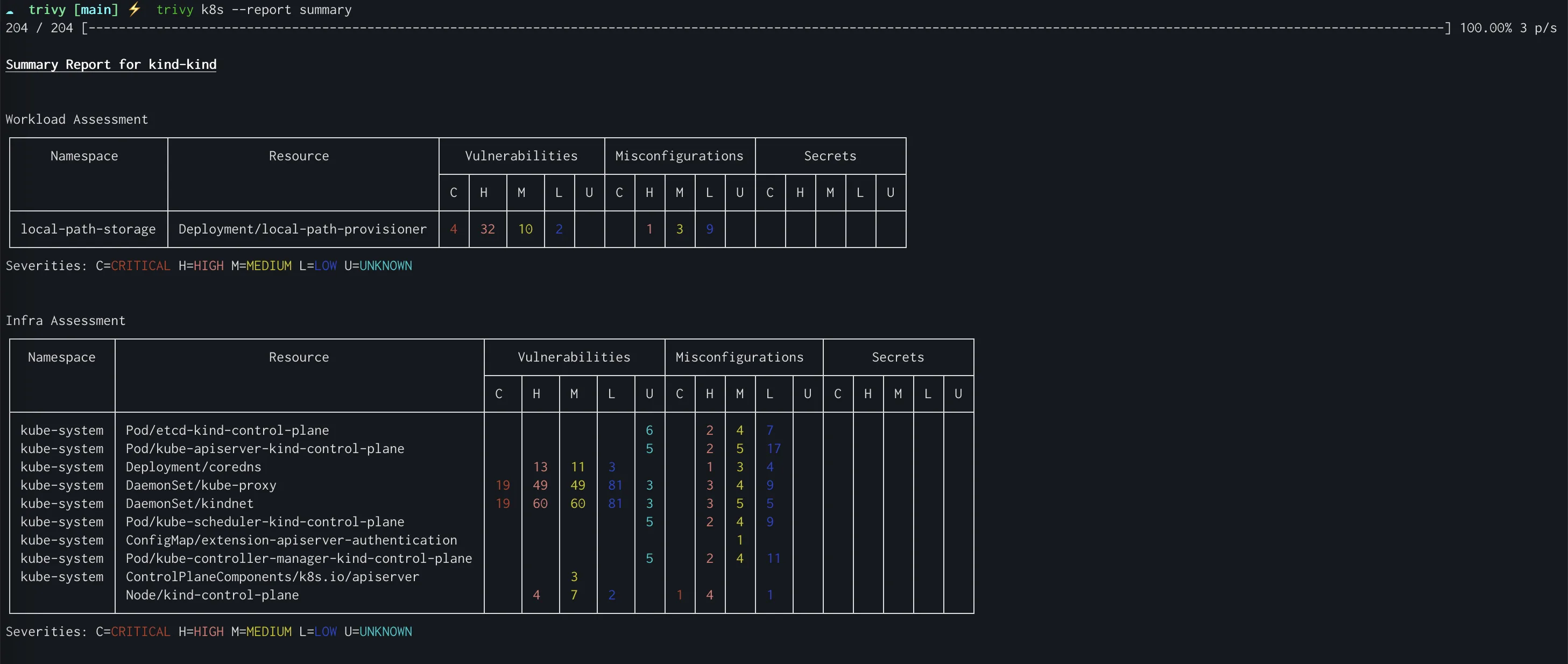
Both tools scan Docker and OCI images effectively. Trivy supports Docker daemons, registries, OCI archives, and the Trivy Operator for continuous scanning inside Kubernetes clusters.
Grype supports Docker daemons, registries, Docker archives, OCI directories, OCI archives, and Singularity images.
Coverage of OS packages and language ecosystems is similar. Both handle Alpine, Debian, Ubuntu, RHEL, CentOS, Amazon Linux, and SUSE.
Grype adds Arch and Gentoo; Trivy adds Photon OS and Windows.
Language ecosystem coverage is comparable, with both supporting the major package managers for Go, Java, JavaScript, Python, Ruby, Rust, PHP, and .NET.
Vulnerability Databases#
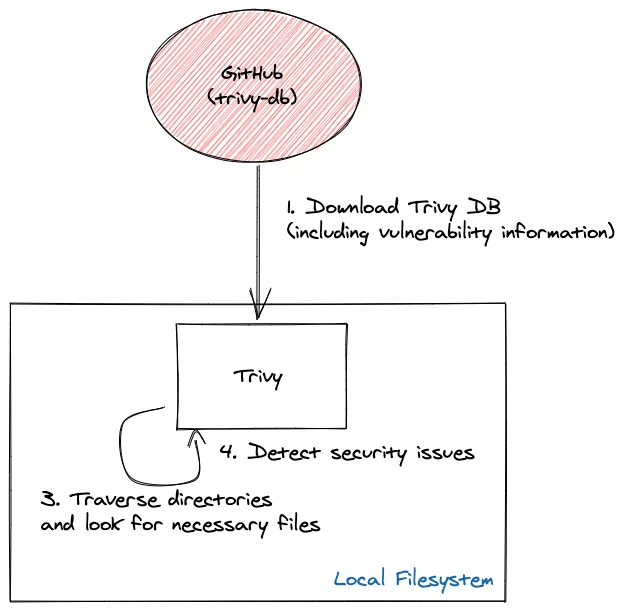
Trivy uses its own trivy-db database maintained by Aqua Security, plus a separate trivy-java-db for JAR/WAR identification. The database updates daily.
Grype aggregates data from NVD, GitHub Security Advisories, Alpine SecDB, Debian Security Tracker, Red Hat Security Data, Ubuntu/Canonical, Amazon Linux (ALAS), and Oracle Linux (ELSA). The database updates daily via SQLite archives.
Data processing runs through Vunnel, Anchore’s open-source vulnerability ETL tool.
Both databases are comprehensive.
The aggregation approach differs — Trivy has a curated database while Grype pulls from multiple upstream sources — but practical coverage for common vulnerability queries is similar.
CI/CD Integration#
Both tools provide strong CI/CD integration. Trivy has aquasecurity/trivy-action for GitHub Actions.
Grype has anchore/scan-action@v7. Both output SARIF for GitHub and GitLab code scanning. Both support severity-based exit codes for build gating.
Trivy’s Kubernetes operator (trivy-operator) runs continuous scans inside clusters, which Grype does not offer. For Kubernetes-native teams, this is a significant workflow advantage.
Configuration is similar. Trivy uses trivy.yaml and .trivyignore. Grype uses .grype.yaml with ignore rules.
Both support environment variables for CI configuration.
When Should You Choose Trivy?#
Choose Trivy if:
- You want one tool that covers vulnerabilities, IaC misconfigurations, secrets, and licenses
- Kubernetes cluster scanning with an operator for continuous assessment is part of your workflow
- SBOM generation (not just consumption) is a requirement
- Your team uses Terraform, CloudFormation, or Kubernetes manifests and wants IaC scanning alongside vulnerability checks
- You prefer a single binary that does everything rather than composing multiple tools
- You want the most popular open-source security scanner (36,500+ GitHub stars)
When Should You Choose Grype?#
Choose Grype if:
- Risk-based prioritization with EPSS and KEV data matters more than breadth of scanning types
- You want an SBOM-first workflow where you generate SBOMs with Syft and rescan them as databases update
- OpenVEX support for managing vulnerability exploitability assessments is part of your process
- You need a focused, fast vulnerability scanner without the overhead of additional scanning engines
- Your team already uses other Anchore tools (Syft, Grant) and wants ecosystem consistency
Both tools are free, open-source, and capable. Many teams start with Trivy for its breadth, then add Grype when they need better vulnerability prioritization.
The two tools can even run in parallel — Trivy for IaC and secrets, Grype for vulnerability matching with risk scoring.
For more options, browse AppSec Santa’s SCA tools category.
Visit either project#
- Trivy — official site · Trivy on GitHub · maintained by Aqua Security
- Grype on GitHub · pairs with Syft · maintained by Anchore
Looking for managed scanning beyond OSS? Aqua Platform (Trivy maintainer’s commercial CNAPP) and Anchore Enterprise (Grype maintainer’s commercial product) build on top of these scanners.
Related Comparisons#
- Trivy vs Snyk — OSS Trivy vs the commercial Snyk developer-experience bet.
- Trivy vs Snyk — if your focus is container images specifically.
- Checkov vs Trivy — when you need to compare IaC-focused scanning alongside container coverage.
- Open-Source SCA Tools — the broader OSS SCA landscape if you want options beyond Trivy and Grype.
- SCA Tools — every SCA scanner I’ve reviewed, filterable by licensing and language coverage.
Frequently Asked Questions
Is Trivy better than Grype?
Are both tools free?
Can Trivy and Grype scan SBOMs?
Which tool has better CI/CD integration?
What vulnerability databases do they use?

Written & maintained by
Suphi CankurtEight years on the vendor side of application-security sales — thousands of evaluations and demos. I started AppSec Santa in 2022 to put that insider view to work for buyers. Independent of any vendor, paid by none, and honest about what fits whom.