
- Sonatype's repository firewall blocks vulnerable or malicious packages at download time before they enter your codebase; Snyk scans dependencies already in your code and auto-generates fix PRs.
- Sonatype tracks 140M+ components with quality, age, and popularity metadata; Snyk's database is 3x larger than the next public source with 47-day average early detection.
- Snyk offers a free tier (200 tests/month) and installs in minutes; Sonatype has no free tier and delivers most value when paired with Nexus Repository Manager.
- Sonatype supports air-gapped deployment via SAGE for defense, government, and finance organizations; Snyk requires enterprise agreements for self-hosted deployment.
- Sonatype's Golden Pull Requests use AI to find zero-breakage upgrade paths; Snyk maintains its own patches to fix vulnerabilities without version bumps.
Which Is Better: Sonatype or Snyk?
Sonatype Lifecycle and Snyk Open Source are both SCA tools, but they solve the dependency security problem from opposite directions. Sonatype intercepts vulnerable components before they reach your codebase.
Its repository firewall sits in front of your artifact repository and blocks risky packages at download time. If a developer tries to pull a malicious npm package, Sonatype stops it cold.
Snyk works the other side: it scans dependencies already in your projects, opens automated fix pull requests, and monitors continuously for newly disclosed vulnerabilities.
The practical difference shows up in workflow. Sonatype fits organizations that want centralized control over what enters their software supply chain, particularly enterprises running Nexus Repository Manager.
Snyk fits teams that want SCA wired into their Git workflow with minimal setup. Sonatype is a Forrester Wave Leader for SCA with the highest scores in the 2024 evaluation.
Snyk reports over 2.5 million developers on the platform and a free tier that lets individuals and small teams get started without a sales call.
What Are the Key Differences?
| Feature | Sonatype Lifecycle | Snyk Open Source |
|---|---|---|
| License | Commercial | Freemium |
| Approach | Proactive blocking (repository firewall) | Reactive scanning + auto-fix PRs |
| Languages | 20+ | 13 languages, 20+ package managers |
| Vulnerability data | 140M+ components tracked, proprietary research | Proprietary DB (3x larger than NVD per Snyk) |
| Remediation | Golden Pull Requests (zero-breakage upgrades) | Automated fix PRs with compatibility scoring |
| Repository firewall | Yes (blocks bad packages at download) | No |
| Reachability analysis | No | Yes (Java, JavaScript) |
| Free tier | No | Yes (200 tests/month) |
| SBOM formats | CycloneDX, SPDX | CycloneDX, SPDX |
| License compliance | 2,000+ license threat categories | Policy enforcement (paid plans) |
| IDE plugins | IntelliJ, VS Code, Eclipse, Visual Studio | VS Code, JetBrains, Eclipse, Cursor |
| Deployment | Cloud or self-hosted (including air-gapped) | Cloud (self-hosted requires enterprise plan) |
| Analyst recognition | Forrester Wave Leader (SCA 2024), Gartner Visionary | — |
Sonatype vs Snyk: How Do They Compare?
Philosophy: Prevention vs Detection
This is the core difference. Sonatype Lifecycle is built around the idea that the best vulnerability is one that never enters your codebase.
The repository firewall evaluates components at download time against Sonatype’s intelligence database.
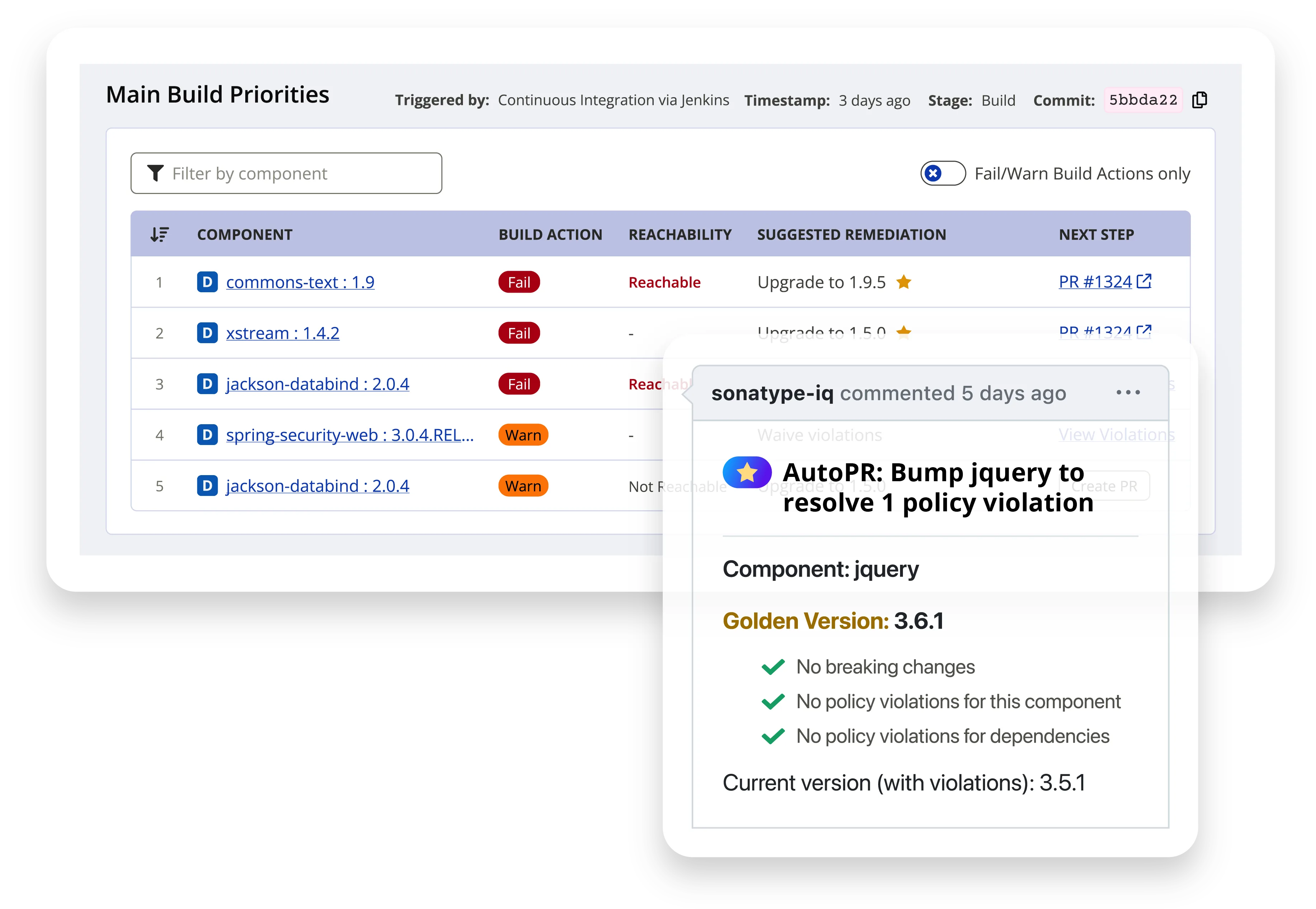
If a package is flagged as malicious, has a critical vulnerability, or violates your organization’s policies, the firewall blocks the download and suggests alternatives. Developers never pull the risky package in the first place.
Snyk takes the position that developers are going to choose their own dependencies and the tool should make it painless to find and fix problems.
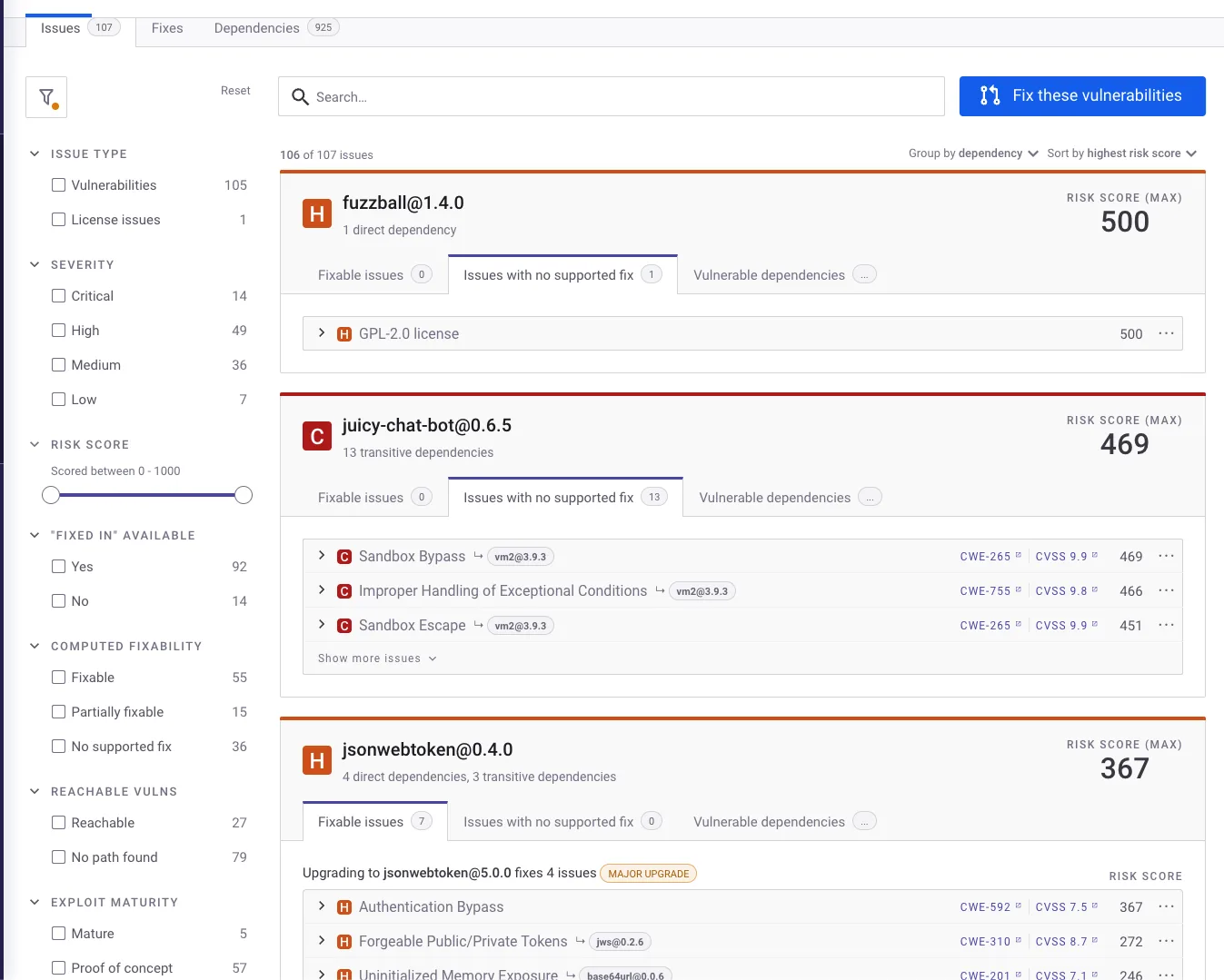
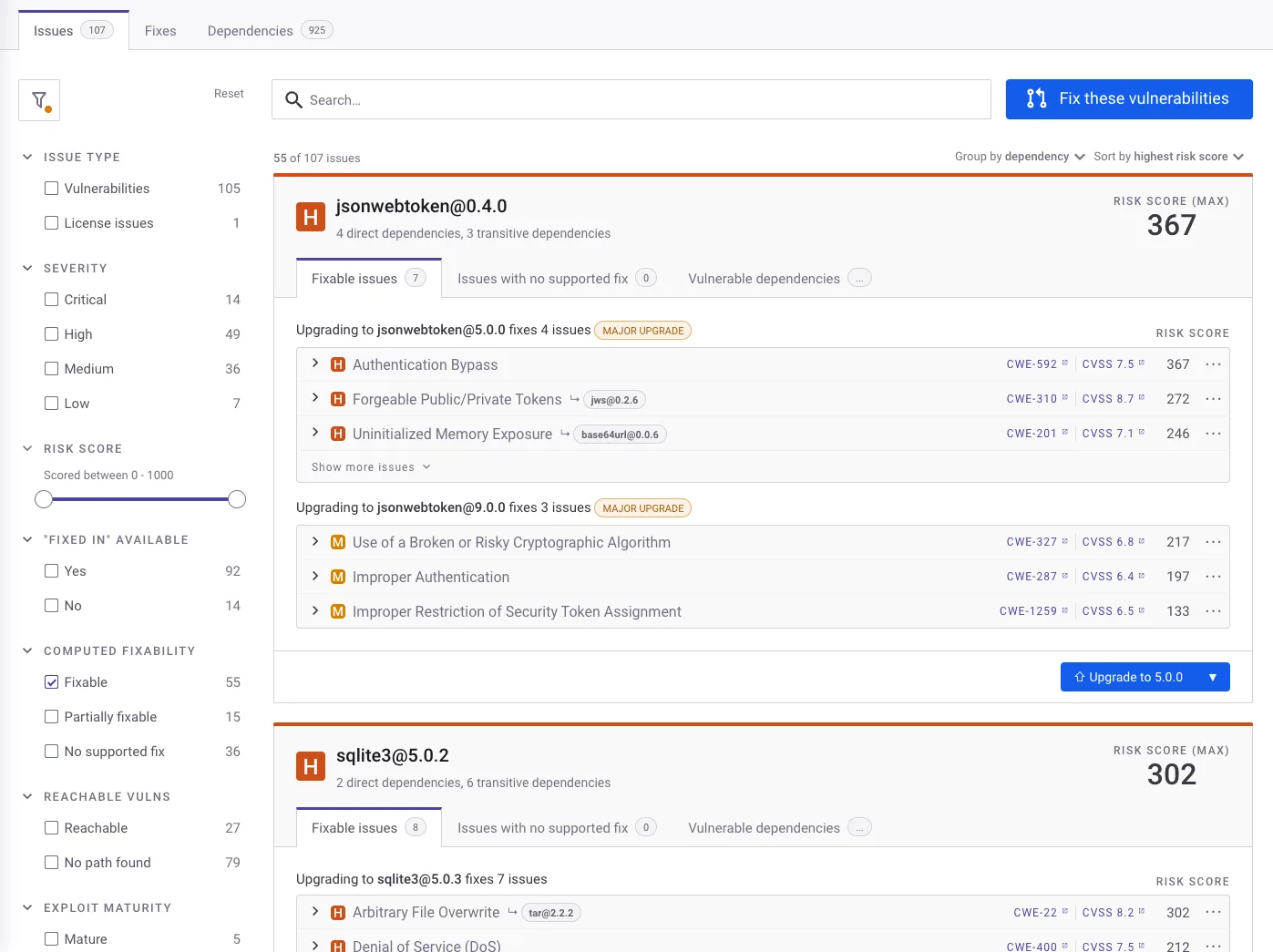
You add dependencies, Snyk scans them, and when it finds a vulnerability with an available fix, it opens a pull request. The PR includes the upgrade path, changelog entries, and a compatibility score based on how the same upgrade went for other projects. You review and merge.
Neither approach is wrong. Sonatype’s model works well for organizations that need centralized governance over their software supply chain.
Snyk’s model works well for teams that move fast and want security to fit into their existing pull request workflow.
Vulnerability Intelligence
Both maintain proprietary intelligence well past what the NVD offers. Sonatype’s security research team finds and discloses vulnerabilities before CVEs are assigned.
Their database tracks 140M+ components with metadata that goes beyond security: component age, popularity, quality metrics, and license risk. That extra context lets policy rules get more granular.
Snyk says its vulnerability database is the largest proprietary source, with entries landing an average of 47 days before competitors.
For JavaScript, Snyk reports that 92% of its entries precede the NVD. Their research team has disclosed over 3,400 vulnerabilities directly.
Snyk also does reachability analysis for Java and JavaScript — it checks whether your application actually calls the vulnerable code path, which helps cut noise when triaging findings.
Remediation: Golden PRs vs Auto-Fix PRs
Sonatype’s Golden Pull Requests analyze transitive dependencies and breaking changes to find the minimum safe upgrade with zero expected breakage.
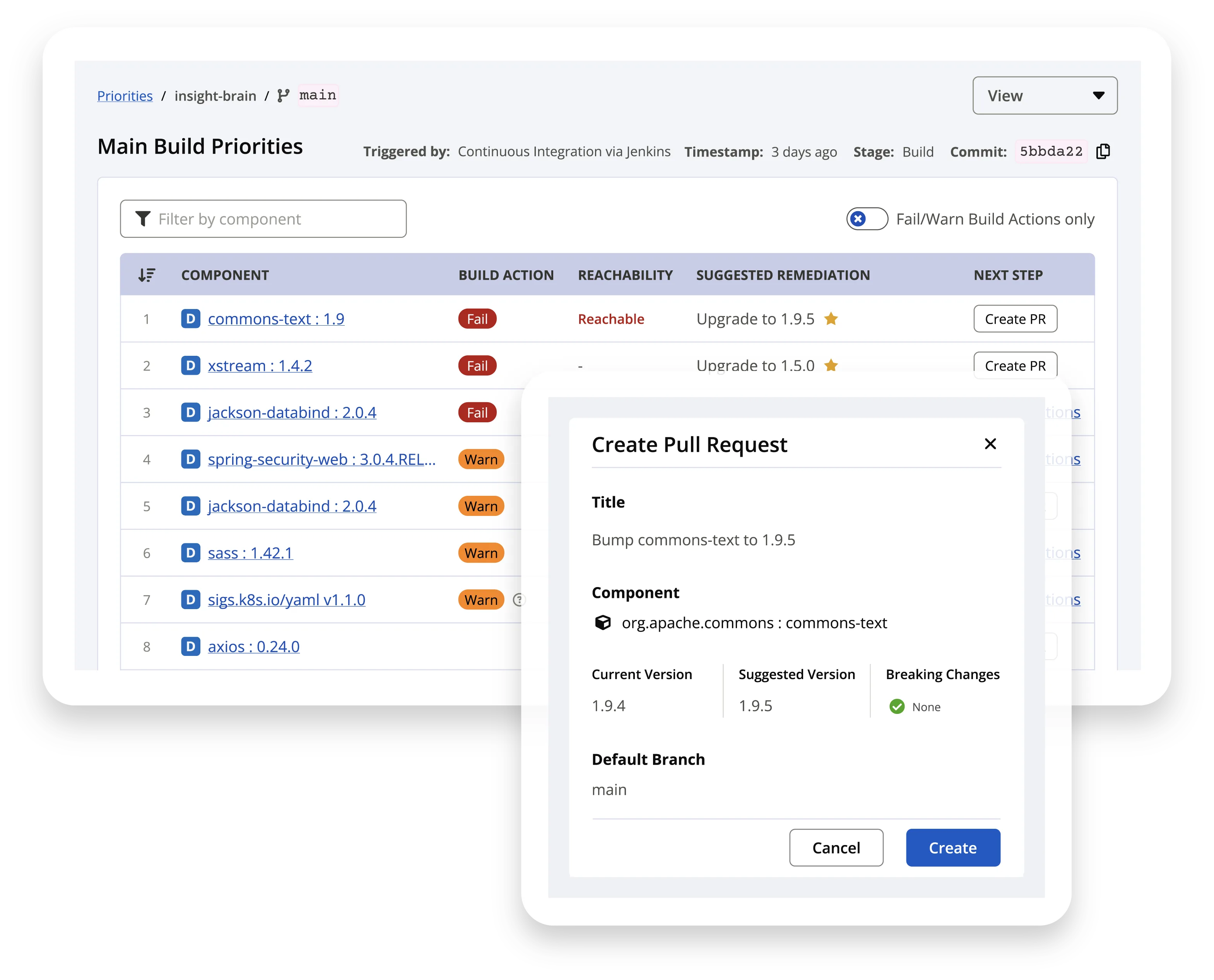
The “golden” label means Sonatype’s AI has checked the upgrade path for cascading dependency issues. This matters in large Java/Maven projects where upgrading one library can break ten others.
Snyk’s auto-fix PRs take a similar approach but add a compatibility score based on CI pass rates from public repositories that applied the same upgrade.
When no upgrade exists, Snyk maintains its own patches — targeted code changes that fix the vulnerability without bumping the package version.
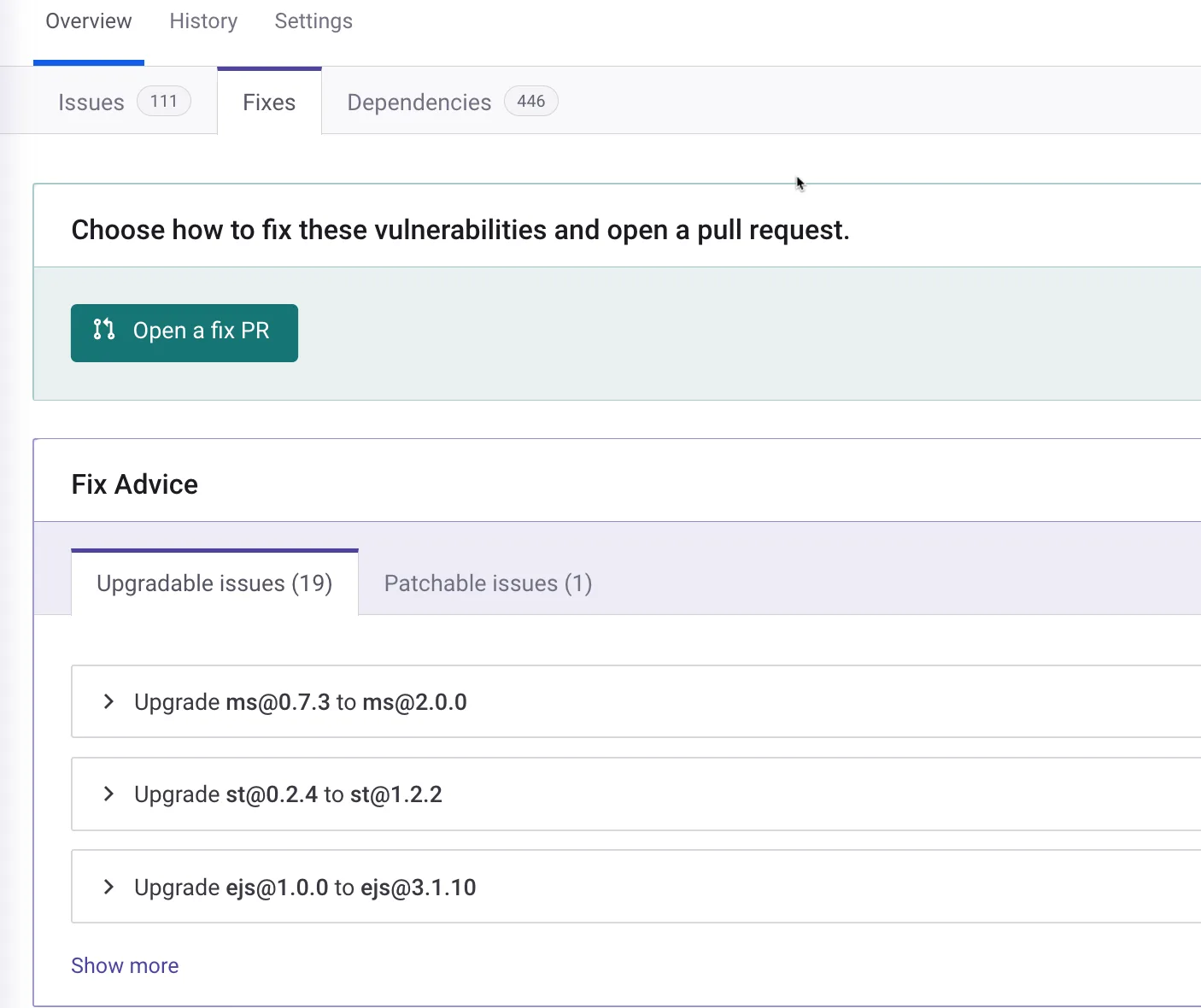
This is useful when upgrading to the next major version would require significant refactoring.
Both approaches beat the alternative of manually researching and testing upgrades. Sonatype’s edge is in complex enterprise dependency graphs.
Snyk’s edge is in breadth of language support and the fallback patch mechanism.
Enterprise Features and Deployment
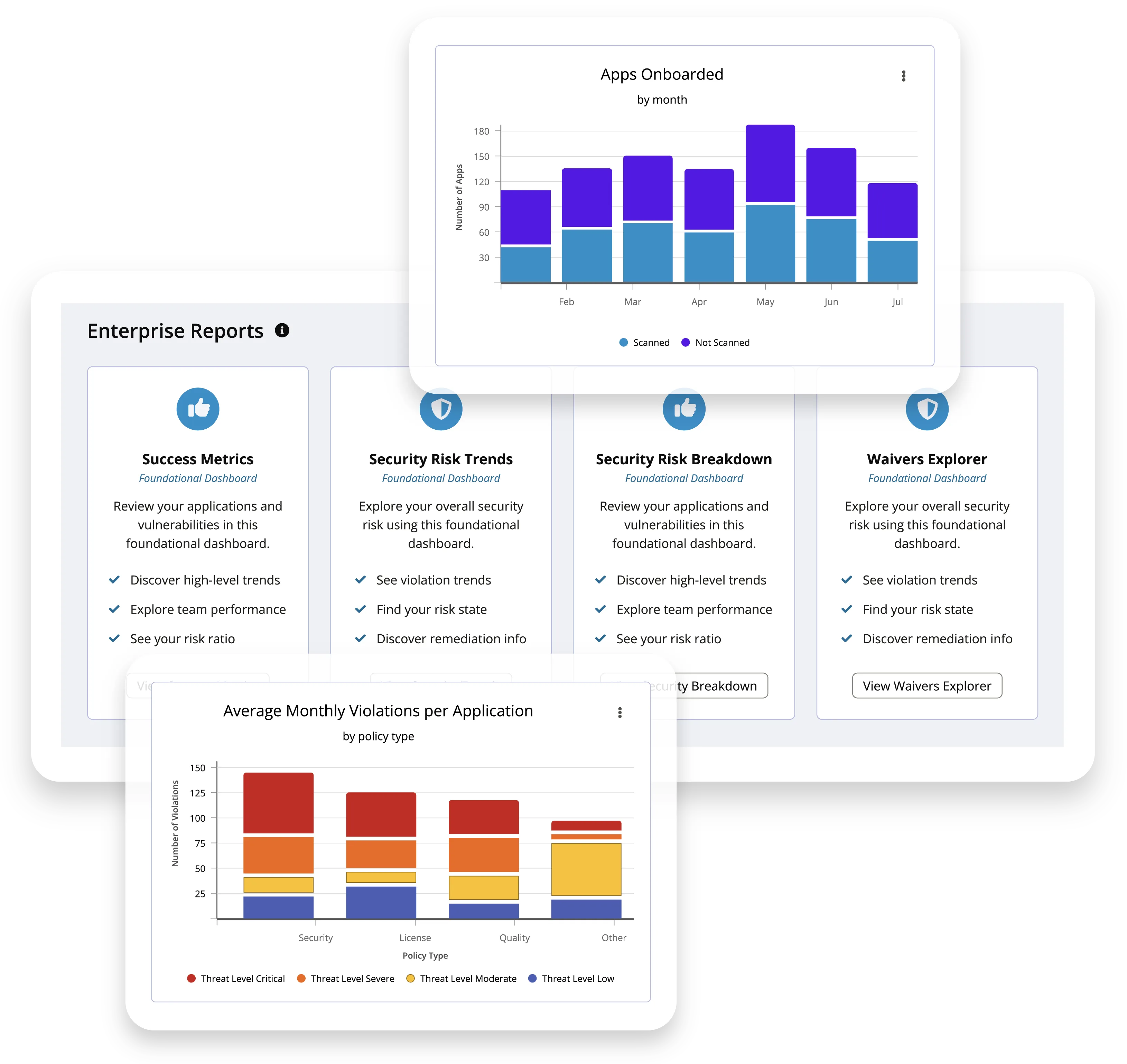
Sonatype Lifecycle ships with 18 default policies and over 30 you can customize.
You can set different standards for dev vs production builds, route exceptions through approval workflows, and auto-fail CI when thresholds are exceeded.
Air-gapped deployment via SAGE is available for defense, government, and finance organizations that can’t send data out.
Snyk’s enterprise features cover license compliance, reporting dashboards, SSO, and custom policies. It’s cloud-first — self-hosted deployment needs an enterprise agreement.
If you need everything on-premises with no external connectivity, Sonatype wins that one easily.
Pricing and Accessibility
Snyk’s free tier (200 open-source tests per month) matters. Individual developers and small teams can scan projects, get fix PRs, and monitor dependencies without paying.
Team and Enterprise plans unlock higher limits, license compliance, and advanced reporting.
Sonatype Lifecycle has no free tier. Pricing is custom and enterprise-oriented.
The platform delivers the most value when paired with Nexus Repository Manager for the firewall capability. For organizations already running Nexus Repository, adding Lifecycle is a natural extension.
For teams starting from scratch, the total cost of ownership is higher than Snyk.
When Should You Choose Sonatype Lifecycle?
Choose Sonatype Lifecycle if:
- Blocking vulnerable or malicious components before they enter your codebase is a priority
- You run or plan to run Nexus Repository Manager as your artifact repository
- You need air-gapped deployment for regulated or classified environments
- Your organization is Java/Maven-heavy and needs deep ecosystem support
- Granular policy management with 18+ default policies matters
- You want component intelligence beyond vulnerabilities (age, quality, popularity)
When Should You Choose Snyk Open Source?
Choose Snyk Open Source if:
- You want SCA integrated into your Git pull request workflow with automated fix PRs
- A free tier for individual developers and small teams matters
- You need broad language coverage across 13 languages and 20+ package managers
- Reachability analysis (knowing if you actually call the vulnerable code) is valuable
- You prefer a developer-first tool that installs in minutes via npm or Homebrew
- You want a single platform that also covers SAST (Snyk Code), containers, and IaC
Both are featured in AppSec Santa’s SCA tools comparison. Sonatype is the stronger choice for enterprises that want proactive supply chain control and run Nexus Repository.
Snyk is the stronger choice for developer teams that want fast setup, automated remediation, and a free entry point.
Frequently Asked Questions
What is the main difference between Sonatype Lifecycle and Snyk Open Source?
Which tool has a better vulnerability database?
Can I use Sonatype and Snyk together?
Which tool is better for small teams or startups?
Does Sonatype Lifecycle require Nexus Repository Manager?

+7 Years in AppSec
10+ years in application security. Reviews and compares 208 AppSec tools across 11 categories to help teams pick the right solution. More about me →