
- Snyk Open Source scans third-party dependencies (SCA) while SonarQube analyzes your own source code (SAST) — they target different layers and pair well together.
- Snyk's proprietary database detects JavaScript vulnerabilities 92% of the time before NVD listing, with a 47-day average lead over competing databases.
- SonarQube Community Edition is free with no scan limits for 19 languages; Snyk's free tier gives 200 tests/month with paid plans for teams.
- SonarQube's quality gates enforce thresholds on coverage, duplication, reliability, and security simultaneously; Snyk gates builds only on dependency vulnerability severity.
- Snyk generates automated fix PRs and SBOM reports (SPDX, CycloneDX); SonarQube has no auto-remediation or SBOM capabilities.
Which Is Better: Snyk or SonarQube?
Snyk Open Source and SonarQube target different parts of your application’s attack surface.
Snyk is a dedicated SCA tool that scans dependency manifests and lock files to find known vulnerabilities in open-source packages.
It maintains a proprietary vulnerability database reported to be 3x larger than the NVD, and it opens fix pull requests automatically when patched versions are available.
SonarQube analyzes source code for bugs, code smells, security vulnerabilities, and technical debt across 35+ languages. Its quality gate system can block deployments when code doesn’t meet configured thresholds.
While SonarQube has added some SCA capabilities, its strength is in analyzing the code your team writes, not the third-party packages it depends on.
What Are the Key Differences?
| Feature | Snyk Open Source | SonarQube |
|---|---|---|
| Primary focus | Dependency vulnerability scanning (SCA) | Source code quality + security (SAST) |
| License | Freemium | Free Community Edition + commercial tiers |
| Languages | 13 languages, 20+ package managers | 35+ languages, 6,000+ rules |
| Vulnerability database | Proprietary (3x larger than NVD) | CWE, OWASP Top 10, SANS Top 25 rules |
| Automated fix PRs | Yes | No |
| Reachability analysis | Yes (Java, JavaScript) | No |
| Code quality analysis | No | Yes (bugs, code smells, duplication, tech debt) |
| Quality gates | No | Yes |
| SBOM generation | Yes (SPDX, CycloneDX) | No |
| PR decoration | Yes | Yes (Developer Edition+) |
| Self-hosted option | Enterprise only | Yes (all editions) |
| CI/CD integration | GitHub Actions, GitLab CI, Jenkins, Azure DevOps | GitHub Actions, GitLab CI, Jenkins, Azure DevOps, Bitbucket |
| IDE plugins | VS Code, JetBrains, Eclipse, Cursor | VS Code, JetBrains, Eclipse |
| AI remediation | No | AI CodeFix (LLM-powered) |
Snyk vs SonarQube: How Do They Compare?
Different Problems, Different Tools
Snyk Open Source and SonarQube are not direct competitors. Snyk scans what your application depends on — npm packages, Maven artifacts, PyPI libraries, Go modules, and other third-party code.
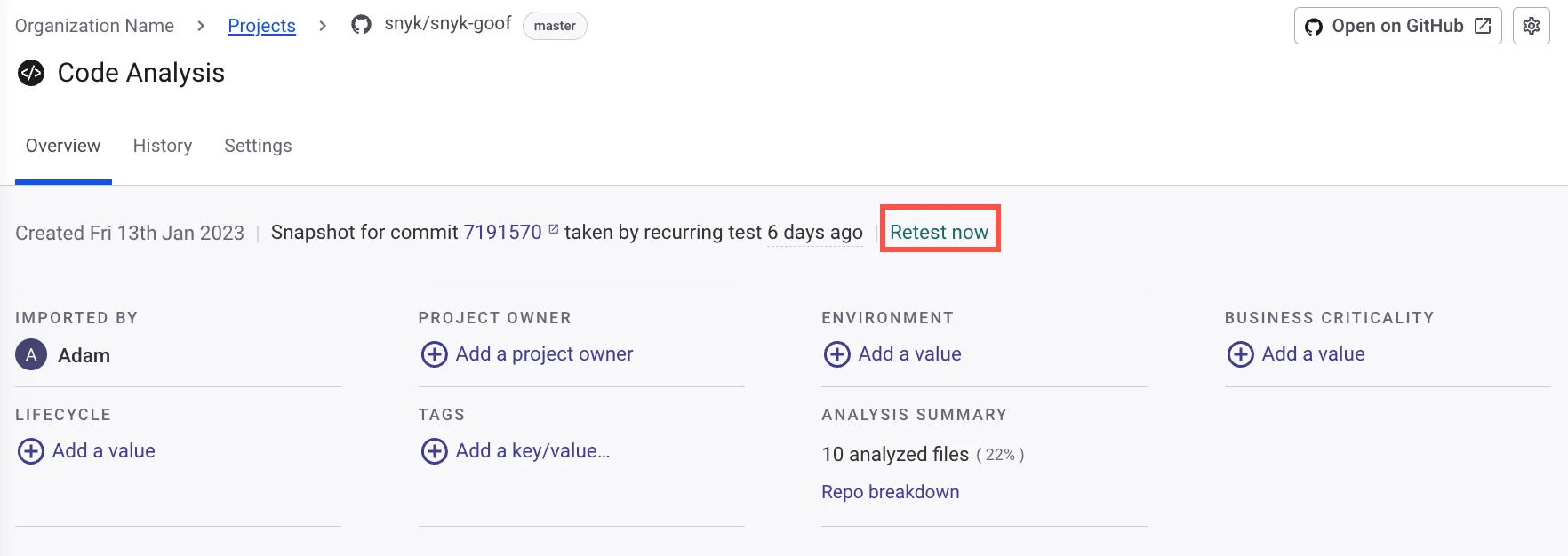 Snyk’s project-level Code Analysis view displaying scan metadata, project ownership, and analysis summary for a connected GitHub repository.
It answers the question: “Are any of my dependencies known to be vulnerable?”
SonarQube scans what your team writes. It answers: “Does our code have bugs, security flaws, or maintainability problems?” Its 6,000+ rules cover security vulnerabilities, but also code smells, cognitive complexity, test coverage gaps, and duplication.
Security is one dimension of a broader code quality platform.
This means comparing them head-to-head is a bit like comparing a lock to an alarm system. They protect different things.
Vulnerability Detection Approach
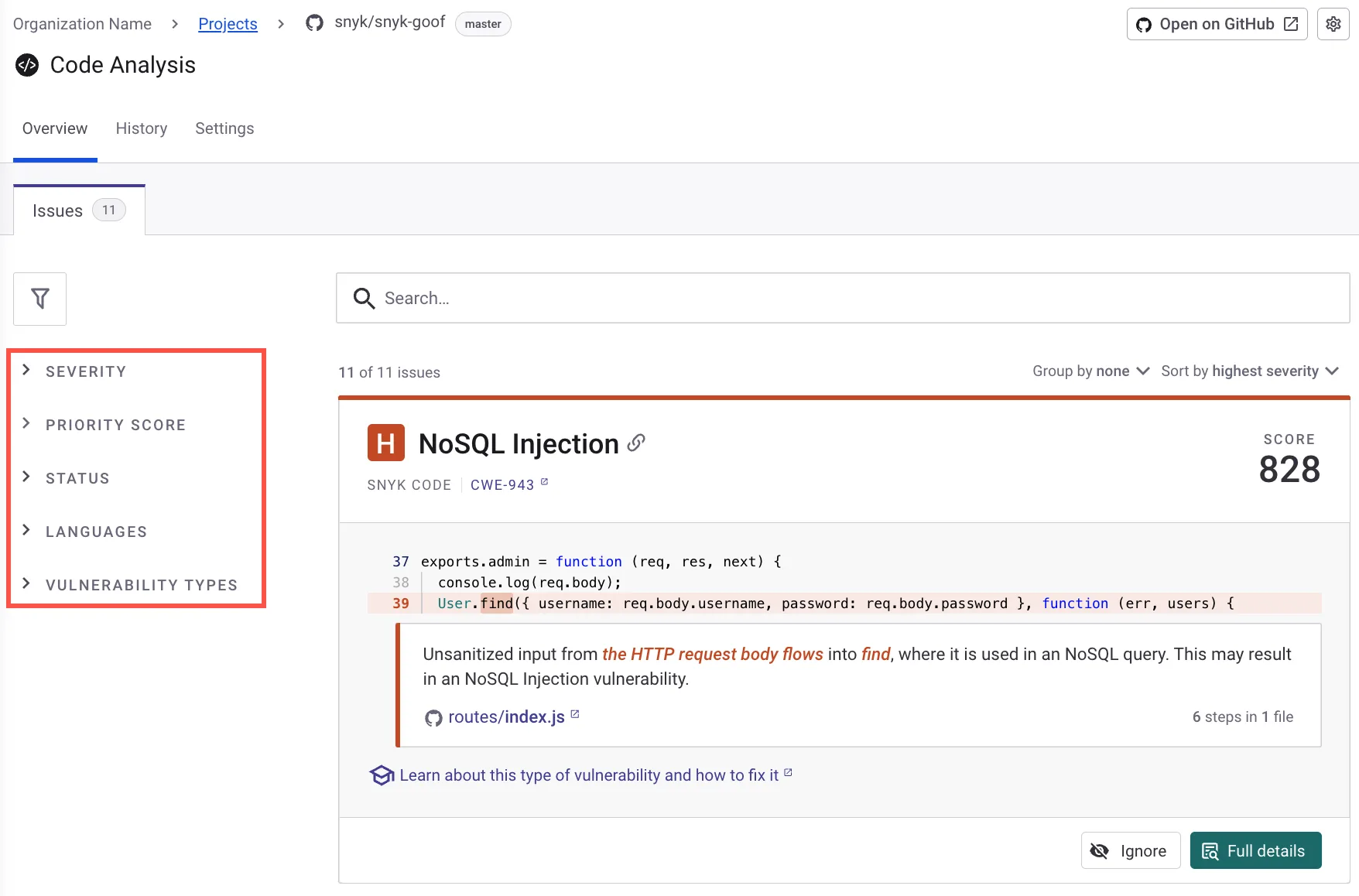 Snyk Code’s vulnerability findings view displaying a NoSQL Injection issue (CWE-943) with inline code context, data flow explanation, and severity filtering options.
Snyk’s approach to vulnerability detection is database-driven. According to Snyk, its security research team has disclosed over 3,400 vulnerabilities to date.
For JavaScript, Snyk says 92% of entries hit their database before the NVD, with a 47-day average lead according to the company’s published benchmarks.
When a vulnerability is found, Snyk maps the full dependency graph — including transitive dependencies — and shows exactly how the vulnerable package enters your project.
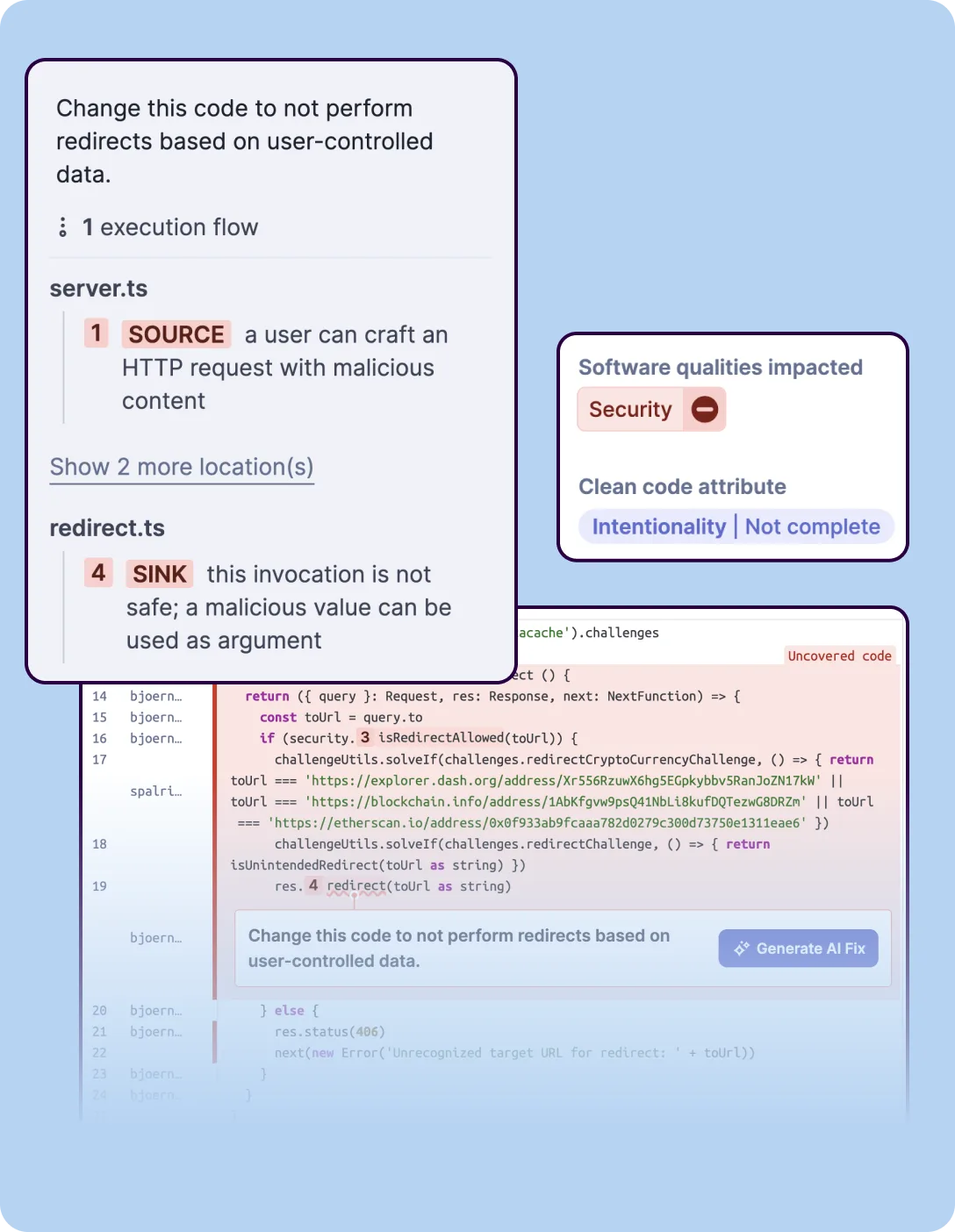 SonarQube’s SAST analysis tracing a security vulnerability from source to sink, with execution flow steps and impacted software qualities.
SonarQube catches security issues through static analysis rules. The paid tiers add taint analysis — tracing data flow from user input to dangerous sinks like SQL queries or file paths.
The Community Edition has basic security rules but no taint analysis. Either way, SonarQube’s security scanning targets your source code, not your dependency tree.
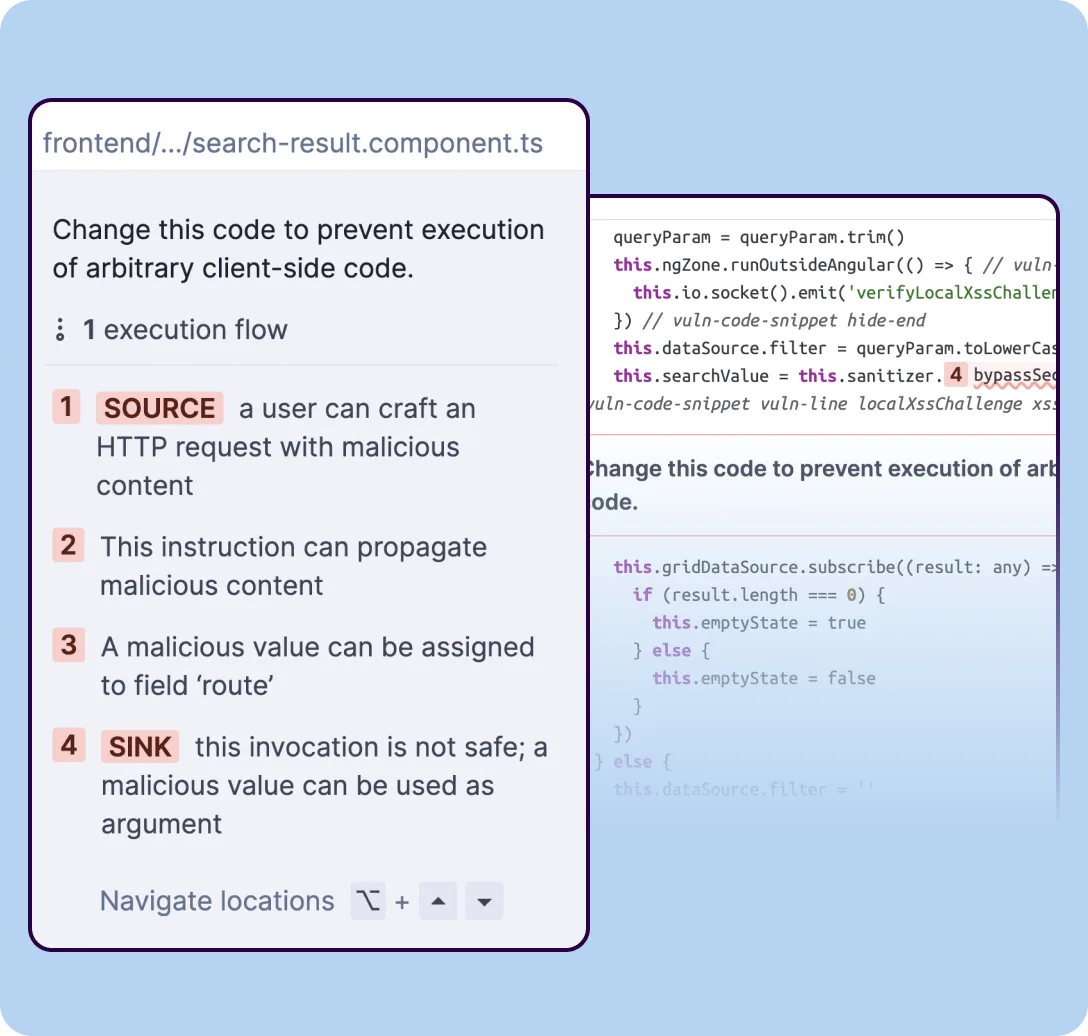 SonarQube’s taint analysis view tracing client-side code execution from a user-controlled HTTP request source through assignment steps to an unsafe sink.
Language and Ecosystem Coverage
Snyk Open Source supports 13 languages and 20+ package managers. That covers the mainstream ecosystems: npm, Maven, Gradle, pip, Go modules, NuGet, Composer, CocoaPods, Cargo, and others.
Coverage depth varies by language — JavaScript and Java have the most mature support.
SonarQube supports 35+ languages with the Community Edition covering 19. The breadth is wider, including COBOL, Apex, ABAP, PL/SQL, and T-SQL alongside the usual suspects.
But this comparison is about source code analysis, not dependency scanning. SonarQube doesn’t need package manager integration the way Snyk does — it analyzes source files directly.
CI/CD Integration
Both tools integrate into CI/CD pipelines, but they gate on different things. Snyk fails a build when vulnerable dependencies exceed a configured severity threshold.
Running snyk monitor creates a dependency snapshot for continuous monitoring between builds. If a new CVE drops against something you already depend on, you get an alert.
SonarQube’s quality gates fail builds based on configurable thresholds for code coverage, duplication percentage, reliability rating, security rating, and maintainability rating. This is broader than just security — you can enforce minimum test coverage or maximum code duplication alongside vulnerability checks.
PR decoration works on both. Snyk shows dependency vulnerability findings on pull requests.
SonarQube shows new code issues, coverage changes, and quality gate status. The Developer Edition and above are required for SonarQube’s PR decoration.
Pricing and Deployment
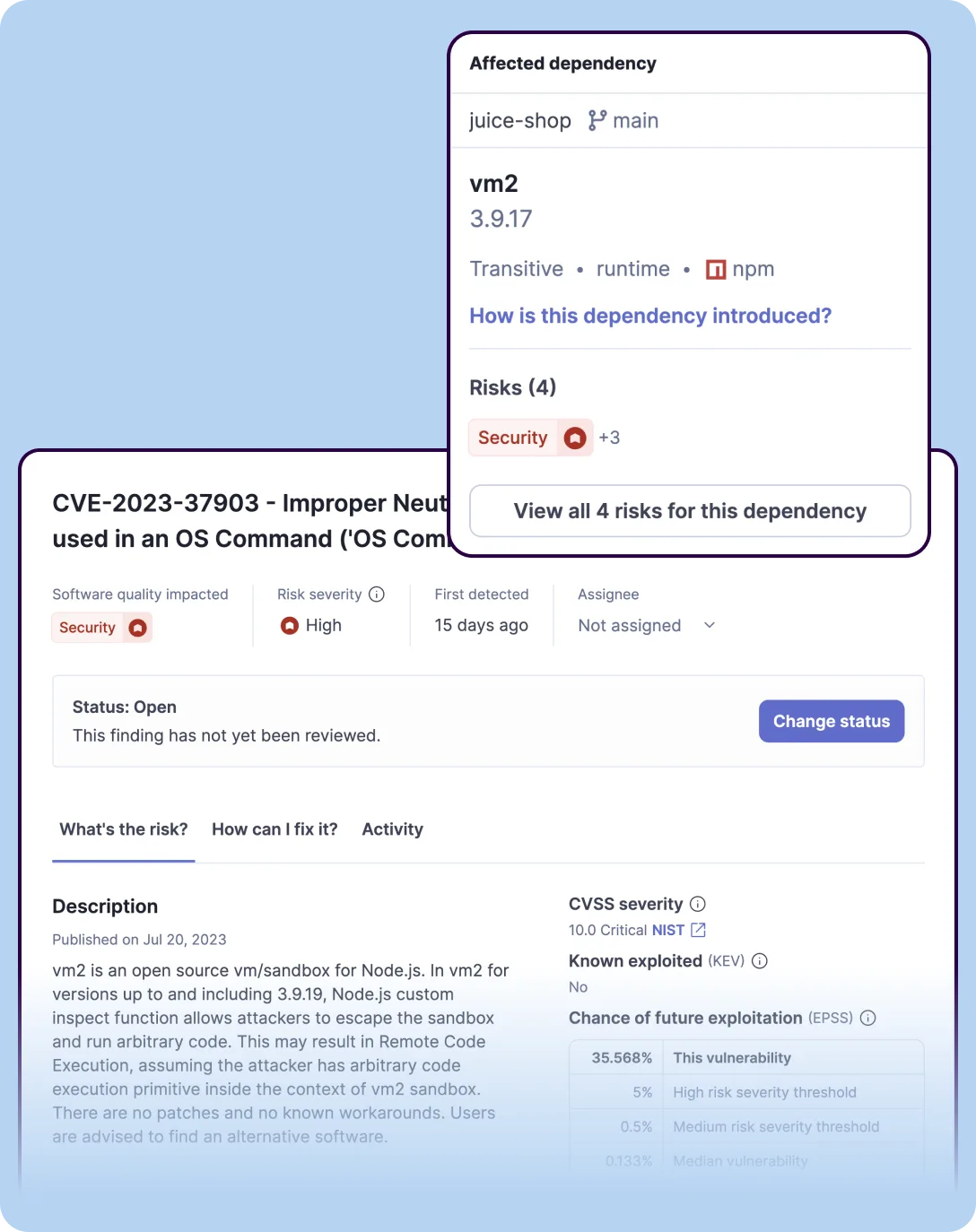 SonarQube’s Software Composition Analysis view showing a transitive dependency vulnerability with CVE details, CVSS severity scoring, and remediation options.
Snyk’s free tier gives individual developers 200 open-source tests per month. Team and Enterprise plans unlock higher limits, license compliance, and advanced reporting.
Snyk is primarily cloud-based; self-hosted deployment requires an enterprise agreement.
SonarQube’s Community Edition is free and open-source. You can download it and run it on your own infrastructure with no limits on scans or users.
The Developer Edition starts at $150/year for 100K lines of code and adds branch analysis, PR decoration, and more languages.
Enterprise and Data Center editions add portfolio management, taint analysis, and high availability. SonarCloud is the SaaS alternative, free for public projects.
For teams on a tight budget, SonarQube’s Community Edition is hard to beat. For teams that want dependency scanning without infrastructure, Snyk’s free tier works well for small projects.
When Should You Choose Snyk Open Source?
Choose Snyk Open Source if:
- Dependency vulnerabilities are your primary concern
- You want automated fix PRs that upgrade vulnerable packages
- Fast vulnerability disclosure matters (47-day average lead over NVD)
- Reachability analysis to filter noise on Java and JavaScript projects is valuable
- You need SBOM generation for compliance (SPDX, CycloneDX)
- Your team wants SCA without managing infrastructure
When Should You Choose SonarQube?
Choose SonarQube if:
- Code quality enforcement is as important as security
- You need quality gates that cover coverage, duplication, and maintainability alongside security
- You want a self-hosted solution with no scan limits (Community Edition)
- Your codebase includes languages outside the mainstream 13 that Snyk covers
- Taint analysis for injection and data flow vulnerabilities in your source code is a priority
- You prefer an open-source core you can run on your own infrastructure
These tools solve different problems and pair well. Snyk watches your dependencies.
SonarQube watches your code. Teams that run both cover the supply chain and the codebase in a single pipeline.
See more comparisons in the AppSec Santa SCA tools hub.
Frequently Asked Questions
What is the main difference between Snyk and SonarQube?
Can I use Snyk and SonarQube together?
Does SonarQube do dependency scanning?
Which tool is free?
Should I pick Snyk or SonarQube for CI/CD pipeline security?

+7 Years in AppSec
10+ years in application security. Reviews and compares 208 AppSec tools across 11 categories to help teams pick the right solution. More about me →