
- Dependabot is completely free with no limits on GitHub; Snyk’s free tier caps at 200 tests/month with paid Team and Enterprise plans.
- Snyk’s proprietary database is 3x larger than the next public source, detecting CVEs 47 days ahead on average; Dependabot uses the GitHub Advisory Database with 20,000+ reviewed advisories.
- Dependabot supports 25+ ecosystems including Docker, Terraform, and GitHub Actions; Snyk covers 13 languages and 20+ package managers.
- Snyk offers reachability analysis (Java, JavaScript) and a Risk Score combining 12+ factors; Dependabot uses auto-triage rules and compatibility scores.
- Dependabot provides version updates to keep all dependencies current (not just vulnerable ones); Snyk focuses on security-only fixes with fallback patching.
Which Is Better: Snyk or Dependabot?#
If your repositories live on GitHub and you want free dependency security with zero setup, Dependabot is the obvious starting point. If you need a deeper vulnerability database, reachability analysis to cut through noise, or support for GitLab, Bitbucket, or Azure DevOps, Snyk Open Source is worth the cost.
What Are the Key Differences?#
| Feature | Snyk Open Source | Dependabot |
|---|---|---|
| License | Freemium (200 free tests/month) | Free (no limits) |
| Pricing | Free tier; paid Team and Enterprise plans | Free for all GitHub repos |
| Platform Support | GitHub, GitLab, Bitbucket, Azure DevOps | GitHub only |
| Vulnerability Database | Proprietary (3x larger than next largest public DB) | GitHub Advisory Database (20,000+ reviewed advisories) |
| Automated Fix PRs | Yes (security fixes with patches) | Yes (security updates + version updates) |
| Reachability Analysis | Yes (Java, JavaScript) | No |
| Risk Scoring | 12+ contextual factors, 0-1000 score | Compatibility scores from public CI data |
| Transitive Dependency Scanning | Yes (full dependency graph) | Yes (through dependency graph) |
| License Compliance | Yes (paid plans) | No |
| SBOM Generation | CycloneDX, SPDX | Dependency graph export |
| Grouped Updates | No | Yes (by name, type, semver level, cross-ecosystem) |
| Version Updates | No (security-focused) | Yes (configurable scheduling) |
| Continuous Monitoring | Yes (alerts on new disclosures) | Yes (alerts from GitHub Advisory Database) |
| IDE Plugins | VS Code, JetBrains, Eclipse, Cursor | No |
| CLI | Yes (snyk test, snyk monitor) | No (GitHub-native only) |
| Package Ecosystems | 13 languages, 20+ package managers | 25+ ecosystems |
| Auto-Triage Rules | No | Yes (preset and custom rules) |
Snyk vs Dependabot: How Do They Compare?#
Vulnerability Database#
This is where Snyk pulls ahead most clearly. Snyk maintains a proprietary vulnerability database that the company says is 3x larger than the next largest public database.
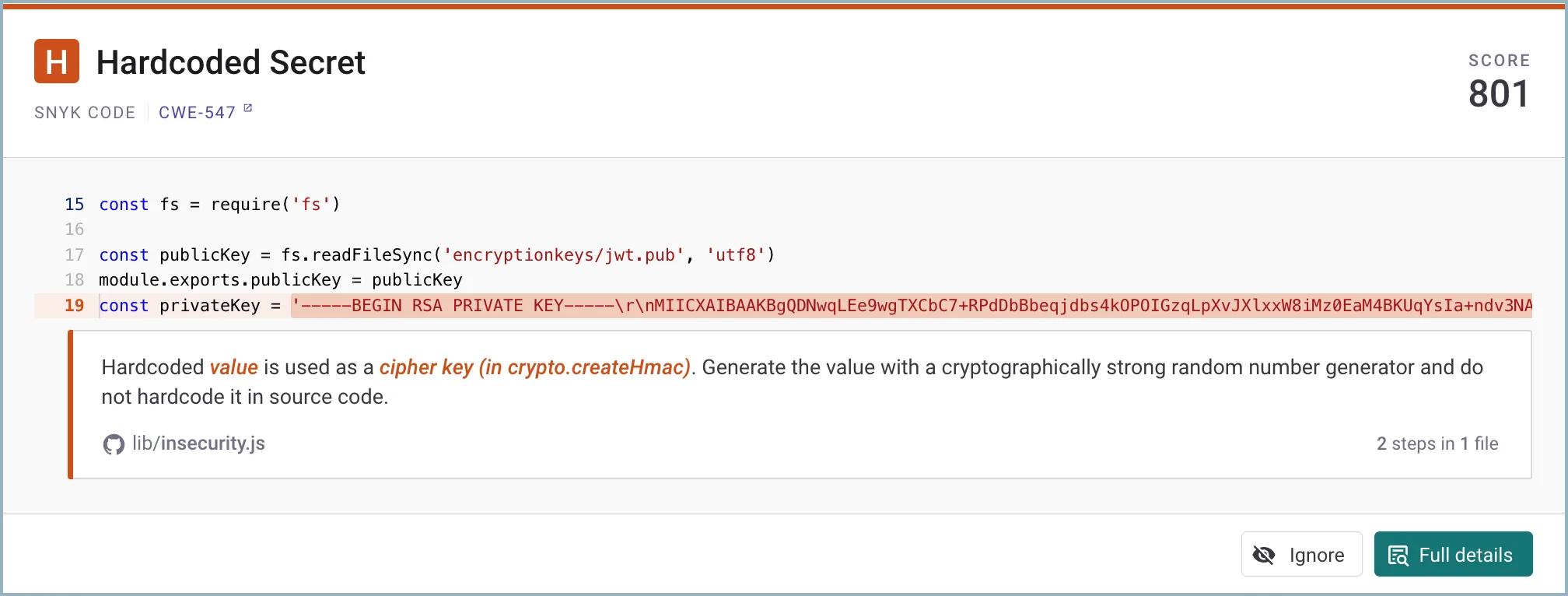
Their security research team has personally disclosed over 3,400 vulnerabilities, and for JavaScript specifically, Snyk reports disclosing 92% of vulnerabilities before the NVD lists them. On average, Snyk detects vulnerabilities 47 days faster than competing databases.
Dependabot relies on the GitHub Advisory Database, which contains 20,000+ reviewed advisories. GitHub reviews each advisory before it triggers an alert, which reduces false positives compared to raw NVD feeds.
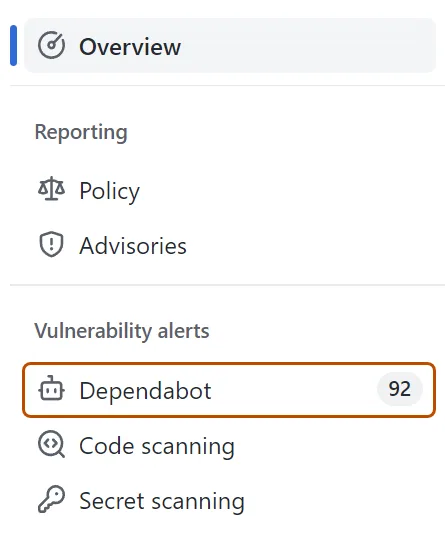
The database is solid for known CVEs but does not include the proprietary research that Snyk’s team produces.
For teams where early detection of zero-day dependency vulnerabilities matters — financial services, healthcare, SaaS platforms handling sensitive data — Snyk’s database advantage is significant.
Automated Fix Pull Requests#
Both tools create PRs to fix vulnerable dependencies, but they approach it differently.
Snyk creates fix PRs that upgrade to the minimum safe version and includes vulnerability details, changelog entries, and a compatibility score based on CI pass rates from public repos.
When no upgrade is available, Snyk maintains its own patches — targeted code changes that fix the vulnerability without bumping the version. This is useful when an upgrade would introduce breaking changes.
Dependabot creates security update PRs that bump to the minimum patched version with release notes and compatibility scores. It also offers version update PRs on a configurable schedule to keep all dependencies current, not just vulnerable ones.
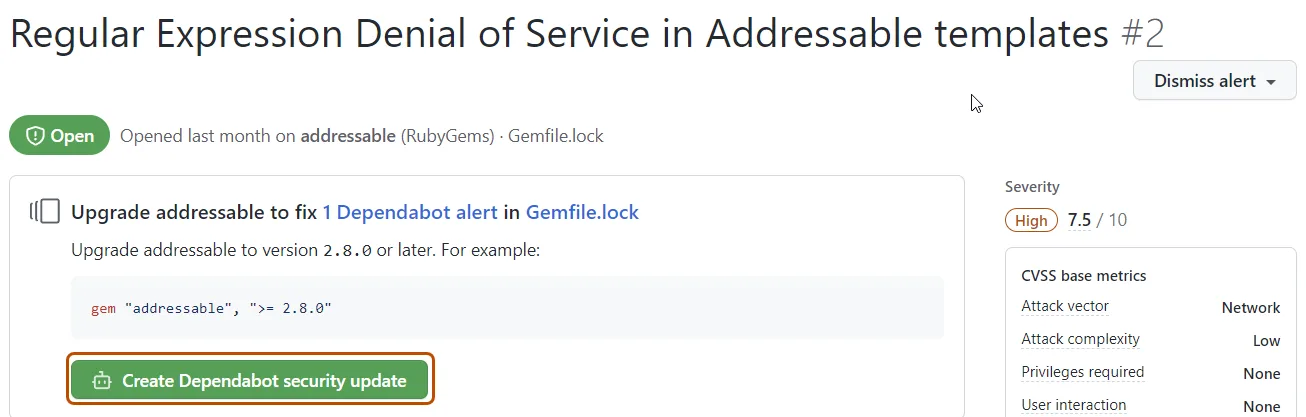
Grouped updates can bundle multiple changes into a single PR to reduce noise.
Dependabot’s version updates are a feature Snyk does not offer. If keeping all dependencies current (not just fixing vulnerabilities) is a priority, Dependabot handles that natively.
Platform Support#
Dependabot works on GitHub and only GitHub. If your code is on GitLab, Bitbucket, or Azure DevOps, Dependabot is not an option.
Snyk works across GitHub, GitLab, Bitbucket, and Azure DevOps. It also has a CLI (snyk test, snyk monitor) that runs anywhere, plus IDE plugins for VS Code, JetBrains (IntelliJ, PyCharm, WebStorm, GoLand), Eclipse, and Cursor.
This makes Snyk the better fit for organizations with repositories spread across multiple platforms or teams that want in-IDE vulnerability feedback.
Noise Reduction#
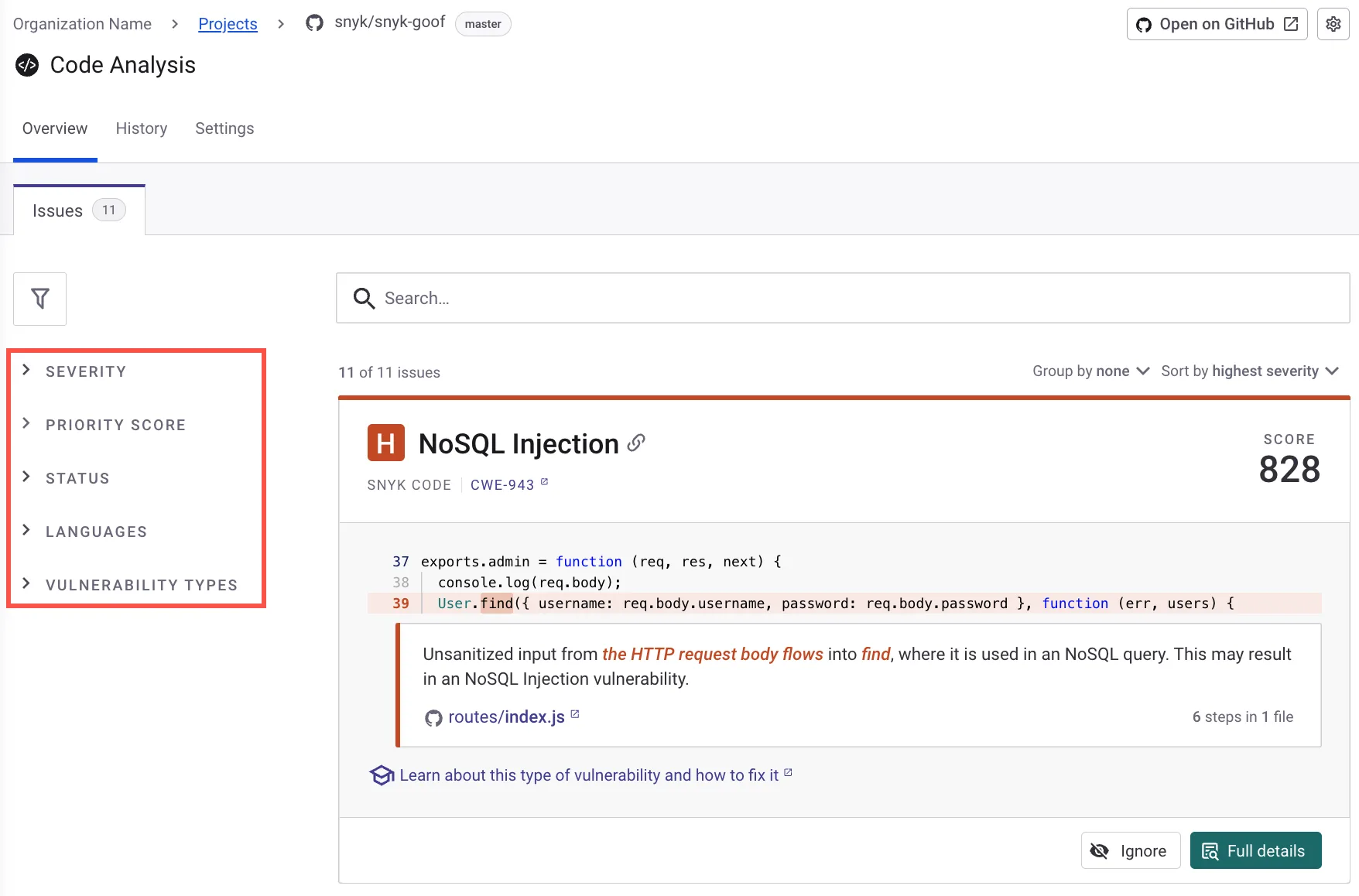
Snyk’s reachability analysis is a meaningful differentiator. It traces call paths from your application code to the vulnerable function in a dependency.
If your code never actually calls the vulnerable function, the finding gets deprioritized. This is currently available for Java and JavaScript.
The Risk Score combines 12+ factors — EPSS score, exploit maturity, reachability, fix availability — into a 0-1000 score for prioritization.
Dependabot uses auto-triage rules to manage noise. Preset rules auto-dismiss low-impact alerts on development dependencies.
Custom rules filter by severity, package name, and CWE. Compatibility scores from public CI pass rates help you gauge upgrade safety. These are simpler approaches, but they do help.
Pricing#
Dependabot is free. No limits, no paid tiers, no catches. This alone makes it the default choice for any GitHub repository.
Snyk’s free tier gives individual developers 200 open-source tests per month. Team and Enterprise plans are required for higher limits, license compliance, advanced reporting, and full reachability analysis.
Pricing is not public, but expect a meaningful cost for teams above a handful of developers.
When Should You Choose Snyk?#
Choose Snyk Open Source if:
- Your vulnerability database needs to catch issues before they hit the NVD
- You have repositories on GitLab, Bitbucket, or Azure DevOps (not just GitHub)
- Reachability analysis for Java or JavaScript dependencies would reduce your triage workload
- You need license compliance enforcement across your dependency tree
- IDE-level feedback on dependency vulnerabilities matters to your workflow
- You want continuous monitoring with a CLI that runs anywhere
When Should You Choose Dependabot?#
Choose Dependabot if:
- All your repositories are on GitHub
- Free, zero-setup dependency security is more important than database depth
- You want automated version updates to keep all dependencies current, not just vulnerable ones
- Grouped updates and configurable scheduling reduce PR noise in your workflow
- Budget is a constraint and you need solid SCA without any cost
Many teams use both: Dependabot for version updates and keeping dependencies current, Snyk for vulnerability detection and deeper security intelligence. The two tools complement each other well.
AppSec Santa maintains detailed reviews of all tools mentioned here. For more SCA tools , see the full category comparison.
Related Comparisons#
- Snyk vs Mend — commercial SCA head-to-head if you’re weighing Snyk against Mend (formerly WhiteSource).
- Dependabot Alternatives — the full alternatives list if Dependabot isn’t the right fit for your stack.
- Dependabot vs Renovate — free-tier dependency updater comparison for teams skipping commercial SCA.
- SCA Tools — every SCA scanner I’ve reviewed, filterable by licensing and language coverage.
Frequently Asked Questions
Is Snyk better than Dependabot?
Is Dependabot really free?
Can I use both Snyk and Dependabot?
Does Snyk have a free tier?
Which tool supports more package ecosystems?

Written & maintained by
Suphi CankurtEight years on the vendor side of application-security sales — thousands of evaluations and demos. I started AppSec Santa in 2022 to put that insider view to work for buyers. Independent of any vendor, paid by none, and honest about what fits whom.