Python is one of the fastest-growing languages in enterprise codebases — web services, ML pipelines, data processing, infrastructure automation — and its dynamic nature creates SAST challenges that tools built for Java or C++ handle poorly.
This guide compares 8 SAST tools with strong Python support: Bandit , Semgrep , Snyk Code , SonarQube , CodeQL , Pyright, Ruff, and Pylint security plugins.
Why Python SAST is different#
Python’s dynamic typing, duck typing, and late binding mean that traditional type-inference-based SAST approaches (common in Java and C# scanners) work less reliably.
A Python SAST tool needs AST-based pattern matching plus data flow analysis that handles Python idioms: list comprehensions, generators, decorators, and framework-specific sinks like Flask routes or Django ORM queries.
The other Python-specific concern is supply chain. Python projects lean heavily on PyPI. SAST tools for Python often pair naturally with SCA tools for Python to cover both application code and dependency vulnerabilities in a single pipeline.
The major Python-specific vulnerability patterns that SAST tools target include SQL injection via string-formatted queries, deserialization attacks via pickle and yaml.load, insecure use of subprocess and os.system, hardcoded secrets, SSRF through requests without validation, and insecure template rendering in Flask and Jinja2.
Top SAST tools for Python#
1. Bandit#
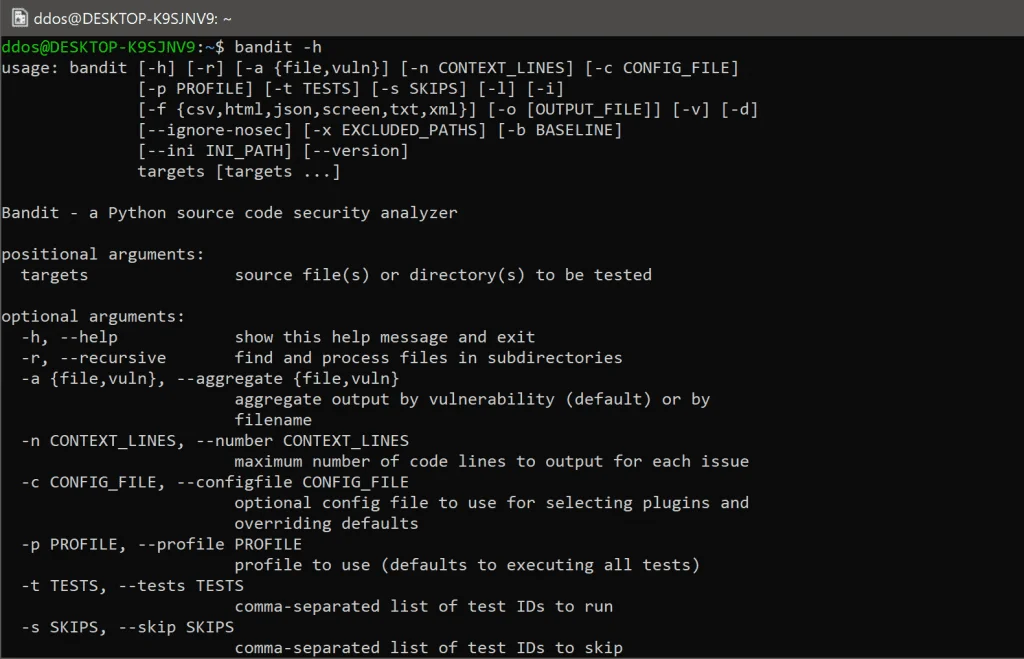
Bandit is the Python-specific SAST tool most developers reach for first. It was built by OpenStack developers to catch common Python security issues and is now maintained under the PyCQA umbrella.
What Bandit does well: 47 AST-based checks
targeting Python-specific patterns — subprocess shell injection, pickle deserialization
, hardcoded passwords, weak cryptography (MD5, SHA1, DES), use of assert for security, and insecure use of tempfile. Because it is Python-specific, it understands Python idioms that generic tools misinterpret.
Where Bandit falls short: No inter-procedural data flow analysis. It cannot trace taint from a Flask request argument through helper functions to a database query across files. It also has no support for non-Python files in the repo.
Best fit: Any Python project, especially as the first CI check. Lightweight enough to run on every commit without slowing the pipeline.
2. Semgrep#
Semgrep supports Python through a structural pattern-matching engine that understands Python syntax — not just regular expressions. The Semgrep Registry includes Python-specific rulesets covering OWASP Top 10, Flask security, Django ORM injection, Jinja2 template injection, and more.
What Semgrep does well: Custom Python rules in YAML are readable and fast to write. The community registry includes Bandit-compatible rules so you can consolidate tooling. Semgrep’s taint analysis (available in the community tier with --pro on public repos) can track user input across function calls within a file.
Where Semgrep falls short: Deep cross-file inter-procedural analysis requires Semgrep Code (the paid platform tier). The community engine is strong but stops at file boundaries for complex taint flows.
Best fit: Teams that want one SAST scanner for a multi-language codebase, or Python teams that need to write custom detection rules for proprietary frameworks.
3. Snyk Code#
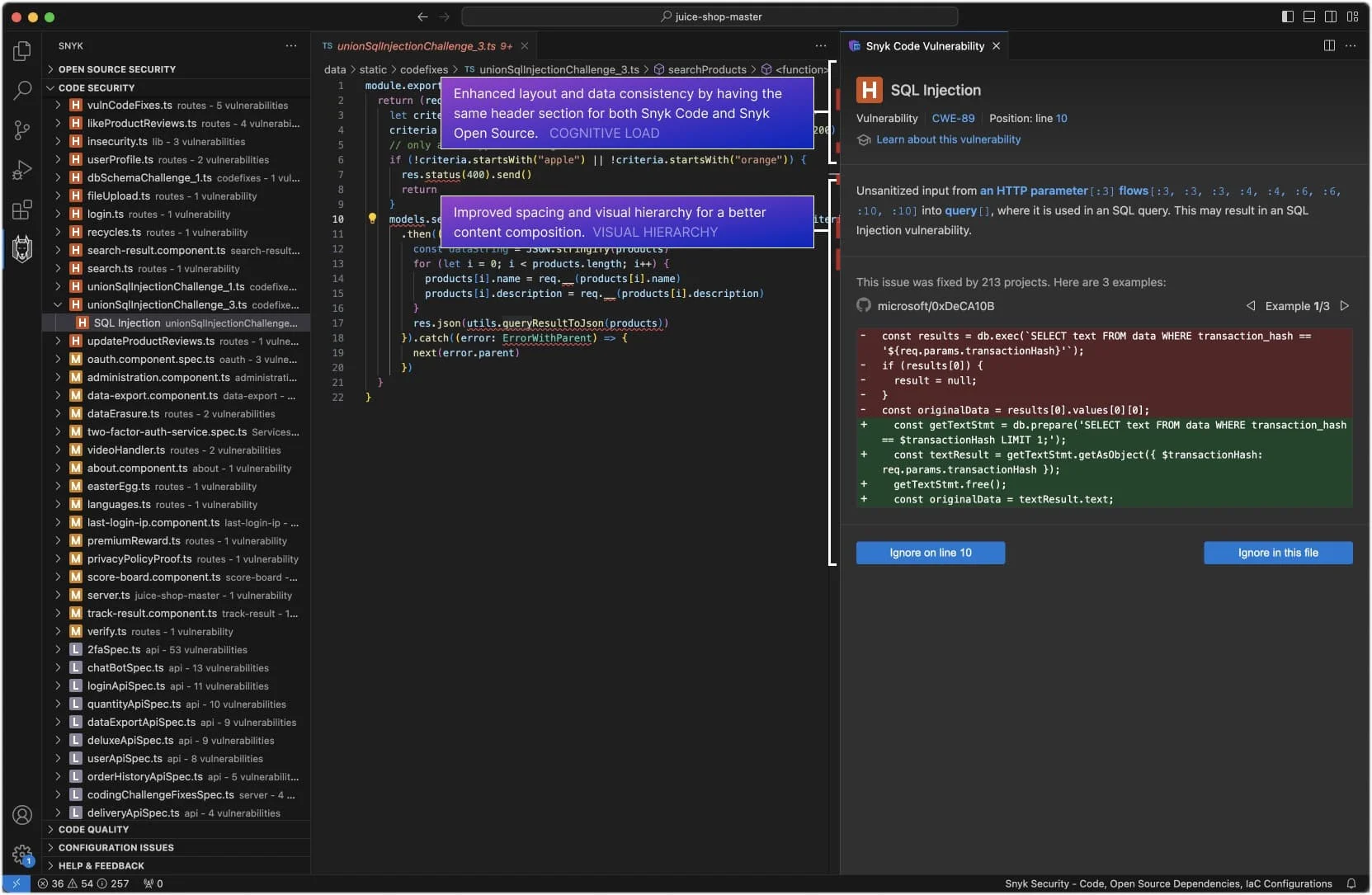
Snyk Code provides commercial-grade Python SAST with real-time feedback in the IDE. Its Python analysis engine understands Django, Flask, FastAPI, and SQLAlchemy patterns, covering taint flows that cross function and file boundaries.
What Snyk Code does well: Data flow analysis across files is the primary advantage over Bandit and Semgrep CE. Snyk Code can trace a tainted request.args.get() value through multiple helper functions to a SQL query or a subprocess.run() call. The IDE integration (VS Code, PyCharm) surfaces issues inline as you type.
Where Snyk Code falls short: The free tier is limited to the IDE. CI/CD integration with full taint analysis requires a paid plan. It is a SaaS tool — source code is sent to Snyk’s infrastructure for analysis, which matters for air-gapped or classified environments.
Best fit: Development teams that want commercial-quality Python taint analysis with an IDE-first workflow and developer-friendly fix guidance.
4. SonarQube#
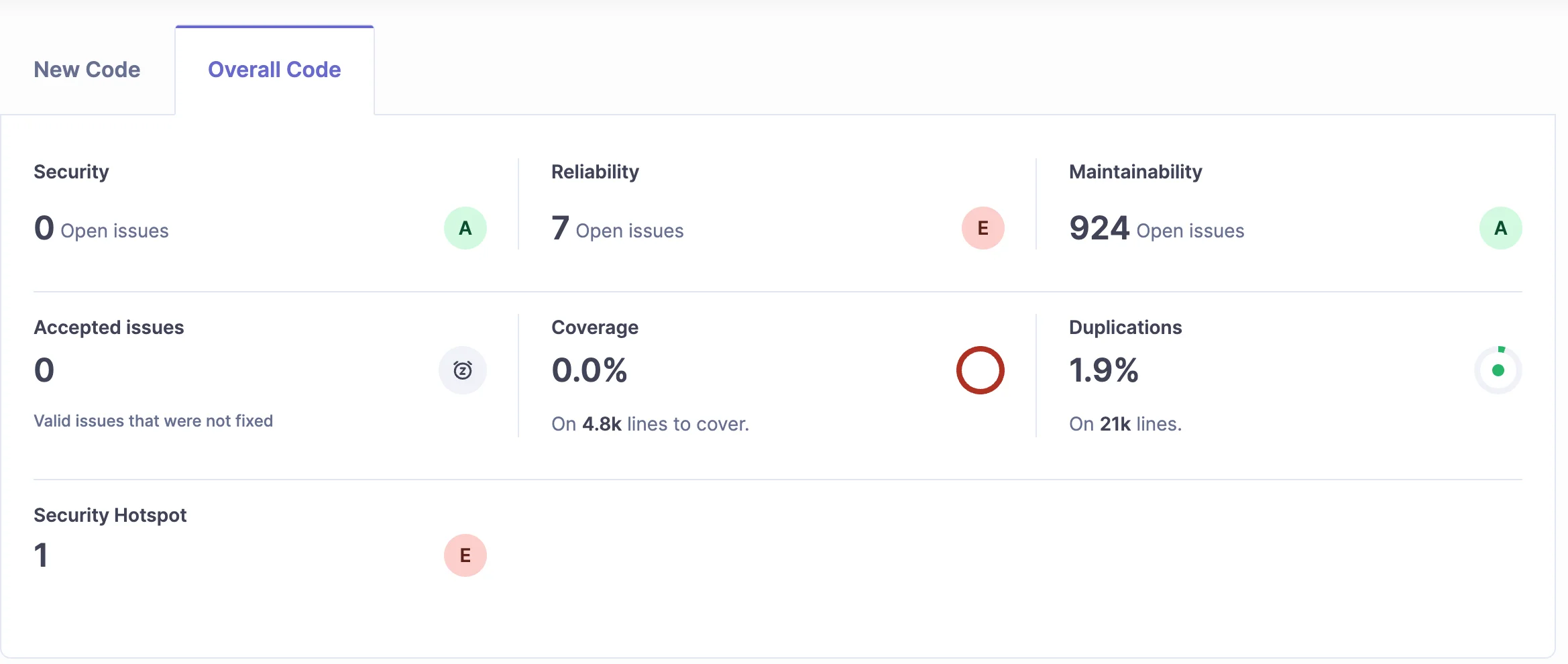
SonarQube Community Edition supports Python with a dedicated rule set covering injection, SSRF, insecure deserialization , weak cryptography, and improper error handling. It combines security rules with code quality checks (coverage, duplication, complexity) in one platform.
What SonarQube does well: The combination of security and quality in one scanner reduces tool sprawl. SonarQube’s Python support includes rules for Django, Flask, and standard library misuse. Quality gates — blocking PRs that introduce new issues — are well-implemented.
Where SonarQube falls short: Taint analysis across function boundaries requires Developer Edition or higher (commercial). Community Edition catches pattern-based issues but misses complex data flow vulnerabilities.
Best fit: Teams that already use SonarQube for code quality and want to add security coverage without a separate tool.
5. CodeQL#
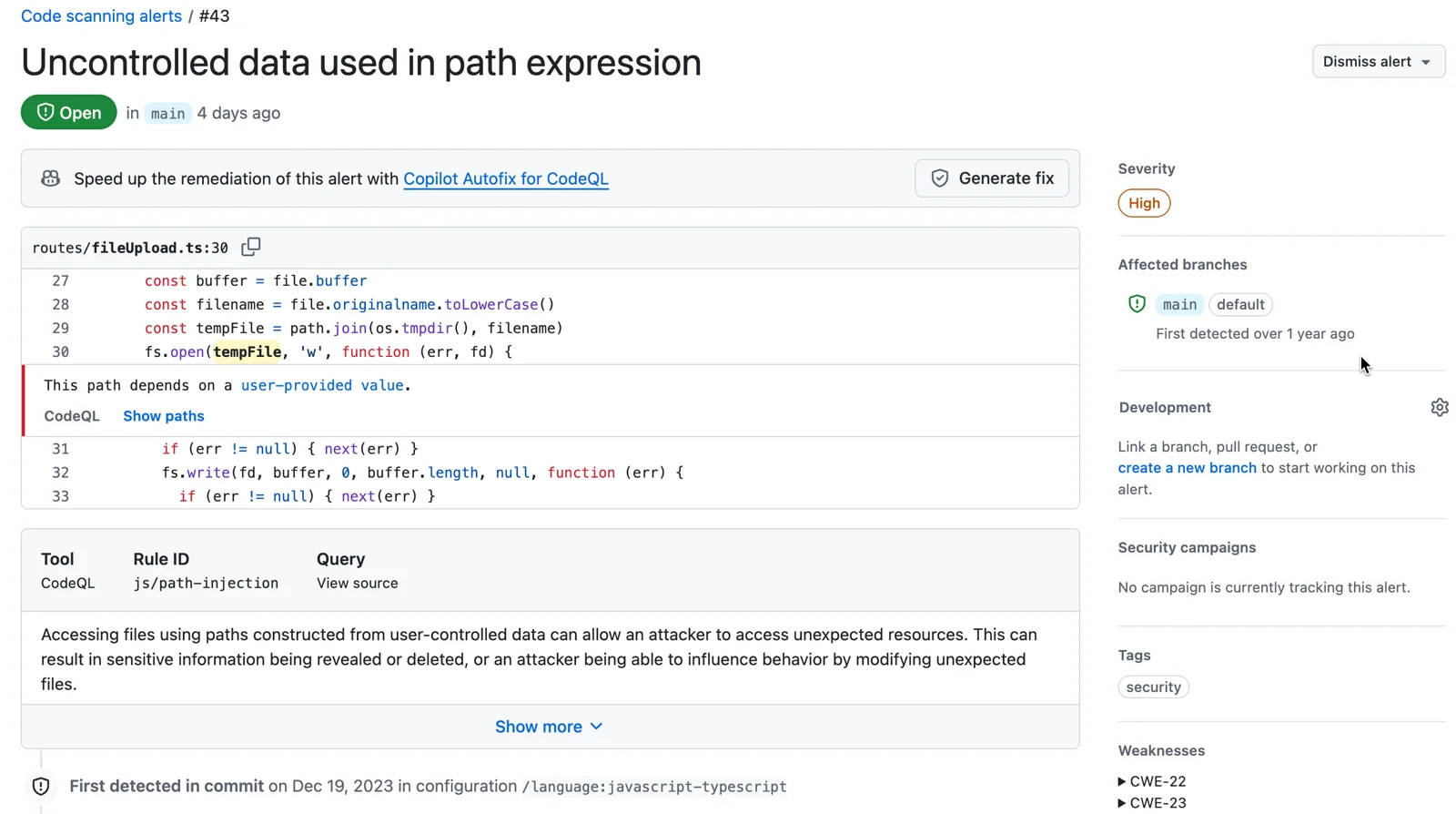
CodeQL models Python code as a queryable database and ships queries for Python taint tracking , SQL injection in Django and SQLAlchemy, SSRF, template injection, insecure deserialization, and more. The analysis follows user input across the entire codebase regardless of how many functions it passes through.
What CodeQL does well: Deep Python inter-procedural data flow analysis. CodeQL’s Python model understands Django’s ORM, Flask’s request object, and common Python framework patterns. Results are highly accurate because the engine models actual Python semantics rather than matching text patterns.
Where CodeQL falls short: Analysis runs slower than pattern-based tools. It adds 5–15 minutes to a CI pipeline for medium-sized Python projects. Setup requires understanding QL queries or using the bundled defaults, which is a steeper learning curve than running bandit ..
Best fit: Python web applications and API services where complex injection vulnerabilities in Django, Flask, or FastAPI are the primary concern, and where CI pipeline time allows for a deeper scan.
6. Pyright#
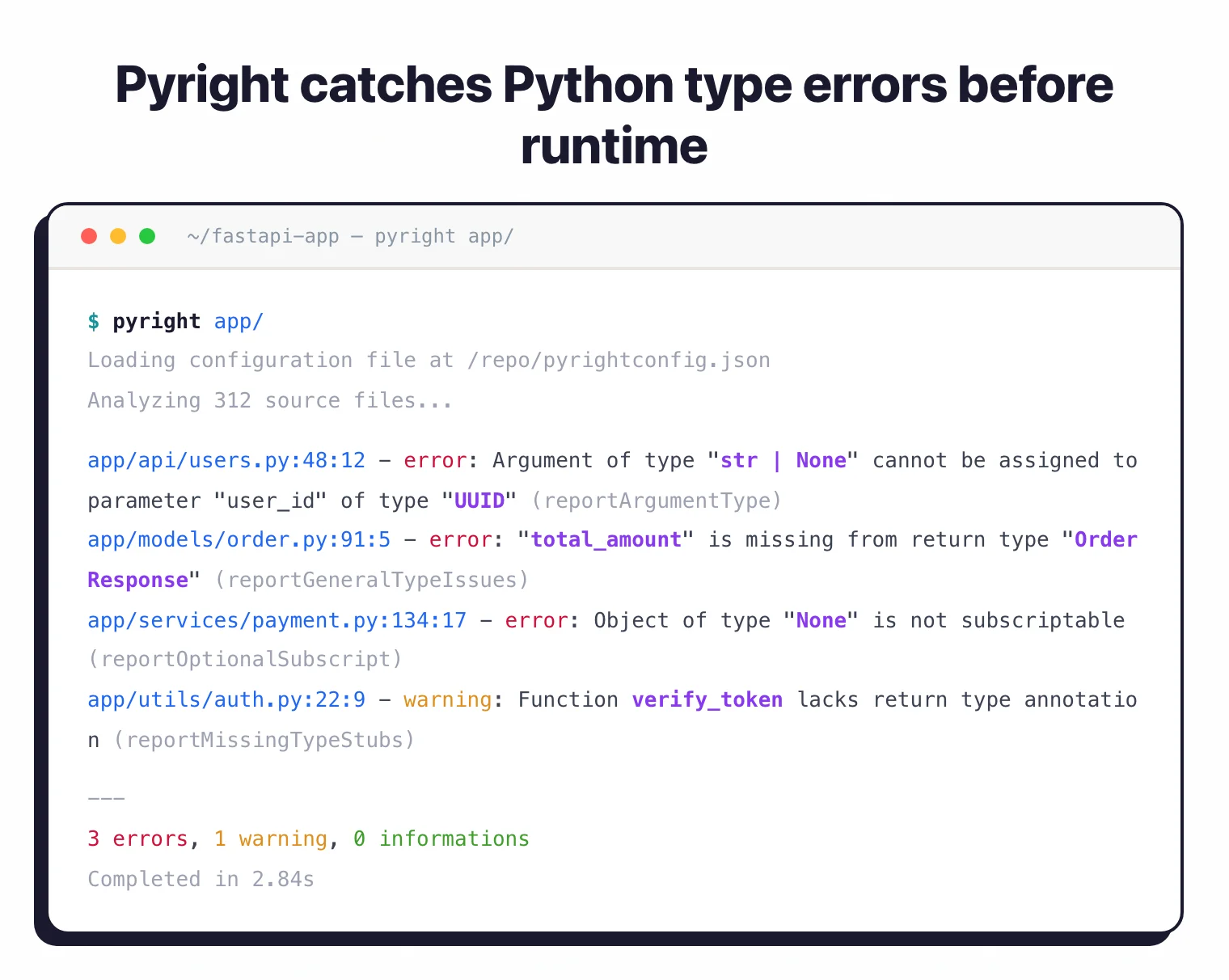
Pyright is Microsoft’s static type checker for Python. It is not a dedicated SAST tool, but it catches a category of issues that pure security scanners miss: type mismatches, missing None checks, unresolved attributes, and incorrect API usage that can lead to runtime errors or security-relevant logic bugs.
What Pyright does well: Fast, accurate type inference for Python 3.x. Pyright’s strict mode catches potential None dereferences, incorrect type narrowing, and use of deprecated or undefined attributes — all of which contribute to security-relevant behavior. It is the type layer that Bandit and Semgrep lack.
Where Pyright falls short: No security rule set. It does not detect injection, deserialization, or secrets. Its value in a SAST stack is catching the class of bugs that type errors represent, not replacing a security scanner.
Best fit: Typed Python codebases (those using mypy, pyright, or PEP 484 type annotations) where type safety overlaps with security correctness.
7. Ruff#
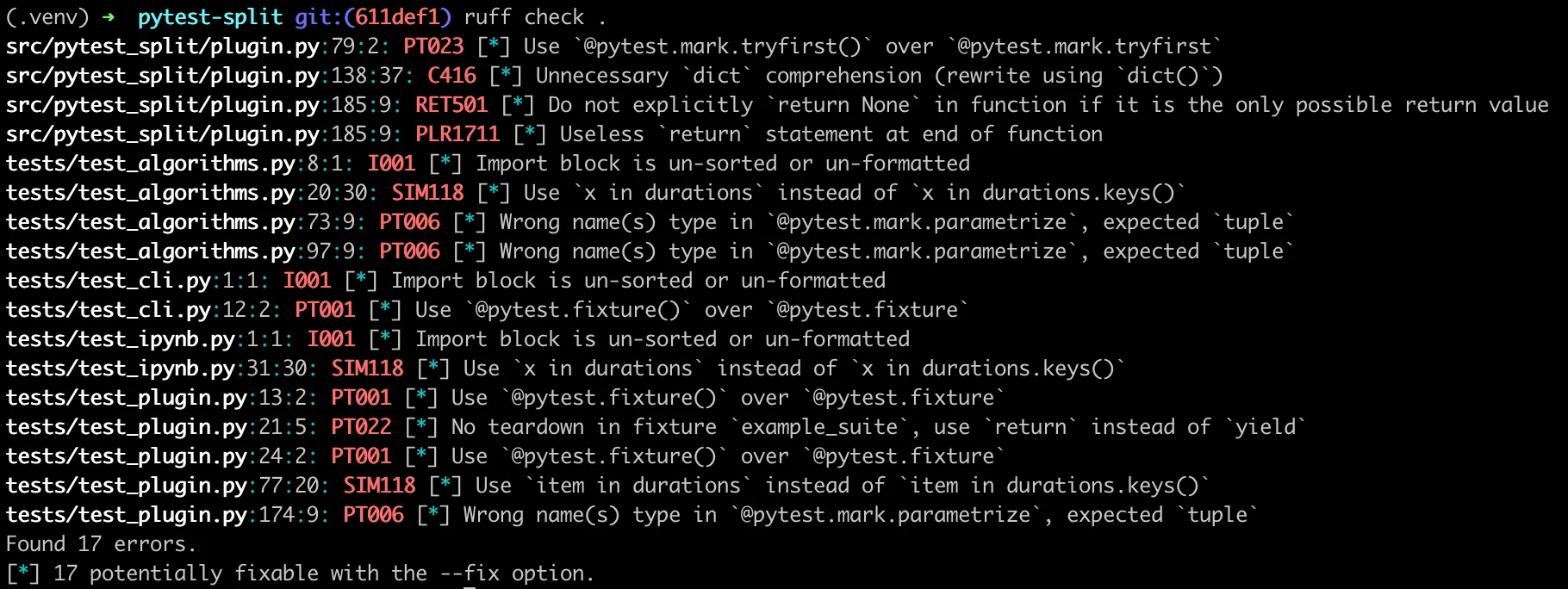
Ruff is an extremely fast Python linter written in Rust that includes a subset of Bandit’s security rules (the S rule prefix
). It is primarily a linter and code quality tool, but its Bandit-compatible checks — subprocess injection, hardcoded passwords, insecure hash functions — run in under a second on large codebases.
What Ruff does well: Speed. Ruff replaces Flake8, isort, pyupgrade, and parts of Bandit in one tool with near-instant execution. Teams that already run Ruff can enable the S rules and get basic security coverage without adding another dependency.
Where Ruff falls short: It covers a subset of Bandit’s checks — roughly 50 of Bandit’s rules as of 2026. No data flow analysis. It is not a replacement for a dedicated SAST tool.
Best fit: Python teams using Ruff as their primary linter who want basic security checks included without a separate Bandit invocation.
8. Pylint security plugins#
Pylint has an ecosystem of security-focused plugins — most notably pylint-django and dlint — that extend it with Django-specific checks and broader security rules covering insecure functions, hardcoded credentials, and unsafe imports.
What Pylint security plugins do well: If your team already runs Pylint, adding dlint (a Pylint plugin from Duo Security) adds security checks without changing the pipeline. It covers SQL injection patterns, insecure subprocess calls, and insecure deserialization.
Where Pylint security plugins fall short: Plugin quality and maintenance varies. dlint has not seen active development in recent years. Coverage is narrower than dedicated SAST tools.
Best fit: Legacy Python projects already on Pylint where changing the toolchain is not feasible.
Comparison table#
| Tool | Type | Python Depth | Taint Analysis | License | Best For |
|---|---|---|---|---|---|
| Bandit | SAST (Python-specific) | Deep AST | None | Open source | First Python security check |
| Semgrep | SAST (multi-language) | Strong patterns | Limited (single-file) | Open source / Commercial | Custom rules, multi-language |
| Snyk Code | SAST (commercial) | Deep + frameworks | Cross-file | Commercial (free IDE tier) | Developer-first taint analysis |
| SonarQube | SAST + quality | Moderate | Paid tiers only | Open source / Commercial | Quality + security combined |
| CodeQL | SAST (deep analysis) | Very deep | Cross-project | Free (public) / Commercial | Complex Django/Flask taint |
| Pyright | Type checker | Type-level | None | Open source | Typed Python codebases |
| Ruff | Linter + subset SAST | Basic (Bandit subset) | None | Open source | Speed-focused teams |
| Pylint + dlint | Linter + plugins | Limited | None | Open source | Legacy Pylint users |
How to choose for your use case#
Start-up or small team on a budget: Run Bandit and Semgrep together in CI. They are free, fast, and complementary. Add Pyright if you use type annotations. That covers the majority of Python security surface without spending anything.
Growing team with a Django or Flask web app: Bandit and Semgrep for the developer loop, CodeQL on the main branch via GitHub Actions (free for public repos, discounted for private), and SonarQube CE as a quality gate. This gives you deep data flow analysis on the critical path without a commercial tool.
Enterprise or compliance-driven team: Snyk Code or SonarQube Developer Edition adds commercial-grade taint analysis with IDE integration, audit trails, and RBAC. If your Python code handles sensitive data, inter-procedural taint analysis is not optional — it catches the SQL injection and SSRF patterns that pattern-based tools miss. See the enterprise SAST tools guide for the broader landscape.
ML or data pipeline team: Bandit plus Semgrep cover most issues. Focus on pickle deserialization rules (Bandit B301-B303) and any S3 or cloud SDK usage patterns in your Semgrep configuration.
Monorepo with Python + JavaScript: Semgrep is the natural anchor — it handles both in one scanner. Add Bandit for Python-specific depth.
Open source vs commercial#
The free Python SAST stack — Bandit, Semgrep CE, CodeQL (public repos) — covers the pattern-matching tier well. The gap versus commercial tools is primarily in cross-file taint analysis and in the quality of results for framework-specific Python code.
Snyk Code
and SonarQube
Developer Edition both perform inter-procedural taint analysis that follows user input through multiple function calls and files. For Flask and Django applications processing untrusted input, this matters: a tainted request.args value passing through three helper functions before reaching a database call will likely be missed by Bandit but caught by Snyk Code.
CodeQL bridges the gap for teams that need deep analysis without a commercial license — but it is free only for public repositories via GitHub Advanced Security. Private repos require a GitHub Enterprise license.
For a more detailed look at the free and open-source options, see the open source SAST tools guide . For buying considerations around commercial tools, see SAST vs SCA: which do you need first .