
- OX Security's Pipeline Bill of Materials (PBOM) maps every component from code to cloud for supply chain integrity; Apiiro's Risk Graph correlates code changes with developer behavior and business context.
- OX Security integrates with 100+ security scanners and claims up to 95% alert noise reduction through exploitability and reachability analysis.
- Apiiro embeds risk-based guardrails in pull requests and tracks developer expertise to flag when junior developers modify sensitive crown-jewel code.
- Both are enterprise-priced with per-developer licensing and require annual contracts with minimum seat commitments.
- OX aligns with SLSA and NIST SSDF compliance frameworks; Apiiro covers SOC 2, PCI DSS, and HIPAA with contextual risk governance.
Which Is Better: OX Security or Apiiro?
OX Security is an ASPM platform focused on pipeline security and AppSec orchestration. Apiiro is a risk-based ASPM tool that uses code analysis to prioritize security issues.
OX Security and Apiiro are both leading ASPM platforms recognized by Gartner and IDC, but they solve the application security problem from different starting points.
OX Security built its platform around software supply chain protection, using its proprietary Pipeline Bill of Materials (PBOM) to map every component, dependency, and build step from code to cloud.
Apiiro built its platform around contextual risk analysis, using a Risk Graph that connects code changes, developer behavior, and runtime signals to surface the risks that actually matter.
For organizations where supply chain integrity and CI/CD pipeline security are the primary concern — particularly those in regulated industries or those responding to requirements like SLSA and SSDF — OX Security provides purpose-built capabilities. For organizations drowning in security findings that need intelligent prioritization based on business context, developer risk profiles, and actual exploitability, Apiiro’s Risk Graph delivers the signal-to-noise improvement that security teams need.
Both platforms consolidate findings from dozens of security tools into a single view. The question is which lens you want to look through: supply chain integrity or contextual risk.
What Are the Key Differences?
| Feature | OX Security | Apiiro |
|---|---|---|
| License | Commercial | Commercial |
| Pricing | Per developer (custom quote) | Per developer/month (annual, minimum seat commitment) |
| Core ASPM | Yes | Yes |
| Supply Chain Security | PBOM + OSC&R framework | Code-level dependency analysis |
| Risk Prioritization | Exploitability and reachability analysis | Risk Graph with code + runtime context |
| CI/CD Pipeline Security | Native pipeline scanning and protection | Policy enforcement in PRs and CI/CD |
| Code Analysis | Integrated scanning | Deep Code Analysis (DCA) with material change detection |
| Developer Risk Profiling | Limited | Yes (developer behavior and expertise tracking) |
| Tool Aggregation | 100+ scanner integrations | Broad SCM, SAST, SCA, DAST integrations |
| SBOM Generation | Yes (PBOM) | Yes |
| Policy Engine | Automated policy enforcement | Risk-based policies with automated workflows |
| Compliance Frameworks | SOC 2, PCI DSS, NIST SSDF, SLSA | SOC 2, PCI DSS, HIPAA |
| Runtime Context | Code-to-runtime visibility | Runtime signals feed Risk Graph |
| AI Capabilities | VibeSec engine for real-time security | AI-driven risk assessment |
| Remediation | Automated fix suggestions and workflows | Automated workflows triggered from Risk Graph |
| Alert Reduction | Claims up to 95% noise reduction | Contextual deduplication and prioritization |
| Deployment | SaaS | SaaS (API-based SCM integration) |
| Gartner Recognition | Recognized in ASPM market | Ranked in 2025 Gartner Critical Capabilities for AST |
| IDC Recognition | Listed in ASPM evaluations | Leader in 2025 IDC MarketScape for ASPM |
| Founded | 2021 (Tel Aviv) | 2020 (Tel Aviv) |
OX Security vs Apiiro: How Do They Compare?
Supply Chain and Pipeline Security
OX Security was built with software supply chain security as a founding principle.
The Pipeline Bill of Materials (PBOM) maps every stage of your software delivery pipeline — source code, dependencies, build tools, CI/CD configurations, artifact registries, and deployment targets.
Combined with the OSC&R (Open Software Supply Chain Attack Reference) framework, OX provides a structured approach to identifying supply chain attack vectors and verifying the integrity of your build process.
Apiiro addresses supply chain risks through its code analysis and dependency tracking capabilities, but it does not have a dedicated supply chain framework on the level of OX’s PBOM.
Apiiro tracks third-party components and their risks as part of its broader risk model, and it detects changes to dependencies through its material change detection engine.
However, for organizations specifically concerned about build pipeline tampering, artifact integrity, or compliance with frameworks like SLSA and NIST SSDF, OX provides more targeted coverage.
If supply chain security is a board-level concern or a regulatory requirement, OX Security has the deeper toolkit.
Risk Analysis and Prioritization
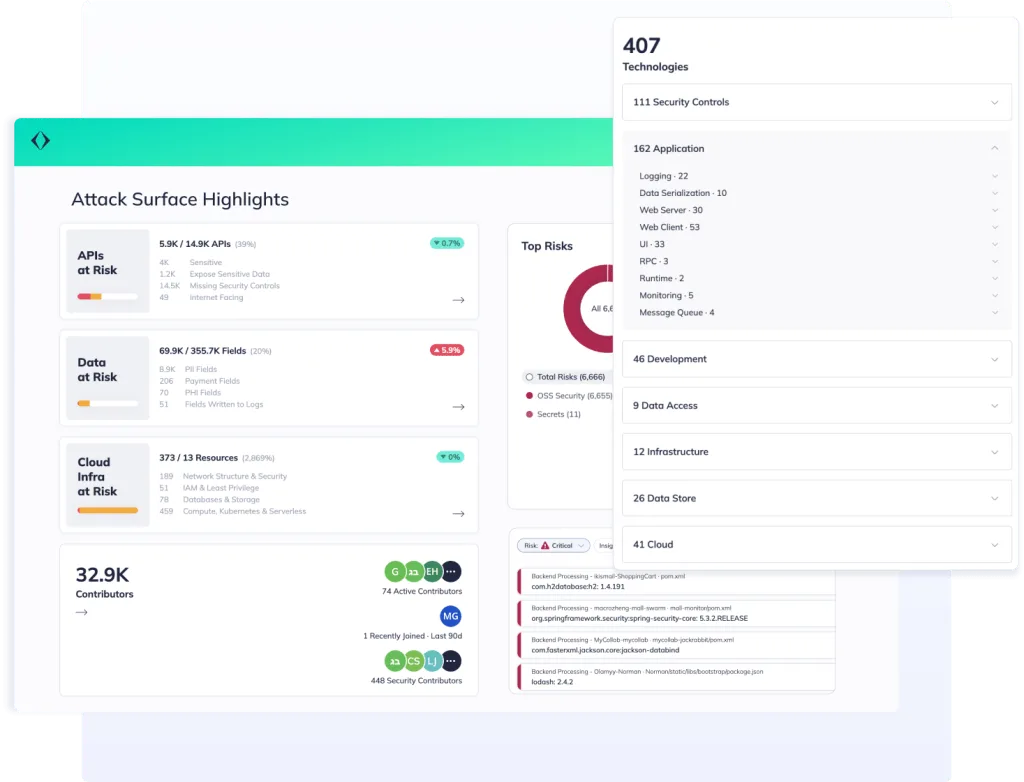
Apiiro’s core strength is the Risk Graph — a multi-dimensional model that connects code, developers, infrastructure, and security findings to calculate risk based on actual business impact. The system considers factors like whether a vulnerability is in a crown-jewel application, whether the code was written by a junior developer working in an unfamiliar part of the codebase, and whether the affected component is reachable from the internet at runtime.
This contextual approach means Apiiro can tell you not just that you have a critical CVE, but that this specific instance matters because it is in a payment-processing service, the code was recently changed, and the component is exposed to the internet. That context dramatically changes how security teams prioritize their backlog.
OX Security also provides risk prioritization through exploitability and reachability analysis, aiming to reduce alert noise by up to 95 percent.
OX’s approach focuses on whether a vulnerability is actually exploitable in your specific environment and whether there is a viable attack path from an attacker’s entry point to the vulnerable component.
Both approaches are effective, but Apiiro’s developer-behavior and business-context dimensions add layers that OX does not currently match.
Developer Experience and Workflow Integration
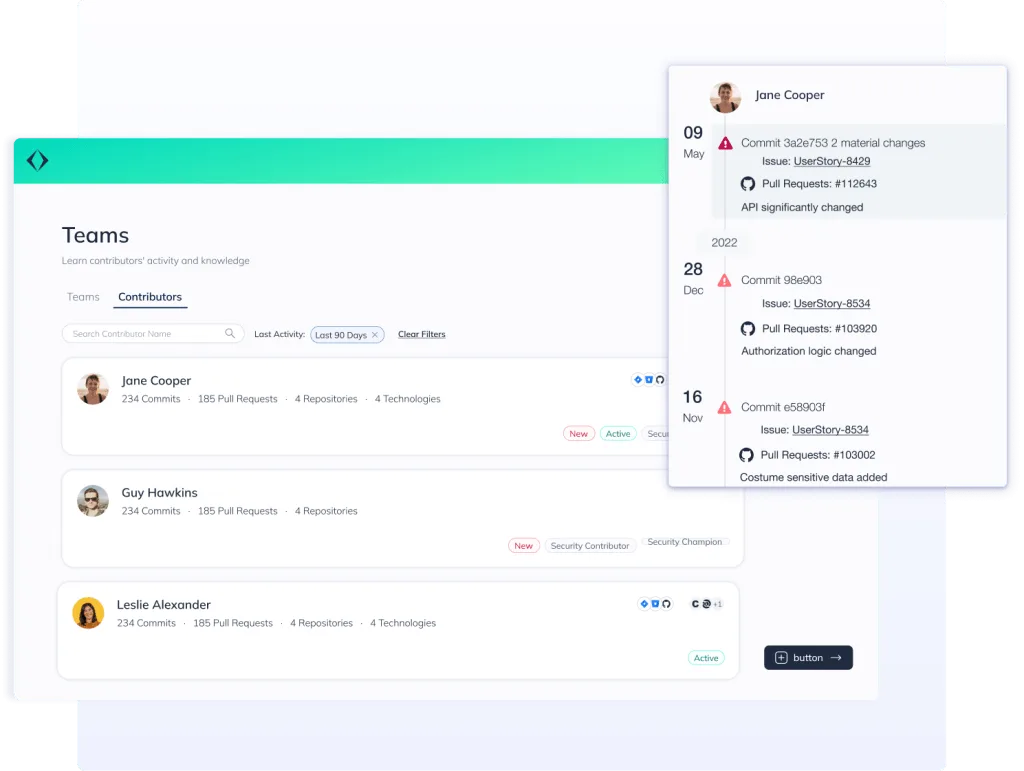
Apiiro integrates directly with source control managers, creating risk-based guardrails in pull requests.
When a developer opens a PR that introduces a material risk — changing authentication logic, adding a new dependency, or modifying code in a sensitive service — Apiiro flags it for additional review or triggers automated scans.
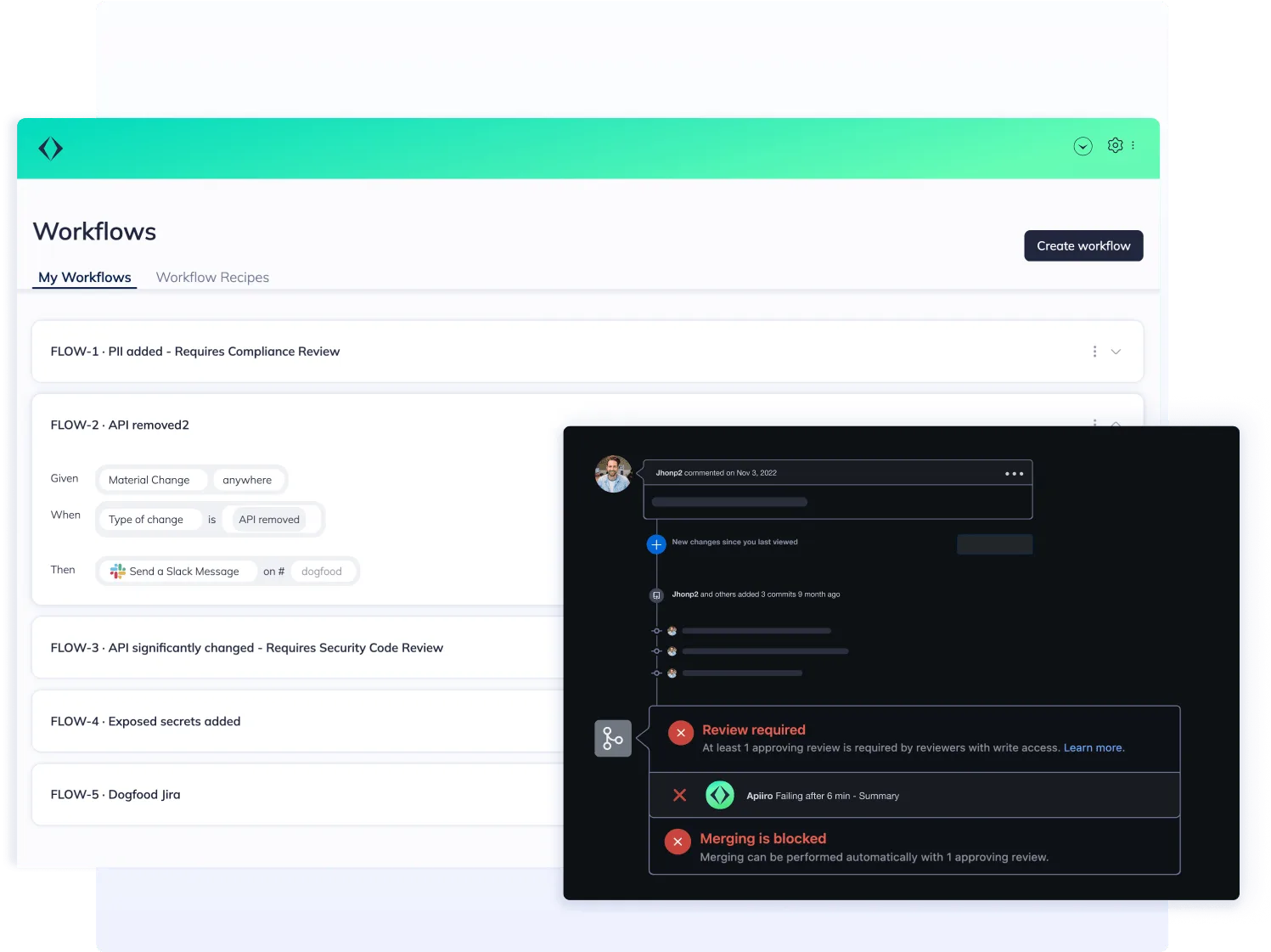
This PR-level integration makes security visible at the point where developers make decisions.
OX Security’s VibeSec engine, introduced in 2026, brings real-time security awareness into every stage of development, including AI-generated code. OX integrates with CI/CD pipelines to enforce security policies during build and deployment, blocking releases that violate configured thresholds.
The distinction matters: Apiiro operates at the code change level (the PR), while OX operates at the pipeline and build level. Teams wanting feedback before code is merged lean toward Apiiro.
Teams wanting enforcement at the deployment gate lean toward OX.
Compliance, Governance, and Tool Consolidation
OX Security’s supply chain focus aligns with SLSA, NIST SSDF, and software integrity requirements. The PBOM provides auditable evidence of every component and how it was built.
Apiiro provides compliance coverage around application risk governance, tracking sensitive data flows and automating evidence collection for SOC 2 and PCI DSS.
Both platforms aggregate findings from dozens of security tools — OX integrates with over 100 scanners, and Apiiro connects to major SAST, SCA, DAST, and cloud security tools.
The consolidation value lies in making that output actionable through correlation, deduplication, and prioritization. The difference is the lens: OX prioritizes through supply chain exploitability, Apiiro through business context and developer risk.
When Should You Choose OX Security vs Apiiro?
Choose OX Security if:
- Software supply chain security is your primary ASPM concern
- You need PBOM and SBOM generation for compliance and audit requirements
- Pipeline integrity verification and build security are critical
- Your organization must comply with SLSA, NIST SSDF, or similar frameworks
- You want to consolidate 100+ security tool findings into a single platform
- Reducing alert noise through exploitability and reachability analysis is a priority
Choose Apiiro if:
- Contextual risk prioritization based on business impact is your top need
- You want risk-based guardrails embedded directly in pull requests
- Developer behavior and expertise tracking adds value to your risk model
- You need to identify when junior developers change sensitive, crown-jewel code
- Material change detection for triggering targeted security reviews is important
- Your security team needs to explain risk to stakeholders in business terms
For more ASPM comparisons, see AppSec Santa’s ASPM tools category.
Frequently Asked Questions
Is OX Security better than Apiiro?
How much do OX Security and Apiiro cost?
Can I use both OX Security and Apiiro?
Which tool is better for software supply chain security?
Which ASPM tool integrates with more security scanners?

+7 Years in AppSec
10+ years in application security. Reviews and compares 208 AppSec tools across 11 categories to help teams pick the right solution. More about me →