
Mend Alternatives
Considering switching from Mend? Compare top competitors including Snyk, Black Duck, Dependabot, Socket, FOSSA, and Endor Labs.


- Mend's reachability analysis currently supports only Java and JavaScript; Endor Labs leads with function-level reachability across 7 languages (Java, Python, Go, Rust, Kotlin, Scala, C#).
- Snyk detects CVEs an average of 47 days before competing databases and offers a free tier with 200 open-source tests/month; Mend has no free tier.
- Socket analyzes package behavior to catch malicious packages and typosquats before CVEs exist, protecting 8,500+ organizations and 750,000+ GitHub repos.
- Black Duck covers 2,750+ unique open-source licenses with multi-factor detection including binary and snippet analysis, making it the industry standard for license compliance.
- Mend bundles SCA, SAST, container scanning, and AI security under a single per-developer price, while Snyk charges separately for each product.
The best Mend alternatives in 2026 are Snyk, Endor Labs, Socket, Semgrep Supply Chain, Black Duck, FOSSA, Renovate, Dependabot, Grype, and OWASP Dependency-Check.
Why Look for Mend Alternatives?
Mend (formerly WhiteSource) has been a fixture in the SCA market for over a decade. The platform provides end-to-end open-source risk management with vulnerability detection, license compliance, automated remediation, and a unified developer experience.
Its reachability analysis helps teams cut through alert noise by identifying which vulnerabilities actually affect running code paths.
And since rebranding to Mend, the company has expanded into SAST, container security, and AI security under a single per-developer pricing model.
So why would teams look elsewhere? The most common friction point is pricing opacity.
Mend does not publish fixed pricing tiers, and the per-developer model can scale unpredictably for organizations with large contributor bases.
Teams that only need SCA may find themselves paying for bundled capabilities they do not use. Smaller companies and startups sometimes find the cost hard to justify when free alternatives cover their baseline needs.
Beyond pricing, Mend’s reachability analysis currently supports only Java and JavaScript for GitHub repositories. Teams working primarily in Python, Go, or Rust will not get the noise reduction that is Mend’s signature advantage.
The platform’s interface, while functional, does not match the developer polish of newer competitors like Snyk or Socket.
And organizations that prefer fully open-source toolchains may want more transparency in how vulnerabilities are detected and scored than a commercial platform provides.
Top Mend Alternatives
1. Snyk Open Source
Snyk Open Source is the most widely adopted developer-focused SCA tool, used by over 2.5 million developers.
It scans dependencies across npm, Maven, pip, NuGet, Go modules, and dozens of other ecosystems, surfacing known vulnerabilities from Snyk’s proprietary database.
That database catches CVEs an average of 47 days before they appear in public sources like NVD.
Snyk’s automated fix pull requests are one of the most useful features in any SCA tool, generating version bumps and patch suggestions directly in your repository workflow.
Where Snyk differs from Mend is developer experience. The IDE plugins for VS Code, JetBrains, and Eclipse scan in real time, showing vulnerability information as developers add dependencies.
The CLI integrates cleanly with any CI/CD pipeline. Snyk is a Gartner Leader in application security testing and covers SCA, SAST, container scanning, and IaC scanning across separate products.
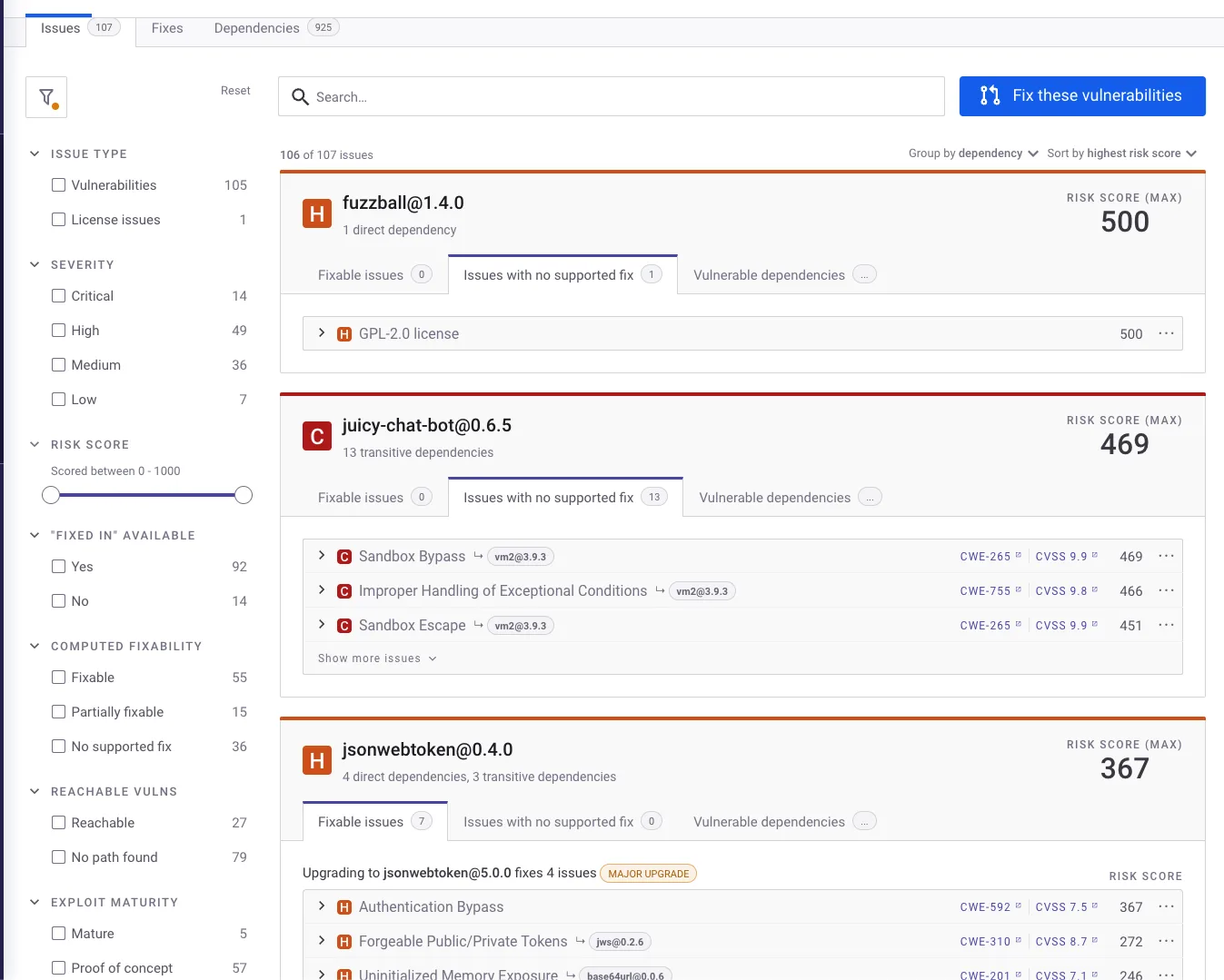
The trade-off is cost at scale. Each Snyk product is priced separately, so a team needing SCA plus SAST plus containers may pay more than Mend’s bundled approach.
Snyk’s reachability analysis is limited to Java and JavaScript, similar to Mend.
The free tier caps at 200 tests per month, which works for small teams but not for organizations scanning hundreds of repositories.
Best for: Developer teams wanting polished IDE integration and automated fix pull requests with a strong vulnerability database. License: Commercial (free tier available) Key difference: Proprietary vulnerability database with earlier CVE detection. Best-in-class developer experience across IDE, CLI, and PR workflows.
2. Endor Labs
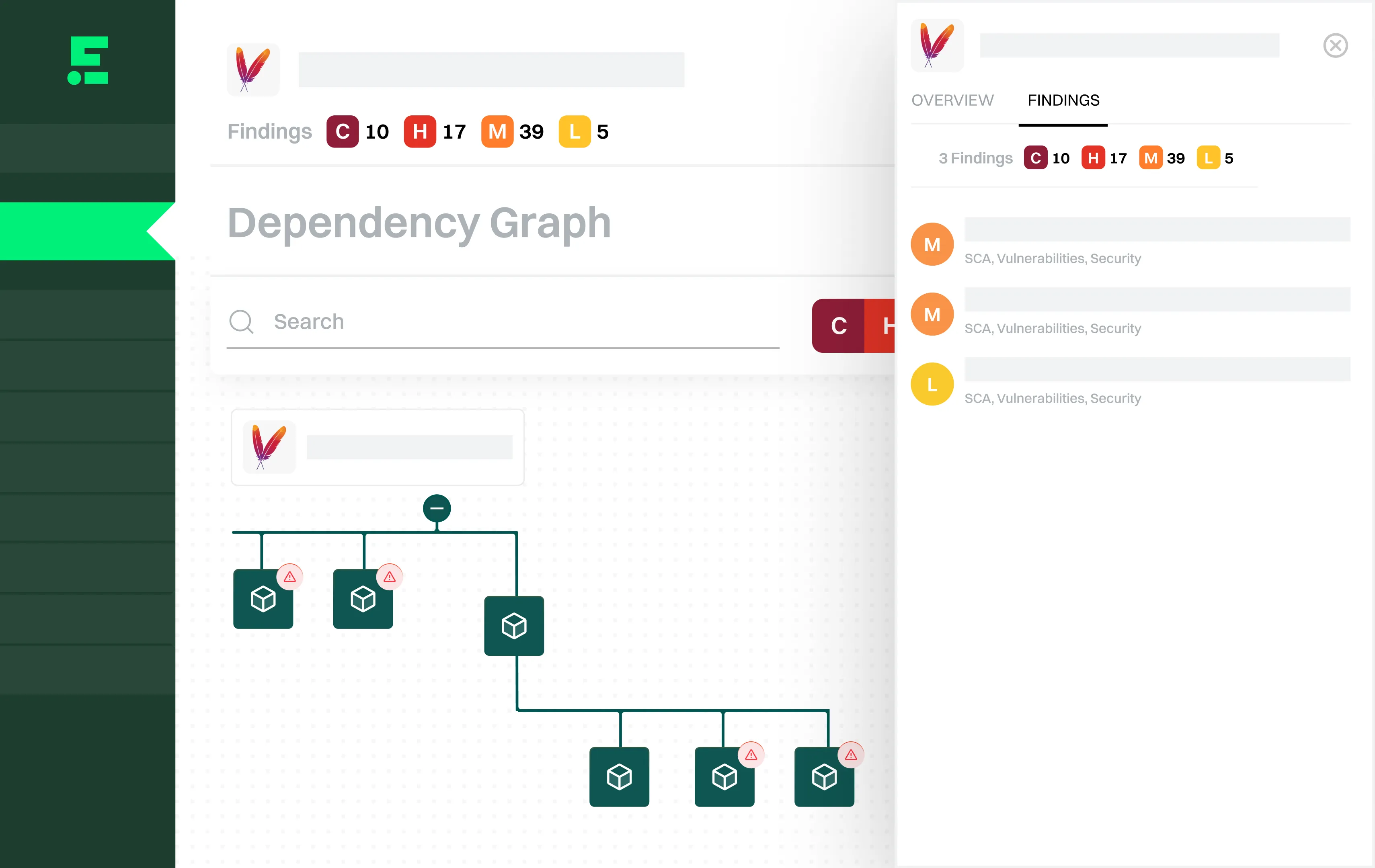
Endor Labs takes a fundamentally different approach to SCA by building a unified dependency graph that maps your code, its dependencies, and container images at the function level.
Its reachability analysis determines which vulnerabilities actually affect your application by tracing whether vulnerable functions are called in your code paths.
Their research shows that fewer than 9.5% of all vulnerabilities across seven major languages are actually reachable, which means teams can cut remediation work by over 90%.
Beyond reachability, Endor Labs offers Upgrade Impact Analysis that shows exactly what would break if you updated a dependency, and Endor Patches that let you apply security fixes without performing a full version upgrade.
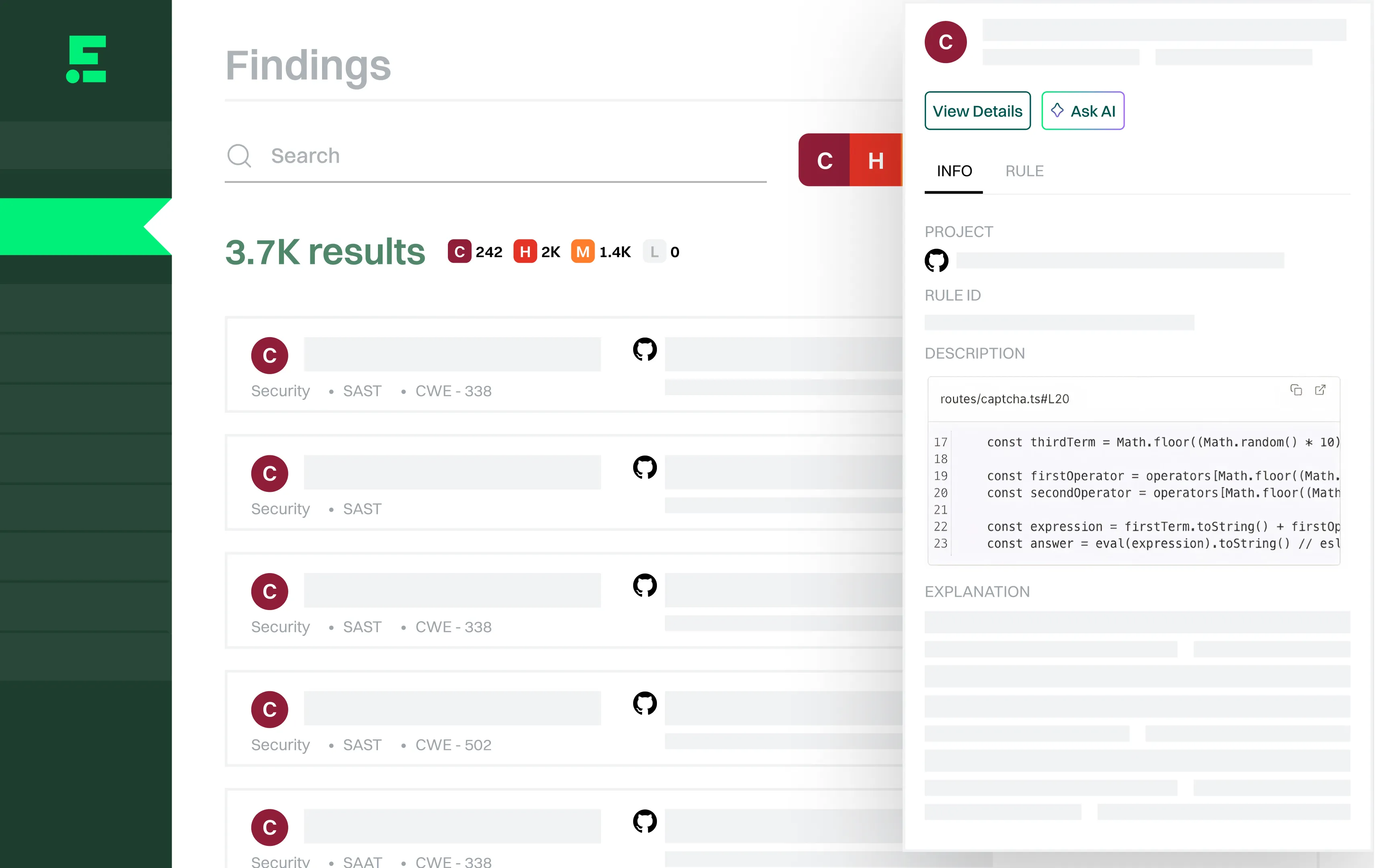
The platform also covers SAST, secrets detection, CI/CD security, and container scanning. AI-driven analysis can process thousands of pull requests to surface the handful with real security implications.
Endor Labs is a newer entrant compared to Mend, so its ecosystem integrations are still maturing. The platform is commercial with no free tier or open-source component.
But for teams drowning in SCA alert noise, the reachability analysis is the most advanced available.
Best for: Teams that need aggressive noise reduction through function-level reachability analysis across multiple languages. License: Commercial Key difference: Function-level reachability across Java, Python, Go, Rust, Kotlin, Scala, and C#. Upgrade Impact Analysis shows the blast radius before you bump a version.
3. Socket
Socket approaches supply chain security from a behavior-first perspective rather than a CVE-first one.
Instead of waiting for a vulnerability to be disclosed and assigned a CVE, Socket analyzes the actual behavior of every package version: what network calls it makes, what files it accesses, whether it runs install scripts, and whether code is obfuscated.
This catches malicious packages, typosquats, and supply chain attacks that traditional SCA tools miss entirely because no CVE exists yet.
The platform tracks over 70 risk signals across npm, PyPI, Go, and other ecosystems. The Socket Firewall sits in front of package managers to block malicious dependencies at install time.
After acquiring Coana in April 2025, Socket added reachability analysis that filters out CVE noise by up to 80%. The tool currently protects 8,500+ organizations and 750,000+ GitHub repositories.
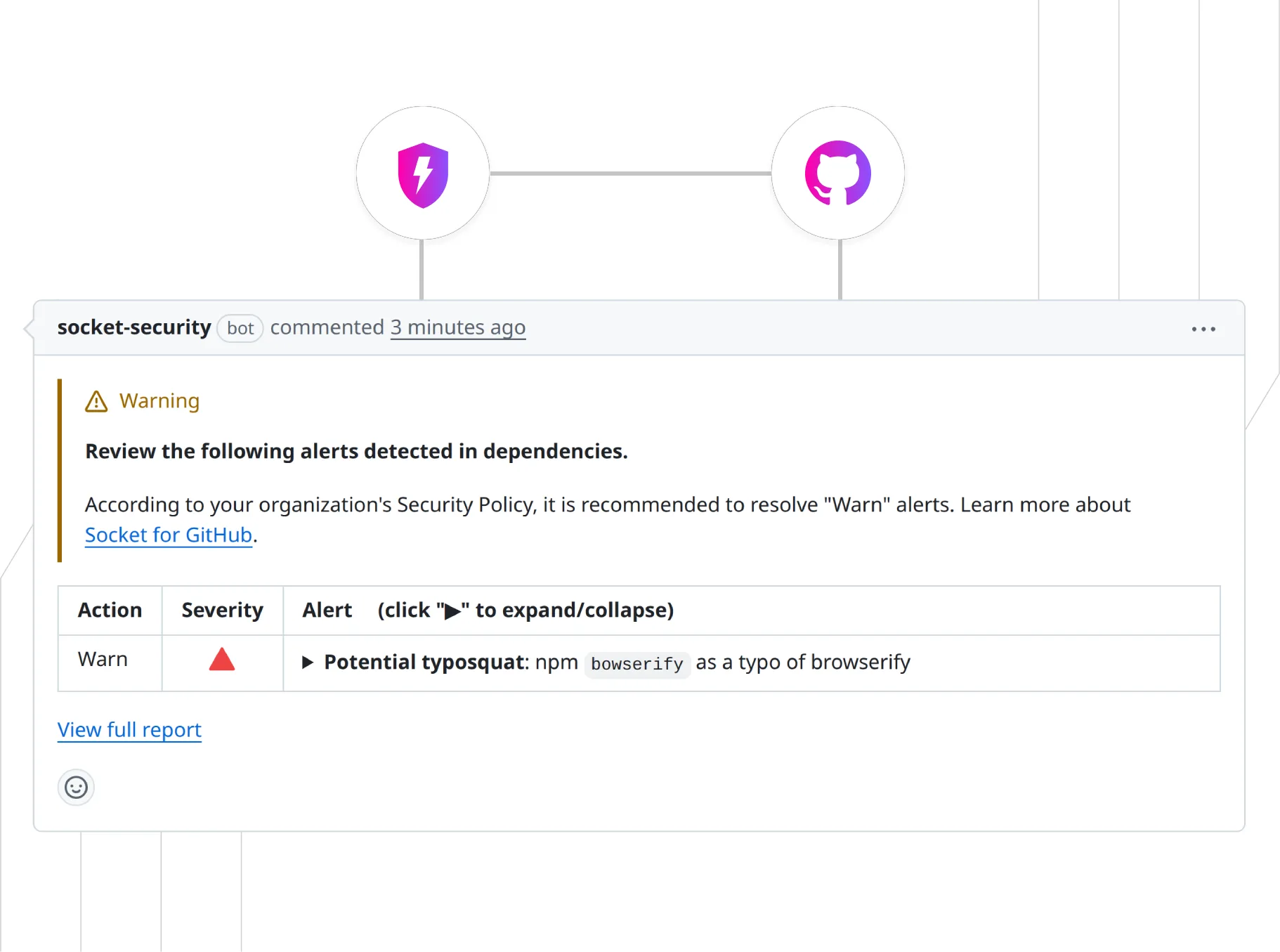
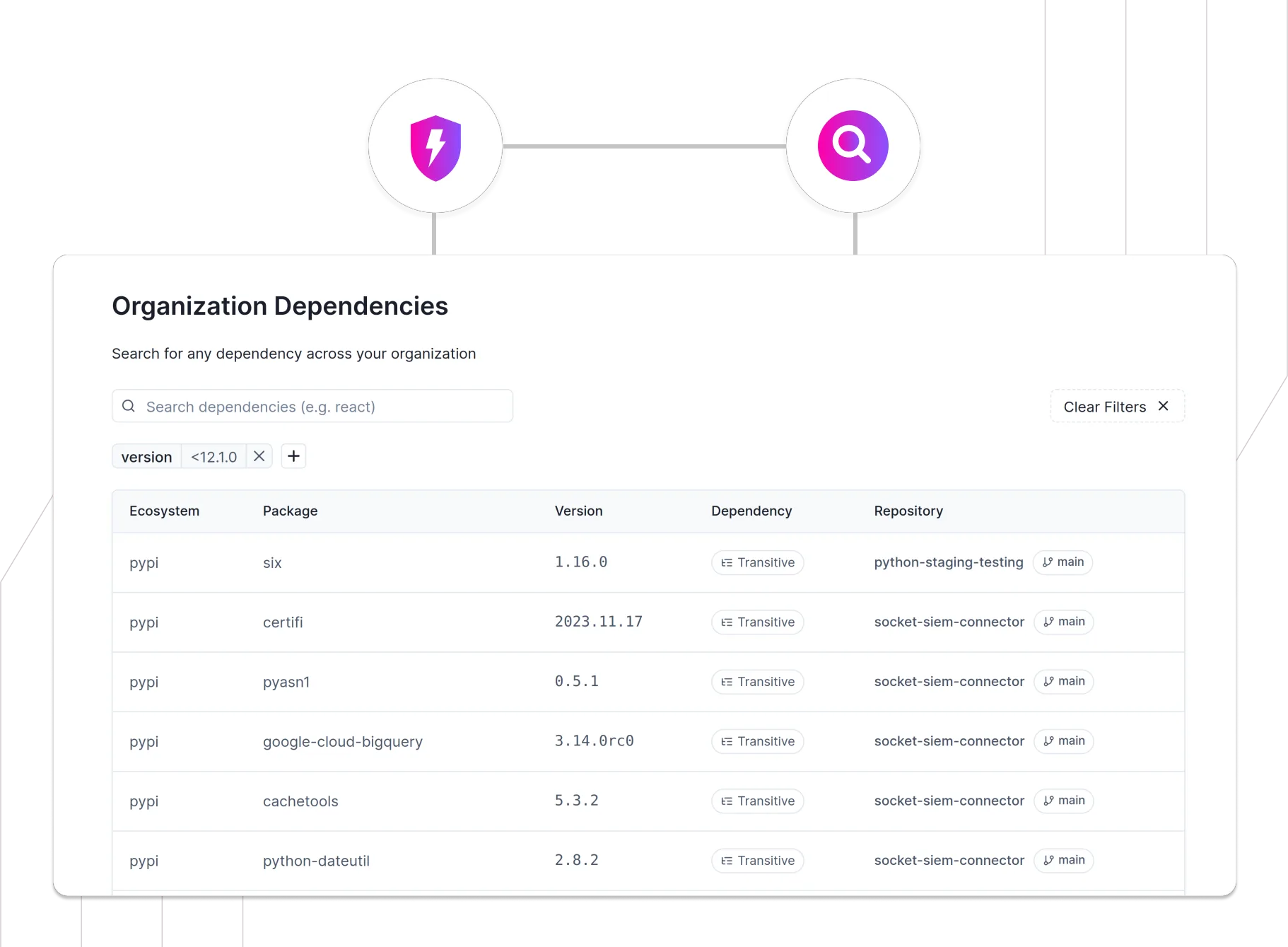
Compared to Mend, Socket offers a different threat model. Mend excels at known vulnerability management and license compliance.
Socket excels at catching threats that have no CVE yet. Teams serious about supply chain security often run both types of tools. Socket’s free tier covers public repositories.
Best for: Teams concerned about malicious packages and supply chain attacks beyond known CVEs. License: Commercial (free tier available) Key difference: Behavior-first analysis detects malicious packages, typosquats, and supply chain attacks before CVEs are assigned. Socket Firewall blocks threats at install time.
4. Black Duck
Black Duck (formerly Synopsys SCA, now under the Software Integrity Group) is the industry standard for open-source license compliance and SBOM management.
It uses multi-factor detection combining package manager analysis, binary analysis, source code scanning, and snippet matching to find open-source components even when they are copied into your codebase without a package manager.
This is critical for organizations in regulated industries that need complete visibility into their software bill of materials.
Black Duck’s vulnerability database, the Black Duck Security Advisories (BDSAs), provides enhanced vulnerability intelligence beyond what NVD offers. The KnowledgeBase covers over 2,750 unique open-source licenses, making it the most comprehensive license compliance solution available.
The platform integrates with CI/CD pipelines, IDEs, and SCM systems.
The platform is enterprise-focused with corresponding pricing and complexity. Setup and configuration require more effort than Mend.
Black Duck is stronger on compliance and governance, while Mend edges ahead on developer workflows and reachability analysis.
Best for: Enterprise teams with strict license compliance requirements and need for comprehensive SBOM generation. License: Commercial Key difference: Multi-factor open-source detection including binary and snippet analysis. Industry-leading license compliance across 2,750+ licenses.
5. FOSSA
FOSSA focuses on open-source license compliance and vulnerability management with both free and commercial tiers.
The free tier is one of the most generous in the SCA market, covering unlimited public and private repositories with basic vulnerability scanning and license detection.
FOSSA’s compliance engine supports SPDX, CycloneDX, and custom license policies, making it a strong choice for teams that need to ship SBOMs to customers or regulators.
FOSSA integrates with 20+ package managers and build systems. The commercial tier adds deeper vulnerability intelligence, custom policies, and priority support.
Compared to Mend, FOSSA is narrower in scope but deeper on license compliance. It does not offer reachability analysis or malicious package detection.
Best for: Teams that need license compliance and SBOM generation with a generous free tier. License: Commercial (free tier available) Key difference: Strong free tier for license compliance. Deep SPDX and CycloneDX support for regulated industries.
6. Dependabot
Dependabot, built into GitHub, provides free dependency updates and vulnerability alerts for repositories hosted on the platform.
It monitors your dependency manifests and lock files, then opens pull requests when newer versions or security patches are available.
The tool supports over 20 ecosystems including npm, Maven, pip, Bundler, Go modules, and Cargo.
Dependabot’s strength is zero-cost integration for GitHub users. There is no separate tool to configure, no separate dashboard to monitor, and no additional vendor relationship to manage.
Alerts appear directly in the Security tab and as PR notifications. The limitation is scope: Dependabot only works on GitHub, offers no reachability analysis, no license compliance, no malicious package detection, and no priority scoring beyond CVSS.
Best for: GitHub-native teams that want free, zero-configuration dependency updates and vulnerability alerts. License: Free (GitHub-only) Key difference: Built into GitHub with zero setup. Automated version bump PRs for 20+ ecosystems at no cost.
7. OWASP Dependency-Check
OWASP Dependency-Check is a free, open-source SCA tool that identifies known vulnerabilities in project dependencies by matching them against the NVD database.
It supports Java, .NET, JavaScript, Ruby, and Python, and integrates with Maven, Gradle, Ant, Jenkins, and other build tools. As an OWASP project, it carries community trust and transparency.
The tool is straightforward but limited compared to commercial offerings. There are no automated fix PRs, no reachability analysis, no license scanning, and no malicious package detection.
False positive rates tend to be higher than commercial tools because matching relies heavily on CPE identifiers. But for teams that want a free, self-hosted scanner with no vendor dependencies, it remains a solid baseline.
Best for: Teams wanting a free, self-hosted SCA baseline with no vendor lock-in. License: Open Source (Apache 2.0) Key difference: Fully open-source and self-hosted. No vendor dependencies. OWASP-backed community project.
8. Grype
Grype is an open-source vulnerability scanner from Anchore, designed for containers and filesystems.
It scans container images, directories, and SBOMs for known vulnerabilities, pulling from multiple data sources including NVD, GitHub Advisories, and vendor-specific feeds.
Grype is fast, scanning most images in under 30 seconds, and pairs with Syft for SBOM generation.
Best for: DevOps teams scanning container images as part of CI/CD pipelines. License: Open Source (Apache 2.0) Key difference: Purpose-built for container vulnerability scanning. Pairs with Syft for SBOM generation.
9. JFrog Xray
JFrog Xray is a security and compliance scanner focused on artifacts and binaries in the software delivery pipeline. It works closely with JFrog Artifactory to scan packages, container images, and build artifacts for vulnerabilities and license issues.
For teams already using Artifactory as their package repository, Xray provides native integration that other SCA tools cannot match.
Best for: Organizations using JFrog Artifactory that want integrated artifact scanning. License: Commercial (included with JFrog Platform) Key difference: Native Artifactory integration. Scans binary artifacts, not just manifest files.
10. Sonatype Lifecycle
Sonatype Lifecycle provides continuous component intelligence across the software development lifecycle. Its proprietary vulnerability database draws on automated and human-verified analysis, and the platform evaluates components at every stage from IDE to production.
Sonatype’s policy engine allows organizations to enforce component standards automatically.
Best for: Enterprise teams wanting policy-driven governance across the full development lifecycle. License: Commercial Key difference: Component intelligence from IDE through production. Mature policy engine for automated governance.
Feature Comparison
| Feature | Mend | Snyk | Endor Labs | Socket | Black Duck | FOSSA | Dependabot |
|---|---|---|---|---|---|---|---|
| License | Commercial | Commercial (free tier) | Commercial | Commercial (free tier) | Commercial | Commercial (free tier) | Free (GitHub) |
| Ecosystems | 200+ | 20+ | 10+ | 6+ | 20+ | 20+ | 20+ |
| Reachability analysis | Java, JS | Java, JS | 7 languages | Yes (via Coana) | No | No | No |
| Malicious package detection | Yes | No | No | Core feature | No | No | No |
| Automated fix PRs | Yes | Yes | Yes | Yes | No | No | Yes |
| License compliance | Yes | Paid tier | Yes | Yes | Industry-leading | Core feature | No |
| SBOM generation | Yes | Yes | Yes | Yes | Yes | Yes | No |
| Container scanning | Yes | Separate product | Yes | No | Yes | No | No |
| Self-hosted option | No | Enterprise only | No | No | Yes | No | No (GitHub only) |
| AI remediation | Yes | Yes | Yes | AI summaries | No | No | No |
When to Stay with Mend
Mend remains the right choice in several scenarios. If your team values a unified platform that bundles SCA, SAST, container security, and AI security under a single per-developer license, Mend offers one of the most cost-effective bundled approaches in the market.
The reachability analysis, while limited to Java and JavaScript, genuinely reduces noise for teams working in those ecosystems.
Mend Renovate for automated dependency updates is one of the most mature solutions available, supporting more ecosystems and more customization than Dependabot.
Teams already invested in Mend’s workflows and dashboards will find the switching cost significant. For a full breakdown of how these two platforms compare, see our AppSec Santa Mend SCA vs Snyk comparison.
The malicious package protection adds a layer of supply chain defense that many competitors lack.
And for organizations that need a single vendor for both SCA and SAST, Mend’s combined offering simplifies procurement and reduces integration complexity.
Frequently Asked Questions
What is the best free alternative to Mend?
How does Mend compare to Snyk for SCA?
Can Dependabot replace Mend?
Which Mend alternative has the best reachability analysis?
Is Mend worth the cost compared to open-source SCA tools?

+7 Years in AppSec
10+ years in application security. Reviews and compares 208 AppSec tools across 11 categories to help teams pick the right solution. More about me →