


Intruder is a cloud-based continuous vulnerability scanner that monitors your external attack surface for security weaknesses. It runs 140,000+ checks against web applications, APIs, cloud infrastructure, and network services.
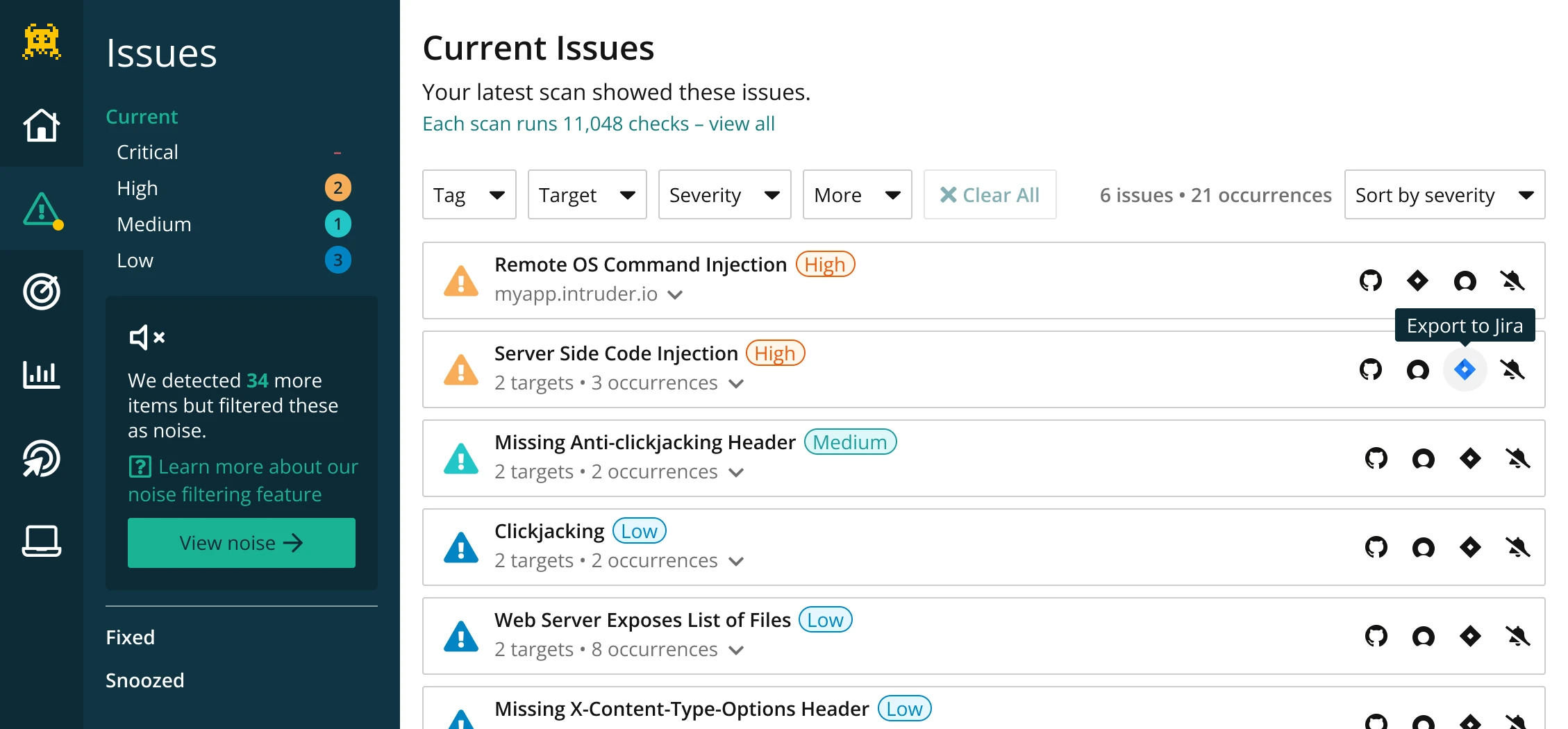
Founded in 2015 and selected for the GCHQ Cyber Accelerator, Intruder now serves 3,000+ customers. It has a 4.8/5 rating on G2 from 154 reviews.
| Feature | Details |
|---|---|
| Deployment | Cloud-only SaaS |
| Security checks | 140,000+ |
| Cloud connectors | AWS, Azure, GCP |
| AI analyst | GregAI |
| Compliance | SOC 2, ISO 27001, PCI DSS, HIPAA, DORA |
| Integrations | 15+ (Jira, Slack, GitHub, etc.) |
| API access | Pro, Premium, and Vanguard plans |
| Free trial | 14 days (Cloud plan features) |
| Starting price | See intruder.io/pricing |
What is Intruder?
Intruder scans internet-facing systems for vulnerabilities on a continuous basis. When your infrastructure changes or a new threat emerges, it triggers scans automatically.
No manual scheduling required.
The Verizon 2024 Data Breach Investigations Report found that vulnerability exploitation as an initial access vector grew significantly year over year, reinforcing the need for continuous scanning of internet-facing assets.
The platform differs from traditional DAST tools in scope. Where most DAST scanners focus on web application logic (XSS, SQLi, authentication flaws), Intruder covers the broader attack surface: exposed ports, misconfigured services, outdated software, and cloud misconfigurations alongside web application vulnerabilities.
Intruder is an attack surface management platform with vulnerability scanning, not a deep application security tester. It finds exposed services and known CVEs across your entire perimeter.
For detailed web app testing of authenticated flows and business logic, pair it with a dedicated DAST scanner like ZAP or Burp Suite .
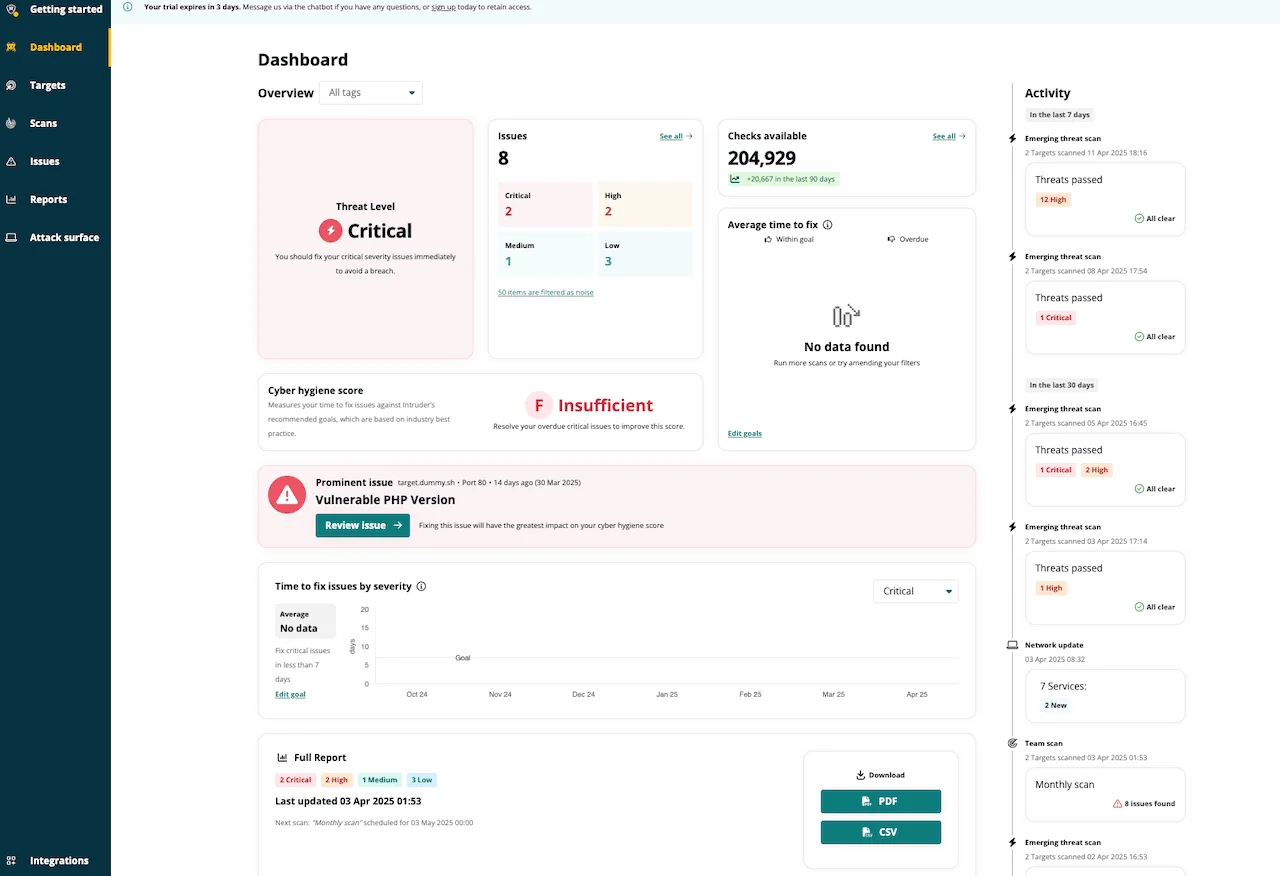
What are Intruder’s key features?
| Capability | Details |
|---|---|
| Attack Surface Monitoring | Automatically discovers new subdomains, exposed services, and cloud resources. Scans trigger when changes are detected so new assets get tested before attackers find them. |
| GregAI Analyst | Intruder’s AI security analyst. It verifies findings, suppresses false positives, and ranks what to fix first based on exploitability and whether the CVE is actively being used in the wild. |
| Cloud Security (CSPM) | Native connectors for AWS, Azure, and GCP. Runs daily misconfiguration checks and automatically imports cloud assets. Up to 3 accounts on Cloud plan, 10 on Pro, unlimited on Enterprise. |
| Emerging Threat Scans | When a new high-profile vulnerability drops, Intruder proactively checks your infrastructure. No waiting for scheduled scans when a critical CVE is published. |
| Compliance Reporting | Generates reports for SOC 2, ISO 27001, PCI DSS, HIPAA, and DORA. NIST SP 800-53 requires organizations to maintain a continuous monitoring program, and Intruder’s compliance reporting helps satisfy those audit requirements. |
| Risk Prioritization | Scoring factors in exploitability, asset criticality, and active exploitation data. Helps you ignore the noise and fix what actually matters. |
How much does Intruder cost?
Intruder offers four tiers, all with 5 infrastructure licenses included:
- Essential — 1 scheduled scan, unlimited ad hoc scans, enhanced risk data, unlimited users
- Cloud — Unlimited scheduled scans, emerging threat scans, GregAI analyst, up to 3 cloud accounts, advanced analytics, role-based access, 15+ integrations
- Pro — Internal target scanning, up to 10 cloud accounts, mass deployment options
- Enterprise — Unlimited cloud accounts, 1000+ checks, attack surface visibility, advanced access control
Pricing is based on a base fee plus a per-target fee, calculated dynamically on Intruder’s pricing page .
All plans include a 14-day free trial with Cloud plan features.
What you actually pay scales with two variables: the number of infrastructure licenses (each license covers one target IP, hostname, or URL) and the plan tier. Vanguard, the highest tier, layers managed pentesting on top of automated scanning — useful when you want hybrid coverage without staffing an internal pentest team.
Web application scanning is included on Cloud and above, but the depth is shallower than dedicated DAST tools like Acunetix or Invicti . I treat Intruder as an attack-surface and continuous-vulnerability scanner first, with web application scanning as a bonus layer rather than the primary capability — pair it with a dedicated DAST when you need authenticated SPA testing or business-logic coverage.
What does Intruder integrate with?
 AWS
AWS Azure
Azure Google Cloud
 GitHub
 GitLab
 Azure DevOps
 CircleCI
 Slack
Slack Microsoft Teams
 Jira
Jira PagerDuty
 Okta
Okta Auth0
Auth0 Cloudflare
How do I get started with Intruder?
- Create an account — Sign up at portal.intruder.io for a 14-day free trial. No installation needed; everything runs in the cloud.
- Add targets — Specify domains, IP addresses, or connect AWS/Azure/GCP accounts. Cloud connectors auto-import your assets.
- Run your first scan — Trigger manually or let Intruder scan automatically when it detects infrastructure changes.
- Review and prioritize — GregAI filters noise and ranks findings by risk. Export reports for compliance or push issues to Jira/Slack.
API Access
The Intruder API lets you manage targets, trigger scans, and retrieve results programmatically. Available on Pro, Premium, and Vanguard plans.
# Trigger a scan via the Intruder API
curl -X POST "https://api.intruder.io/v1/scans" \
  -H "Authorization: Bearer YOUR_API_KEY" \
  -H "Content-Type: application/json" \
  -d '{"target_id": "target_123"}'
When to Use Intruder
Intruder works well for small to mid-sized organizations that need continuous attack surface monitoring without a dedicated security team. The cloud connectors and automated scanning mean less manual work for teams with cloud-native infrastructure.
It covers the gap between traditional vulnerability management (Qualys, Nessus) and application-specific DAST tools. If your primary concern is “what’s exposed on the internet and is it vulnerable,” Intruder answers that question.
For deep web application security testing of complex SPAs, authenticated workflows, or API business logic, you will need a complementary tool like Acunetix or Invicti .
Intruder itself acknowledges this positioning: it scans your perimeter, not the inner workings of your applications. For help choosing the right approach, see the what is DAST guide.
What are alternatives to Intruder?
If Intruder’s external-attack-surface focus or pricing model does not fit, these are the alternatives I’d weigh in the DAST tools landscape :
- Detectify — Closest peer in the crowdsourced-DAST + EASM space. 1,765+ vulnerability modules from 400+ ethical hackers, plus External Attack Surface Management. Better fit when crowdsourced research depth matters more than continuous infra scanning.
- Probely — Now part of Snyk DAST , Probely is developer-focused DAST with strong API coverage and OpenAPI support. Worth evaluating when you want DAST tied to existing Snyk SAST/SCA workflows rather than a standalone scanner.
- Acunetix — Standalone DAST scanner with proof-based verification, 7,000+ vulnerability checks, and IAST sensor support for .NET, Java, PHP, and Node.js. Stronger choice when web application depth matters more than ASM coverage.
- Pentest-Tools.com — On-demand vulnerability scanning with a published per-scan and subscription pricing page. Better when you want pay-as-you-go pentest tooling rather than continuous monitoring.
- Qualys WAS — Enterprise web app scanning from a vendor your operations team likely already uses for vulnerability management. Lower friction when Qualys is the incumbent platform.