
- Endor Labs supports 40+ languages for SCA and performs function-level reachability for a core subset (Java, JavaScript, Python, Go, Kotlin, .NET, Rust), claiming up to 97% noise reduction; Snyk's reachability covers Java, JavaScript, and Python.
- Snyk's proprietary database is 3x larger than the next largest public DB with 47-day faster disclosure; Endor Labs argues database size matters less when 97% of findings are unreachable.
- Endor Labs discovers dependencies beyond manifest files (build artifacts, source imports); Snyk relies primarily on manifest and lock file analysis.
- Snyk offers a free tier with 200 tests/month and IDE plugins for VS Code, JetBrains, Eclipse, Cursor; Endor Labs is commercial-only with no free tier.
- Endor Labs bundles SCA, AI-native SAST, secrets detection, container scanning, and malware detection; Snyk sells each module (Code, OSS, Container, IaC) separately.
Which Is Better: Endor Labs or Snyk?
Endor Labs and Snyk are the two leading SCA platforms: Endor Labs uses function-level reachability analysis to filter noise, while Snyk prioritizes speed-to-fix with proprietary vulnerability data and automated fix PRs.
Endor Labs and Snyk Open Source both scan dependencies for vulnerabilities, but they prioritize differently.
Endor Labs is built around function-level reachability analysis for key languages (Java, JavaScript, Python, Go, Kotlin, .NET, Rust) with SCA coverage spanning 40+ languages — its core pitch is that up to 97% of SCA alerts are noise because the vulnerable code is never actually called.
Snyk is built around a proprietary vulnerability database with faster disclosure, automated fix PRs, and a developer experience that starts with a free tier. Endor Labs cuts through noise with deep call graph analysis.
Snyk finds vulnerabilities faster and fixes them with less manual effort.
What Are the Key Differences?
| Feature | Endor Labs | Snyk Open Source |
|---|---|---|
| License | Commercial | Freemium |
| Free Tier | No | Yes (200 tests/month) |
| Reachability Analysis | Function-level (Java, JS, Python, Go, Kotlin, .NET, Rust); SCA covers 40+ languages | Java, JavaScript, and Python |
| Noise Reduction Claim | Up to 97% | Risk Score (0-1000) with 12+ factors |
| Vulnerability Database | NVD, GHSA, OSV + proprietary | Proprietary (3x larger than next public DB) |
| Disclosure Speed | Standard | 47-day average faster than competitors |
| Automated Fix PRs | Yes | Yes (upgrade + Snyk patches) |
| SAST | Yes (AI-native) | Via Snyk Code (separate product) |
| Secrets Detection | Yes | No (via Snyk separately) |
| Container Scanning | Yes | Via Snyk Container (separate product) |
| Malware Detection | Yes (typosquatting, dependency confusion) | No |
| SBOM Generation | CycloneDX, SPDX | CycloneDX, SPDX |
| Dependency Lifecycle | Version freshness, maintainer activity, security posture | Transitive dependency mapping |
| Language Support | 40+ languages | 13 languages, 20+ package managers |
| EPSS Integration | Yes (combined with reachability) | Yes (part of Risk Score) |
| IDE Plugins | Limited | VS Code, JetBrains, Eclipse, Cursor |
| CI/CD | GitHub Actions, CLI | GitHub Actions, GitLab CI, Azure DevOps, Jenkins |
| Notable Users | OpenAI, Cursor, Snowflake, Atlassian | 2M+ developers, enterprise adoption |
| Analyst Recognition | Emerging | Gartner MQ Leader (AST) |
Endor Labs vs Snyk: How Do They Compare?
Reachability Analysis
This is the defining comparison point. Both tools claim to do reachability analysis, but the scope and depth differ substantially.
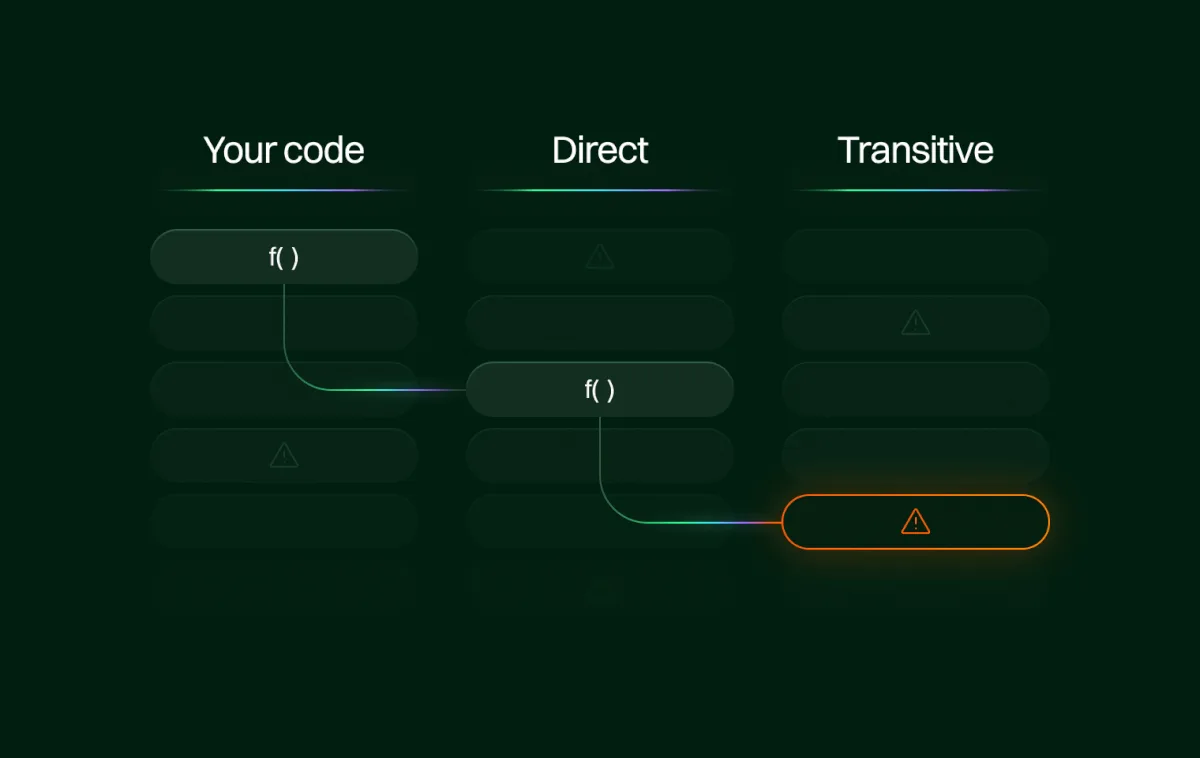
Endor Labs builds call graphs from your application source code and traces data flow to vulnerable methods in dependencies.
If a CVE exists in a function that your code never calls — even transitively — the finding gets deprioritized.
This is function-level analysis: not just “is the package used” but “is the vulnerable function reachable from any entry point in your application.” Endor Labs performs this analysis for a core set of languages including Java, JavaScript, Python, Go, Kotlin, .NET, and Rust, with SCA coverage spanning 40+ languages and vulnerability data back to 2005.
Snyk’s reachability analysis works similarly in concept but currently covers Java, JavaScript, and Python. For those languages, Snyk traces whether your application calls the vulnerable code path in the dependency.
For all other languages — Go, Rust, .NET, Ruby, PHP — Snyk falls back to its Risk Score, which combines CVSS severity, EPSS probability, exploit maturity, and other factors without reachability data.
The practical impact is significant. A Go project with 300 transitive dependencies might have 80 vulnerabilities flagged by a standard SCA tool.
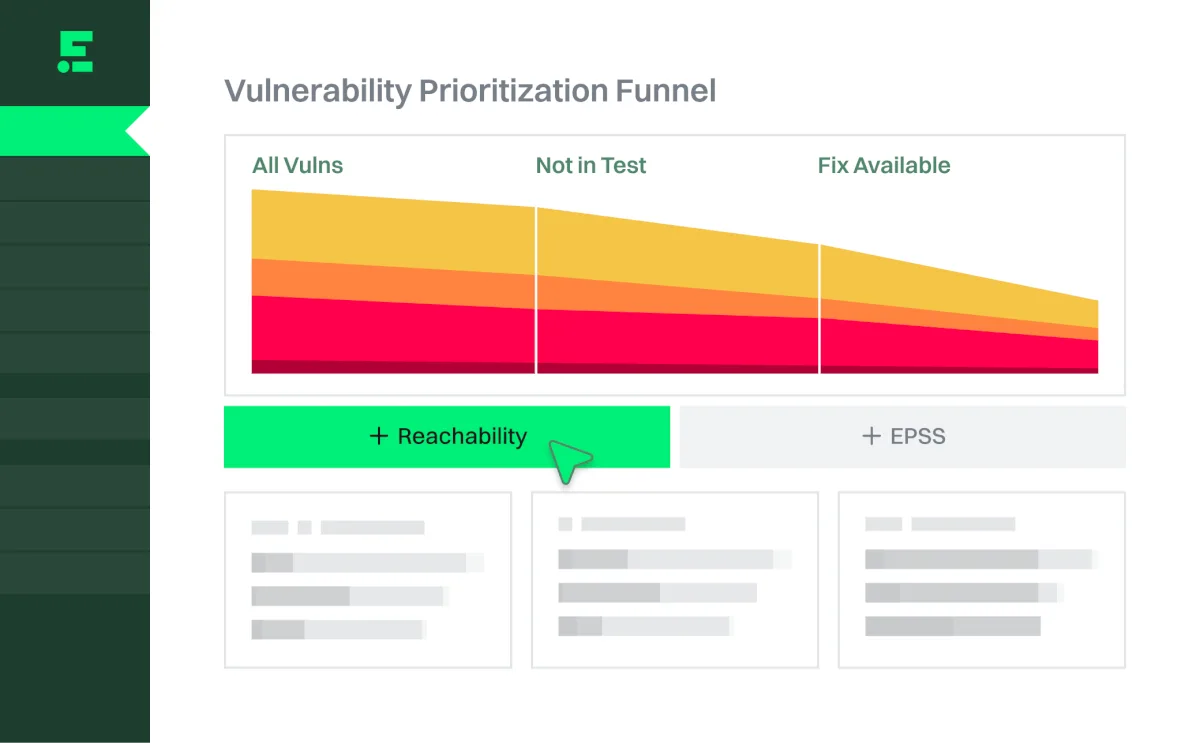
If Endor Labs determines that 75 of those are in unreachable code paths, you focus on 5.
With Snyk, you still see all 80 for Go (since reachability does not apply), sorted by Risk Score but without the reachable/unreachable distinction.
Dependency Discovery
Endor Labs identifies dependencies by analyzing multiple sources beyond manifest files: package manager caches, build artifacts, source code imports, and compiled outputs. Benchmarking published by Endor Labs shows it identified more dependencies than Snyk across tested projects because Snyk relies primarily on manifest files and lock files as the source of truth.
This matters because phantom dependencies — packages that are present in the build but not listed in the manifest — are a blind spot for manifest-only scanners. If a build step pulls in a package through a script rather than a declared dependency, Endor Labs is more likely to catch it.
Snyk’s dependency graph analysis is mature for declared dependencies. It maps the full transitive tree and shows exactly how each vulnerable package enters your project through direct dependencies.
But it may miss dependencies that are not declared in standard manifest files.
Vulnerability Intelligence
Snyk has a clear advantage in vulnerability disclosure speed and database size. According to Snyk, the proprietary database covers 3x more entries than the next largest public database.
The security research team has disclosed over 3,400 vulnerabilities. For JavaScript, Snyk reports disclosing 92% of vulnerabilities before they appear in the NVD, with an average lead of 47 days over competing databases.
Snyk also maintains its own patches — targeted code fixes that address vulnerabilities without bumping package versions. This is useful when upgrading would introduce breaking changes.
Endor Labs draws from NVD, GHSA, OSV, and other standard sources. It does not maintain a proprietary research team at the same scale as Snyk’s.
Where Endor Labs compensates is in the argument that database size matters less when you can filter up to 97% of findings as unreachable (92% on average, according to Endor Labs).
A vulnerability that your code never calls is low-risk regardless of how fast it was disclosed.
Both tools integrate EPSS scoring. Endor Labs combines EPSS with reachability for compound risk ranking.
Snyk includes EPSS as one of 12+ factors in its Risk Score.
Beyond SCA
Both vendors have expanded beyond pure SCA, but through different strategies.
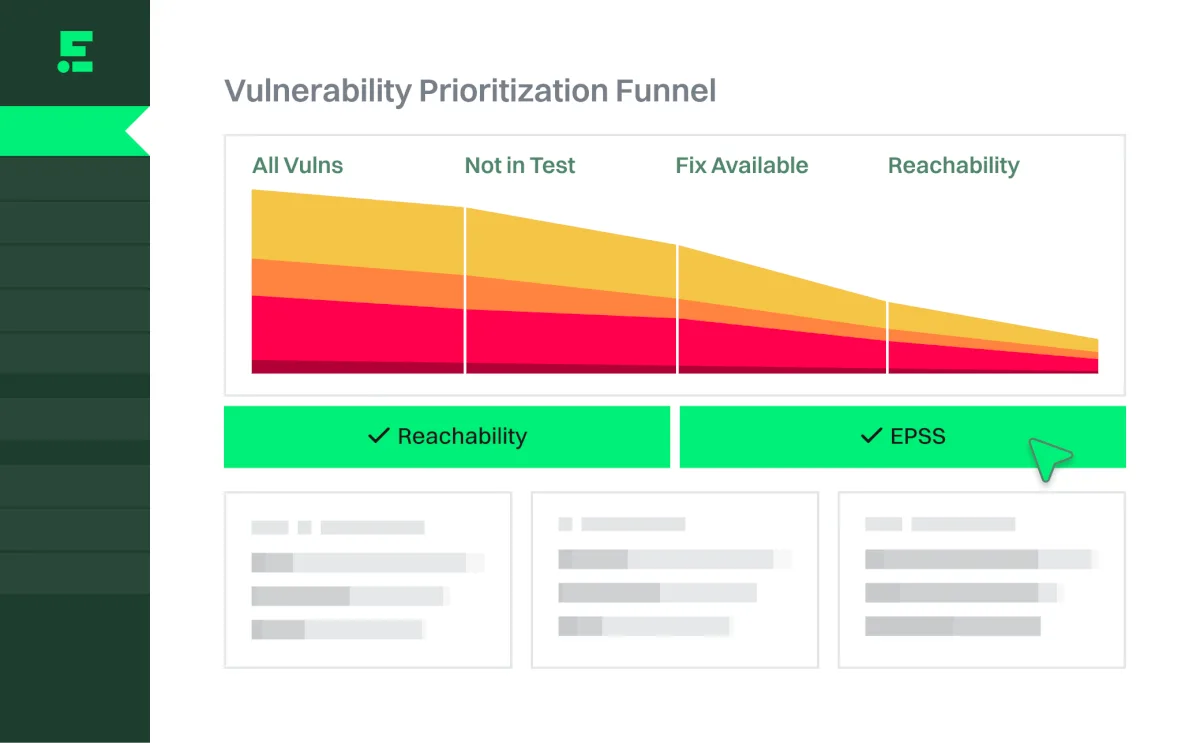
Endor Labs added AI-native SAST, secrets detection, container scanning, and malware detection to its platform.
The malware detection catches supply chain attacks like typosquatting and dependency confusion — threats that exist above the vulnerability layer.
These capabilities ship as part of the same platform, sharing the reachability engine and dependency graph.
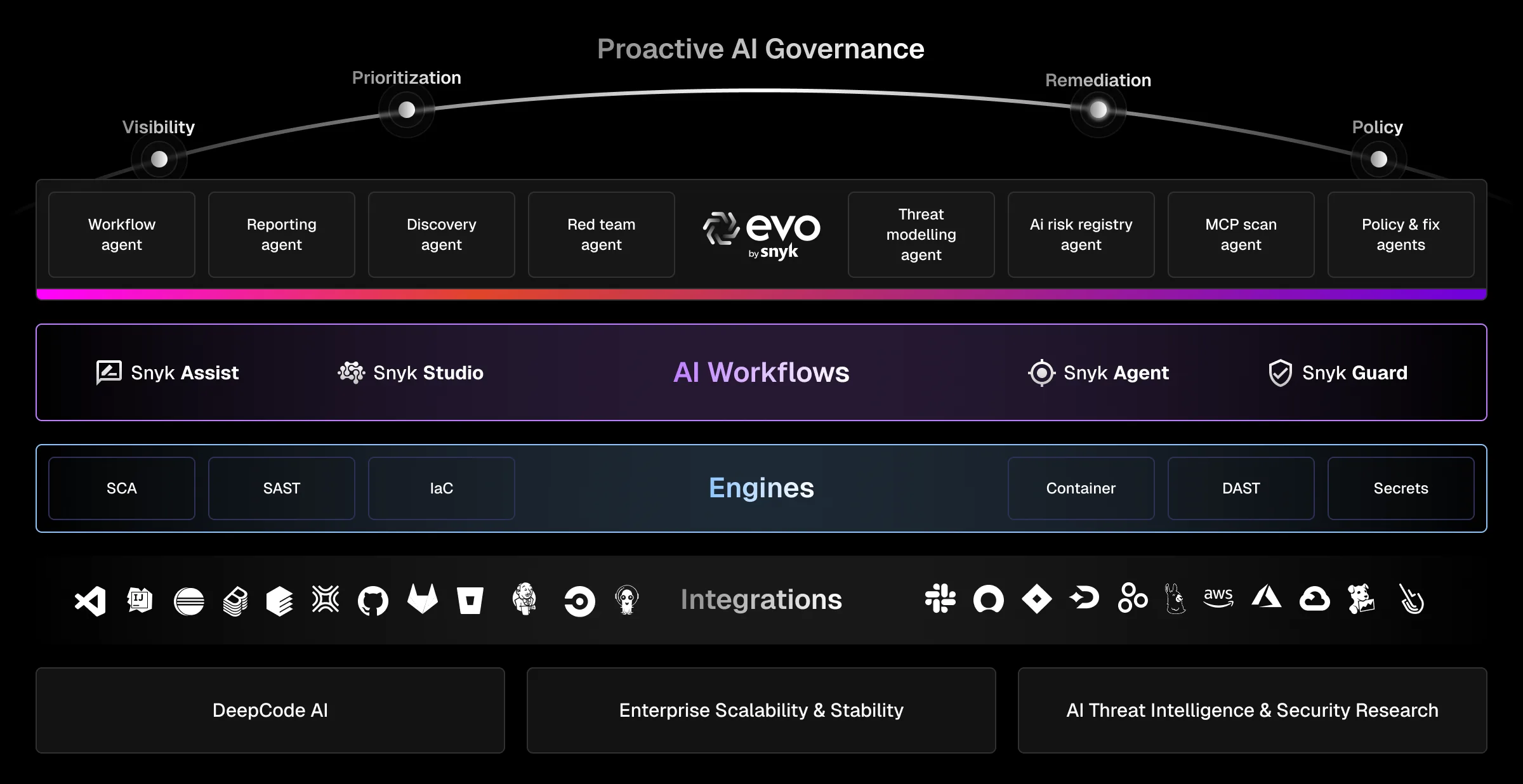
Snyk Open Source is one module in the Snyk Developer Security Platform. Snyk Code provides SAST.
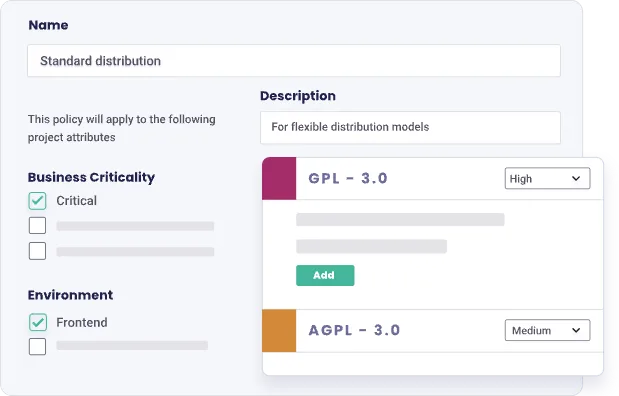
Snyk Container handles container images. Snyk IaC scans infrastructure code.
Snyk Cloud covers cloud security posture. Each is a separate product that can be added incrementally, with its own configuration and pricing.
For organizations that want one vendor covering SCA plus adjacent capabilities, both offer paths. Endor Labs bundles everything together.
Snyk lets you pick and choose which modules to add over time.
When Should You Choose Endor Labs?
Choose Endor Labs if:
- Function-level reachability analysis for key languages (Java, JavaScript, Python, Go, Kotlin, .NET, Rust) is your primary requirement for reducing SCA noise
- You work with Go, Python, Rust, C#, or other languages where Snyk’s reachability does not apply
- Dependency discovery beyond manifest files (build artifacts, source code analysis) matters for your projects
- Malware detection for supply chain attacks (typosquatting, dependency confusion) is important
- You want reachability, SAST, secrets detection, and container scanning on a single platform
- Organizations like OpenAI, Snowflake, and Atlassian as reference customers match your profile
When Should You Choose Snyk?
Choose Snyk Open Source if:
- Vulnerability disclosure speed (47-day average lead) and database breadth are priorities
- You need a free tier for developer adoption without procurement
- Automated fix PRs with proprietary patching (fixes without version bumps) fit your workflow
- IDE integration across VS Code, JetBrains, Eclipse, and Cursor is important for developer experience
- Your primary SCA languages are Java, JavaScript, or Python, where Snyk’s reachability already applies
- You want the option to incrementally add Snyk Code, Container, and IaC as your security program grows
- Established analyst recognition (Gartner MQ Leader for AST) matters for procurement decisions
Both tools address the same core problem — too many SCA alerts, not enough developer time to fix them — but from opposite directions. Endor Labs reduces noise by proving most findings are unreachable.
Snyk reduces noise by scoring risk across multiple contextual factors and prioritizing what to fix first.
For more AppSec Santa comparisons, browse our SCA tools category.
Frequently Asked Questions
How does Endor Labs reachability compare to Snyk reachability?
Does Endor Labs have a free tier like Snyk?
Which tool finds more vulnerabilities?
Does Endor Labs do more than SCA?
Which tool is better for large dependency trees?

+7 Years in AppSec
10+ years in application security. Reviews and compares 208 AppSec tools across 11 categories to help teams pick the right solution. More about me →