
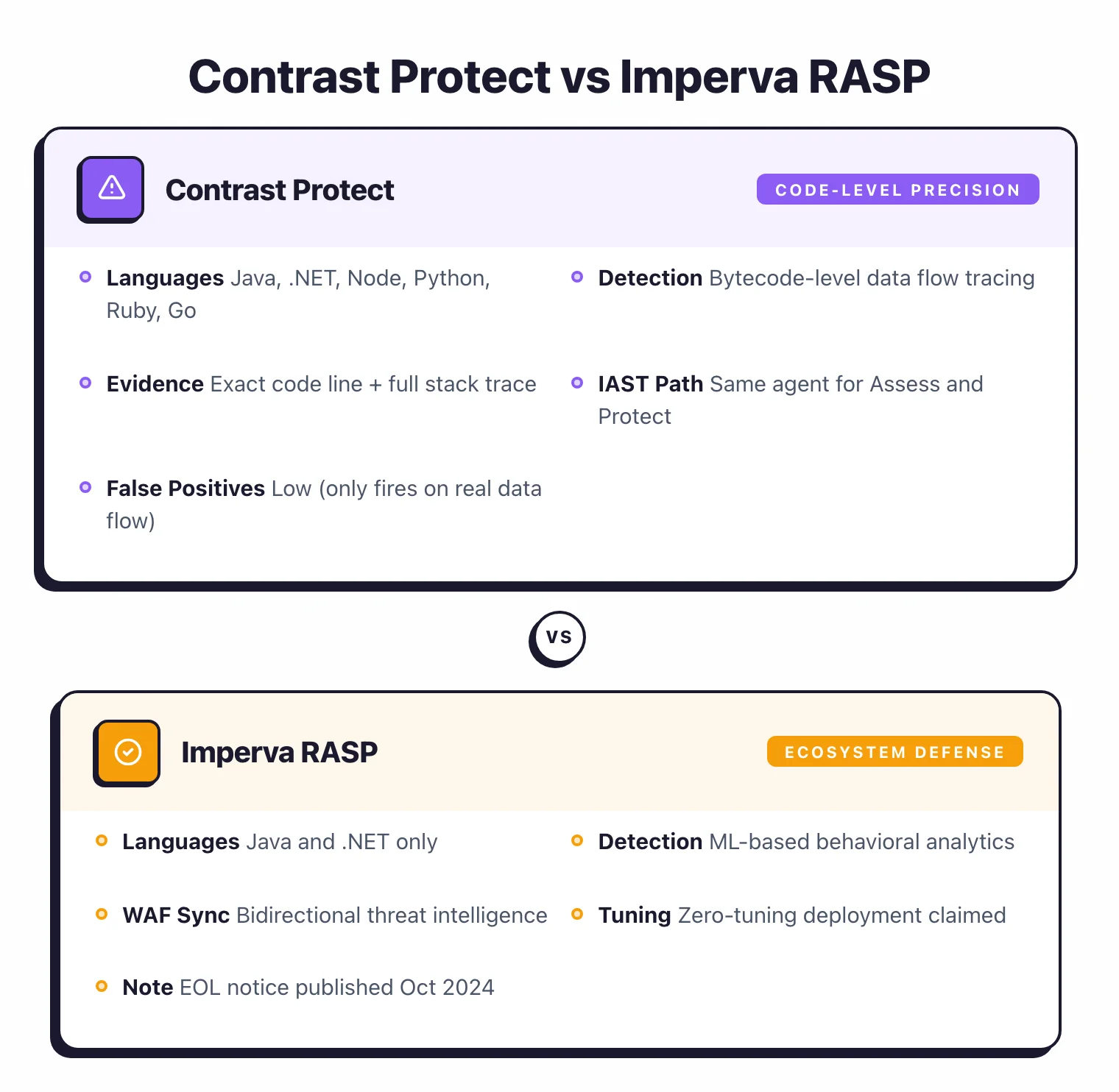
- Contrast Protect supports 11 language runtimes (Java, Kotlin, Scala, .NET Framework, .NET Core, Node.js, Python, Go, PHP, C#, VB.NET); Imperva RASP officially supports Java and .NET only.
- Contrast traces data flow at bytecode level providing exact code-line and stack trace evidence for every blocked attack; Imperva uses ML-based behavioral analytics.
- Imperva RASP shares bidirectional threat intelligence with Imperva WAF — attacks detected inside the app feed back into WAF rules for coordinated defense.
- Contrast’s shared agent handles both IAST testing (Assess) and production RASP (Protect) without re-instrumentation; Imperva RASP has no IAST equivalent.
- Imperva claims zero-tuning deployment; Contrast’s data-flow approach reduces false positives inherently since it only fires when malicious input reaches a security-sensitive operation.
Contrast Protect and Imperva RASP are the two most established commercial RASP solutions for embedding runtime security directly into application code.
Which Is Better: Contrast Protect or Imperva RASP?#
Contrast Protect and Imperva RASP are both commercial, agent-based RASP solutions that embed security inside running applications. They solve the same core problem — blocking attacks that bypass network-level defenses — but differ in instrumentation depth, language coverage, and ecosystem integration.
Contrast Protect is now part of Contrast ADR (Application Detection and Response) , which extends runtime protection with detection and response capabilities. It traces data flow through application code at the bytecode level.
It knows exactly which function received tainted input, how that input propagated, and whether it reached a security-sensitive sink. This approach produces precise detections with detailed stack traces across eleven supported languages.
It fits best in development-forward organizations that want deep code-level visibility and already use (or plan to use) the broader Contrast platform for IAST and SAST.
Note: Imperva published an end-of-life notice for RASP in October 2024 . Verify current availability before evaluating.
Imperva RASP is built for organizations invested in Imperva’s security ecosystem. Its core differentiator is bidirectional threat intelligence with Imperva WAF — attacks detected inside the application feed back into WAF rules, and WAF-level signals inform RASP decisions.
If you already run Imperva WAF, DDoS protection, or API security products, adding Imperva RASP gives you coordinated defense across network and application layers through a unified dashboard.
What Are the Key Differences?#
| Feature | Contrast Protect | Imperva RASP |
|---|---|---|
| License | Commercial | Commercial |
| Vendor | Contrast Security | Imperva (acquired by Thales Group in December 2023 ) |
| Approach | Deep code instrumentation (bytecode) | Agent-based + ML behavioral analytics |
| Java Support | Yes | Yes |
| .NET Support | Yes | Yes |
| Node.js Support | Yes | No |
| Python Support | Yes | No |
| Ruby Support | No | No |
| Go Support | Yes | No |
| SQL Injection Blocking | Yes | Yes |
| XSS Blocking | Yes | Yes |
| Command Injection Blocking | Yes | Yes |
| Remote Code Execution | Yes | Yes |
| Business Logic Attacks | Limited | Yes |
| Virtual Patching | Yes | Yes |
| WAF Integration | Third-party via SIEM/XDR | Native (Imperva WAF) |
| Threat Intelligence Sharing | Via integrations | Bidirectional with Imperva products |
| SIEM/SOAR Integration | Yes (native) | Yes |
| Data Flow Tracing | Yes (exact code line + stack trace) | Limited |
| ML-Based Analytics | No | Yes |
| File Integrity Monitoring | No | Yes |
| Container / K8s Support | Yes | Yes |
| Deployment Models | On-prem, cloud agent | Cloud, on-prem, hybrid |
| Related Platform Products | Contrast Assess (IAST), Contrast Scan (SAST), Contrast SCA | Imperva WAF, DDoS Protection, API Security, Data Security |
| Tuning Required | Minimal (data-flow accuracy) | Zero tuning claimed |
Contrast Protect vs Imperva RASP: How Do They Compare?#
Protection Approach: Code-Level vs Ecosystem-Level#
The fundamental difference between these two products is where they draw their detection advantage from.
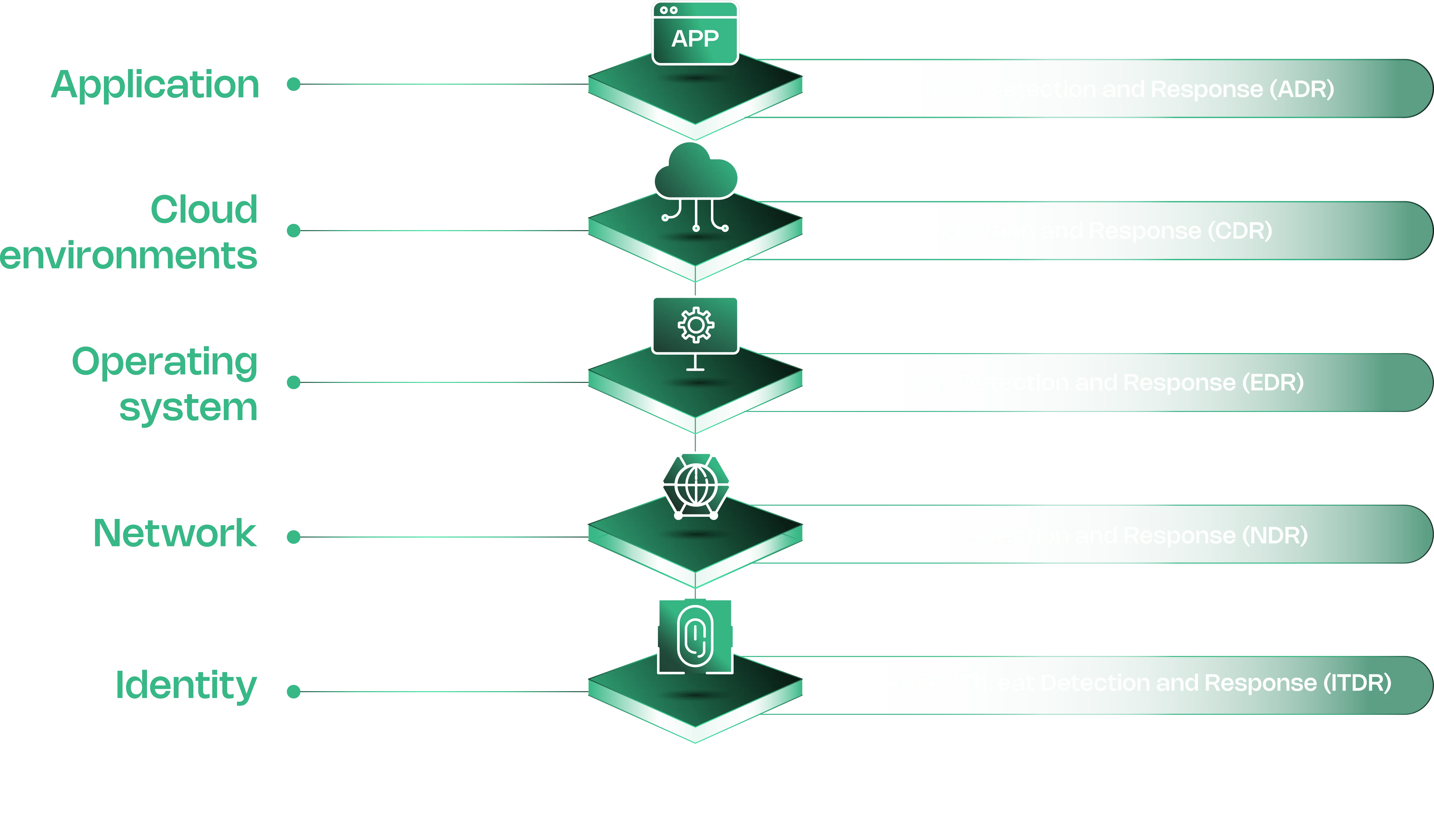
Contrast Protect instruments applications at the bytecode level. When a request enters the application, the Contrast agent follows the data through every function call, method invocation, and API interaction.
It knows whether user input from an HTTP parameter actually reaches a SQL query, a file system call, or an OS command.
This data-flow tracing means Contrast only triggers when a genuine attack path exists — not when a request merely looks suspicious based on patterns.
The practical benefit is precision. A WAF might flag a request containing ' OR 1=1 as SQL injection.
Contrast Protect can determine whether that string actually reaches a database query.
If the application sanitizes the input before it hits the database, Contrast knows the attack failed and does not raise an alert. This reduces false positives substantially compared to pattern-matching approaches.
Imperva RASP also instruments the application runtime, but its detection advantage comes from ecosystem integration rather than data-flow depth. The RASP agent monitors application execution and uses ML-based behavioral analytics to identify attack patterns.
Where it gets interesting is the feedback loop with Imperva WAF. When the RASP agent detects an exploit inside the application, that intelligence feeds back to WAF rules so the same attack pattern gets blocked at the network edge for all other applications behind the WAF.
Conversely, WAF-level threat intelligence informs RASP decisions, creating a layered defense where both components strengthen each other.
Neither approach is universally better. Contrast gives you precise code-level detection. Imperva gives you coordinated defense across your infrastructure.
Language and Platform Support#
Language coverage is one of the clearest differentiators in this comparison.
Contrast Protect supports eleven language runtimes : Java, Kotlin, Scala, .NET Framework, .NET Core, Node.js, Python, Go, and PHP. This covers the majority of enterprise backend stacks.
The same agent technology powers both Contrast Protect (runtime blocking) and Contrast Assess (IAST testing), so teams get consistent instrumentation across development and production environments.
Imperva RASP officially supports Java and .NET . These are the two most common enterprise application languages, but organizations running significant Node.js, Python, or Go workloads will find a coverage gap.
If your application portfolio spans multiple language runtimes, Contrast has a meaningful advantage.
Both tools support containerized deployments and Kubernetes environments. Imperva adds file integrity monitoring as a capability that Contrast does not offer — useful for detecting unauthorized changes to application binaries or configuration files on disk.
Attack Coverage and False Positive Handling#
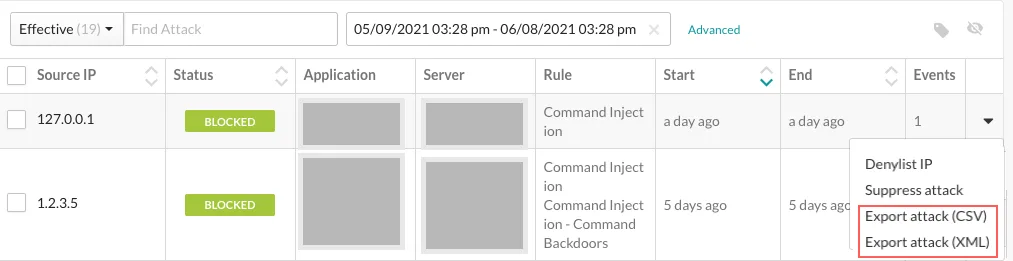
Both products block the standard RASP attack categories: SQL injection , cross-site scripting , command injection, path traversal, and remote code execution. Imperva RASP extends into business logic attack detection and authentication bypass prevention, areas where Contrast’s coverage is less emphasized.
Where they diverge meaningfully is in how they handle false positives.
Contrast Protect’s data-flow tracing is inherently resistant to false positives because it observes actual exploitation rather than inferring intent from request patterns.
Every alert includes the exact code line and full stack trace showing how malicious input propagated through the application.
Security teams can validate findings quickly because the evidence is concrete — they can see the tainted input, the functions it passed through, and the sensitive operation it reached.
Imperva RASP reduces false positives through ML-based behavioral baselines and corroboration with WAF-level signals.
If the WAF sees a sustained attack campaign from a particular source, the RASP agent can weigh that context when evaluating borderline requests.
The zero-tuning claim from Imperva suggests the product is designed to work accurately out of the box without manual rule adjustments, which lowers the operational burden for security teams.
Platform Ecosystem and Integration#
Both products exist within larger security platforms, and the strength of those ecosystems matters for purchasing decisions.
Contrast Protect is part of the Contrast Security platform alongside Contrast Assess (IAST for testing environments), Contrast Scan (SAST), and Contrast SCA (dependency analysis).
The shared agent architecture means organizations can run Assess during development and switch the same agent to Protect mode in production.
This continuity from development through production is a practical advantage — vulnerabilities found by Assess in testing become protection rules in Protect without manual translation.
Contrast integrates with external SIEM, XDR, and SOAR platforms for security operations workflows. It does not have its own WAF or network-level security products, so WAF integration relies on third-party products.
Imperva RASP plugs into a broader infrastructure security stack. Imperva WAF is one of the most widely deployed web application firewalls in enterprise environments.
Adding RASP to an existing Imperva deployment extends protection from the network perimeter into the application layer with shared intelligence and a unified management dashboard.
Imperva DDoS protection, API security, and data security products round out the ecosystem for organizations that want consolidated security from a single vendor.
For teams already running Imperva WAF, adding Imperva RASP is a straightforward add-on that requires minimal additional infrastructure. For teams invested in Contrast Assess or building a development-centric security program, Contrast Protect keeps everything within a single platform.
Deployment and Operational Overhead#
Both products deploy as agents within the application runtime and do not require source code changes.
Contrast Protect is deployed by adding the agent to the application startup command — a JVM argument for Java, a require flag for Node.js.
The agent connects to the Contrast platform for policy management and reporting. Operational overhead is primarily about monitoring agent performance impact and managing policies through the Contrast dashboard.
Imperva RASP offers cloud, on-premises, and hybrid deployment models. The cloud option is a managed service through Imperva Cloud, which reduces operational burden.
On-premises deployments give organizations full control over data residency. The hybrid model supports mixed environments — useful for organizations with regulatory requirements that restrict certain workloads from cloud-based management.
Imperva’s claim of zero tuning required positions the product as lower-friction to operate day-to-day. Contrast requires some initial configuration around protection rules and policy modes (monitor vs. block) but benefits from the data-flow approach reducing noise from the start.
When Should You Choose Contrast Protect?#
Choose Contrast Protect if:
- You need runtime protection across multiple language runtimes (Java, Kotlin, Scala, .NET, Node.js, Python, Go, PHP)
- Low false positives through data-flow tracing and exact code-line evidence matter to your security team
- You want a unified agent that handles both IAST testing (Assess) and production protection (Protect)
- Your security program is development-centric, with developers actively involved in vulnerability remediation
- Stack trace context for every blocked attack is important for incident response
- You are building (or already use) the Contrast Security platform for SAST, IAST, and SCA
When Should You Choose Imperva RASP?#
Choose Imperva RASP if:
- You already run Imperva WAF and want coordinated network-plus-application-layer defense
- Bidirectional threat intelligence between WAF and RASP is valuable for your security posture
- Your application portfolio is primarily Java and .NET
- You prefer a managed cloud deployment option with minimal operational overhead
- Consolidated vendor management across WAF, DDoS, API security, and RASP is a priority
- Zero-tuning deployment with ML-based behavioral analytics fits your operational model
For organizations starting fresh with no existing vendor investment, the decision often comes down to language coverage and detection philosophy. Contrast’s six-language support and data-flow precision appeal to development-oriented security teams.
Imperva’s ecosystem integration appeals to infrastructure and operations teams managing broad security stacks.
Both are RASP tools . For background on the category, read What is RASP? or browse AppSec Santa’s full RASP tools category for more options.
Frequently Asked Questions
Is Contrast Protect or Imperva RASP better for runtime application protection?
Does Contrast Protect support more languages than Imperva RASP?
Can Imperva RASP work without Imperva WAF?
How do Contrast Protect and Imperva RASP handle false positives?
Do I need RASP if I already have a WAF?

Written & maintained by
Suphi CankurtEight years on the vendor side of application-security sales — thousands of evaluations and demos. I started AppSec Santa in 2022 to put that insider view to work for buyers. Independent of any vendor, paid by none, and honest about what fits whom.