
- Checkov has 1,000+ IaC policies including 800 graph-based cross-resource checks; Trivy inherited tfsec's library but cannot validate relationships between resources.
- Trivy covers IaC, container images, dependencies, Kubernetes clusters, SBOMs, and license scanning in one binary (31,700+ GitHub stars); Checkov is IaC-only.
- Checkov maps to CIS, SOC 2, HIPAA, and PCI DSS compliance frameworks; Trivy maps to CIS Benchmarks only.
- Checkov's secrets detection verifies found credentials against live APIs to confirm they're active; Trivy uses regex patterns without live verification.
- Both are Apache 2.0 licensed and free — Checkov is maintained by Palo Alto Networks (Prisma Cloud); Trivy is maintained by Aqua Security.
Checkov and Trivy are two open-source infrastructure-as-code security scanners: Checkov specializes in deep IaC policy coverage with graph-based checks, while Trivy covers IaC plus containers, dependencies, and secrets in a single binary.
Which Is Better: Checkov or Trivy?
Checkov and Trivy are both open-source, Apache 2.0 licensed, and free to use. They overlap in IaC misconfiguration scanning but serve different primary purposes.
Checkov is purpose-built for infrastructure as code security. It has the largest built-in policy library of any open-source IaC scanner at 1,000+ checks, including 800 graph-based policies that verify relationships between resources.
If IaC scanning depth is your priority, Checkov is the specialist.
Trivy is a broader security scanner. It handles IaC misconfigurations, container image vulnerabilities, application dependency CVEs, secrets detection, and license compliance in one binary.
Its IaC scanning absorbed tfsec and covers the most common checks, but the policy library is smaller than Checkov’s. If you want one tool for multiple security concerns, Trivy minimizes tool sprawl.
What Are the Key Differences?
| Feature | Checkov | Trivy |
|---|---|---|
| License | Apache 2.0 | Apache 2.0 |
| Primary focus | IaC security | All-in-one security scanner |
| Built-in IaC policies | 1,000+ (attribute + graph-based) | Inherited tfsec library |
| Graph-based checks | Yes (cross-resource relationships) | No |
| Terraform | Full support | Full support (absorbed tfsec) |
| CloudFormation | Yes | Yes |
| Kubernetes manifests | Yes | Yes |
| Helm charts | Yes | Yes |
| Dockerfiles | Yes | Yes |
| ARM / Bicep | Yes | Yes (ARM) |
| Ansible | Yes | Yes |
| Kustomize | Yes | Yes |
| OpenTofu | Yes | Yes |
| Serverless Framework | Yes | No |
| Container image scanning | No | Yes |
| Dependency scanning | No | Yes |
| Kubernetes cluster scanning | No | Yes (live clusters) |
| SBOM generation | No | Yes (CycloneDX, SPDX) |
| License scanning | No | Yes |
| Secrets detection | Yes (with API verification) | Yes |
| Custom policy language | Python or YAML | Rego (OPA) |
| Compliance frameworks | CIS, SOC 2, HIPAA, PCI DSS | CIS |
| Output formats | JSON, SARIF, JUnit XML, CycloneDX, CSV | JSON, SARIF, CycloneDX, SPDX, table |
| GitHub stars | 8,500+ | 31,700+ |
| Backed by | Palo Alto Networks (Prisma Cloud) | Aqua Security |
Checkov vs Trivy: How Do They Compare?
IaC Policy Coverage
Checkov ships with over 750 built-in policies covering AWS, Azure, GCP, and OCI. These include both attribute checks (inspecting individual resource properties) and graph-based checks (verifying relationships between resources).
Graph-based policies are the real differentiator. A standard attribute check verifies that an S3 bucket has encryption enabled.
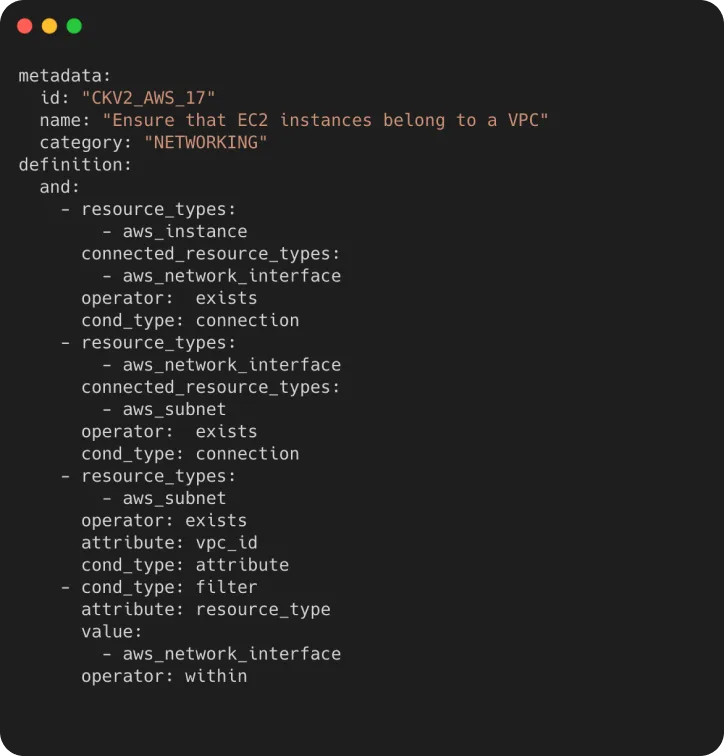
A graph-based check verifies that an EC2 instance connects to a network interface in a VPC-attached subnet. These cross-resource relationship checks catch misconfigurations that single-resource scanners miss entirely.
Trivy inherited tfsec’s Terraform check library and added checks for other IaC frameworks. The policy count is lower than Checkov’s, and Trivy does not support graph-based cross-resource checks.
For the most common misconfigurations (unencrypted storage, open security groups, public access) Trivy catches what matters. For deeper checks that span resource relationships, Checkov provides coverage that Trivy cannot match.
IaC Framework Support
Both tools cover the core IaC frameworks: Terraform, CloudFormation, Kubernetes manifests, Helm charts, Dockerfiles, and ARM templates. Checkov extends further with support for Bicep, Kustomize, OpenTofu, Serverless Framework, and AWS CDK. Trivy covers Ansible, which Checkov also supports.
For teams using standard Terraform or CloudFormation, both tools work well. Teams using less common frameworks like OpenTofu, Kustomize, or Serverless Framework will find better support in Checkov.
Beyond IaC: Where Trivy Pulls Ahead
Trivy’s strength is breadth. Beyond IaC scanning, it provides:
- Container image scanning: Detects vulnerabilities in OS packages and application dependencies within Docker and OCI images.
- Filesystem and repository scanning: Checks application dependencies (package-lock.json, go.sum, requirements.txt) for known CVEs.
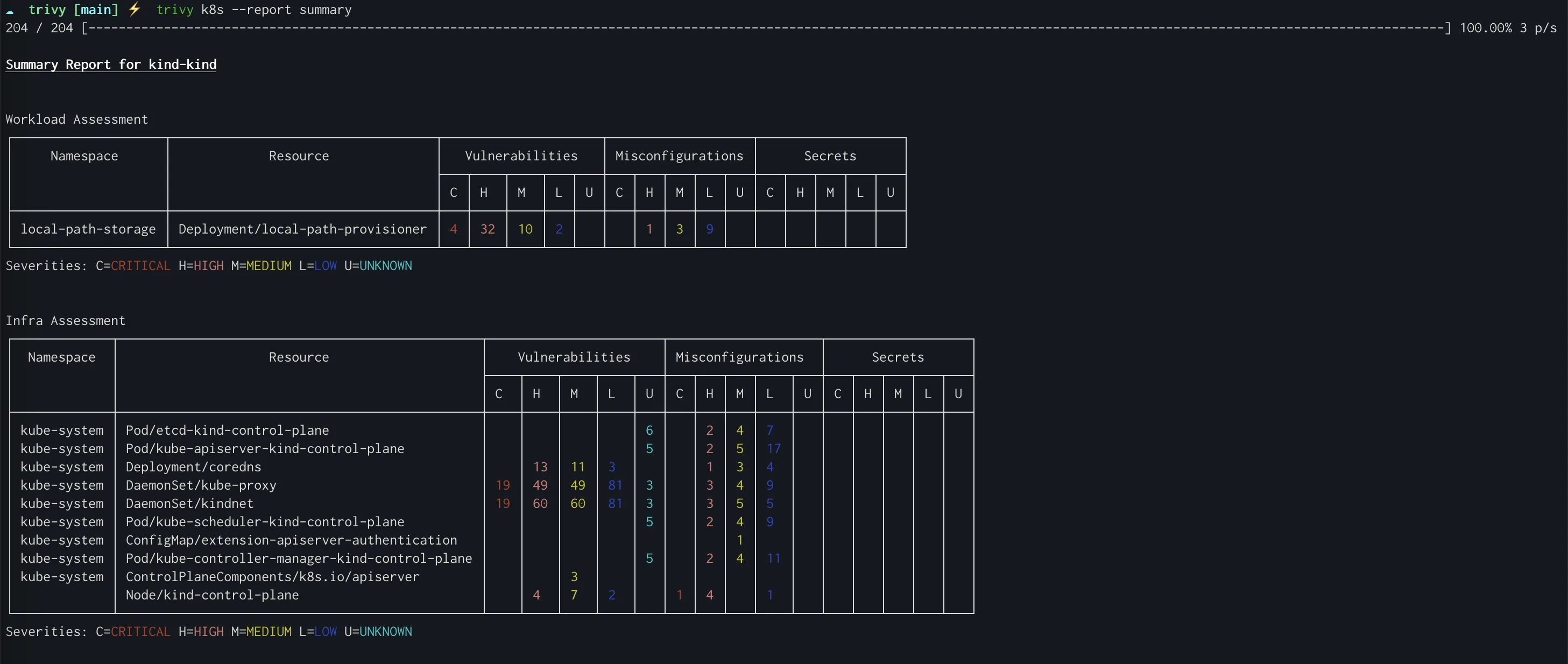
- Kubernetes cluster scanning: Scans running clusters for vulnerabilities, misconfigurations, and secrets across all workloads.
 - **SBOM generation**: Produces CycloneDX and SPDX software bill of materials.
- **License scanning**: Identifies software licenses in dependencies for compliance.
- **SBOM generation**: Produces CycloneDX and SPDX software bill of materials.
- **License scanning**: Identifies software licenses in dependencies for compliance.Checkov does none of these. If you need container scanning or dependency checking, Trivy handles it without adding another tool.
If you only need IaC scanning, Checkov provides deeper coverage.
Secrets Detection
Both tools detect hardcoded secrets. Checkov recognizes known credential formats (AWS keys, Azure storage keys, GitHub tokens), uses entropy analysis for randomized secrets, and can verify detected keys against live APIs to reduce false positives.
The live verification feature is notable because it confirms whether a found credential is actually active.
Trivy uses regex patterns to find API keys, passwords, private keys, and cloud credentials. It runs the secret scanner across all target types (images, filesystems, repos). Trivy does not verify secrets against live APIs.
Custom Policies
Checkov supports custom policies written in Python or YAML. Python policies inherit from base check classes and offer full programmatic flexibility.
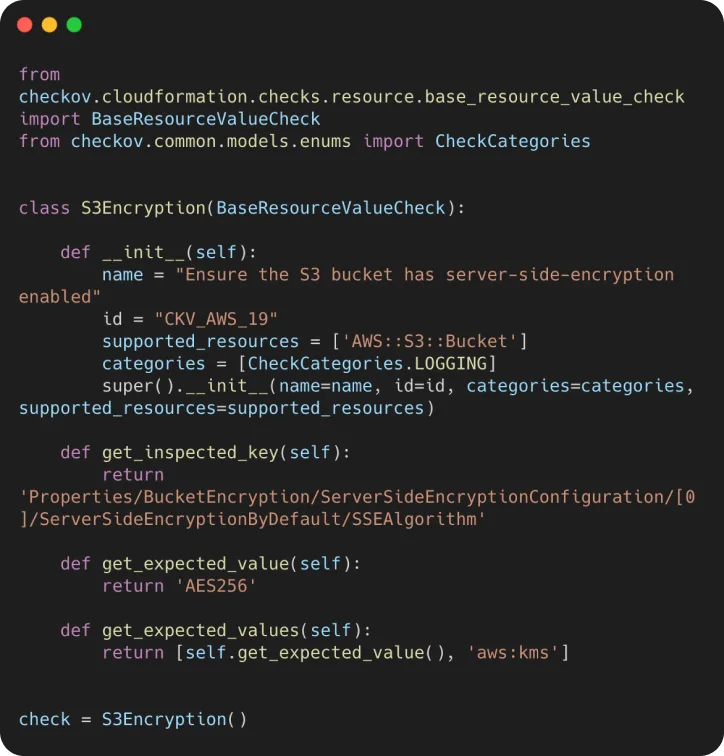
YAML policies use a declarative syntax with operators for attribute checks, connection checks, and filters. Version 3.0 added 36 new operators and JSON path support.
Trivy uses Rego (the Open Policy Agent language) for custom misconfiguration checks. Rego is powerful but has a steeper learning curve than Checkov’s YAML format.
Teams already using OPA in their infrastructure will find Rego familiar.
Compliance Framework Mapping
Checkov maps its policies to multiple compliance frameworks: CIS Benchmarks, SOC 2, HIPAA, PCI DSS, and AWS Foundations Benchmark. Running Checkov against a compliance framework generates a report showing which checks passed and failed against that standard.
Trivy maps to CIS Benchmarks but has less extensive compliance framework coverage than Checkov. For teams that need to demonstrate compliance against specific frameworks, Checkov provides more built-in reporting.
CI/CD Integration
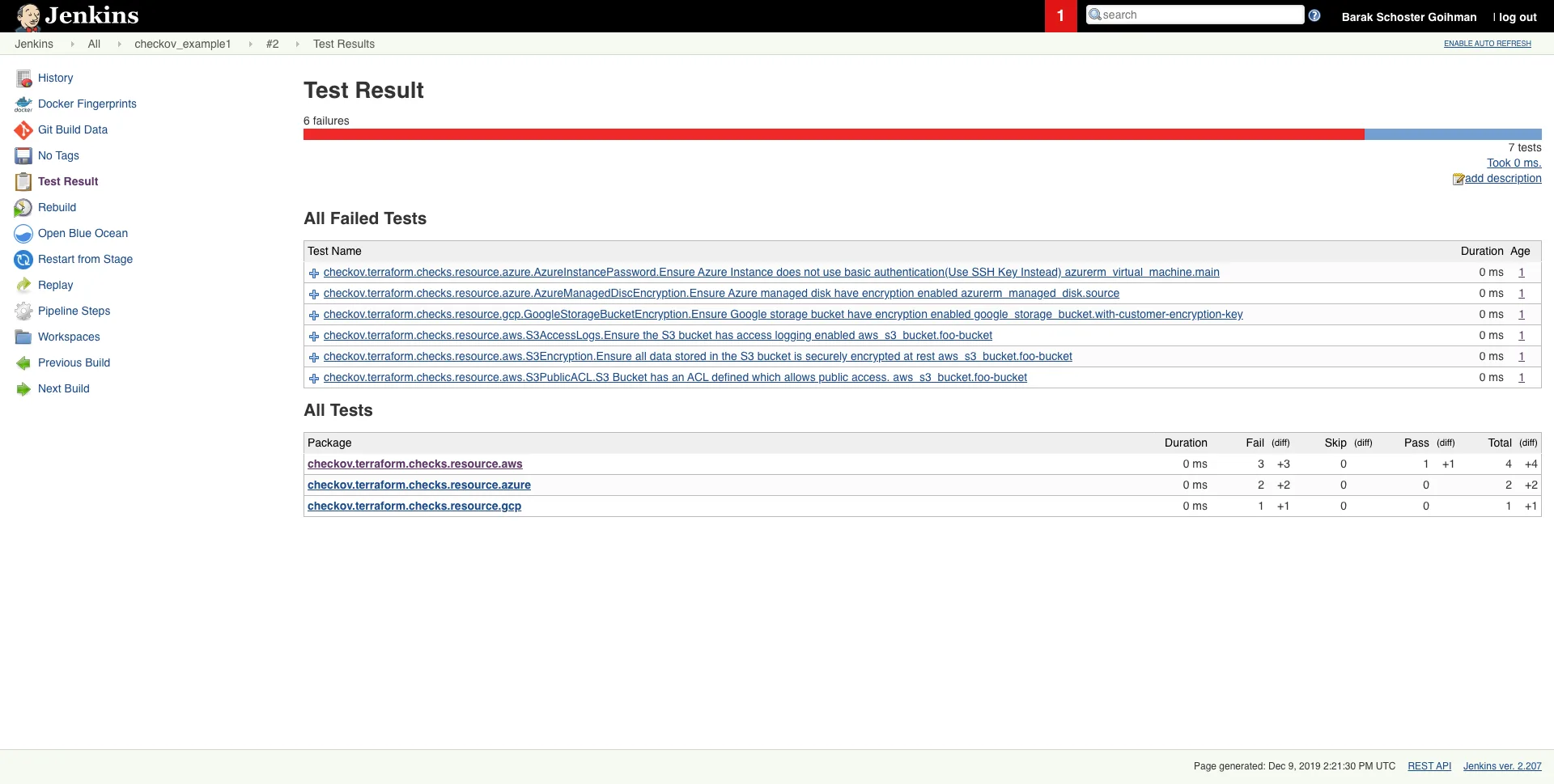
Both tools integrate cleanly into CI/CD. Checkov has an official GitHub Action (bridgecrewio/checkov-action), Docker images for GitLab CI and other platforms, and SARIF output for GitHub code scanning. Non-zero exit codes gate merges.
Trivy has an official GitHub Action (aquasecurity/trivy-action), Docker images, and SARIF output. It also supports severity-based gating (--exit-code 1 --severity HIGH,CRITICAL) so you can fail builds only on serious findings.
Both tools work in any CI/CD system through their CLI. The experience is comparable.
When Should You Choose Checkov?
Choose Checkov if:
- IaC security is your primary concern and you want the deepest policy coverage
- Graph-based cross-resource checks matter for catching complex misconfigurations
- You need compliance reporting for SOC 2, HIPAA, PCI DSS, or CIS Benchmarks
- Your team uses Kustomize, OpenTofu, Serverless Framework, or AWS CDK
- You want custom policies in Python or YAML rather than Rego
- Secrets detection with live API key verification is valuable
When Should You Choose Trivy?
Choose Trivy if:
- You want one tool for IaC scanning, container scanning, dependency scanning, and more
- Container image vulnerability scanning is a requirement
- Kubernetes cluster scanning (live workloads) is part of your security program
- SBOM generation for supply chain compliance is needed
- You prefer Rego (OPA) for custom policies
- Minimizing the number of security tools in your pipeline is a priority
Many teams start with Trivy because it covers the most ground in a single binary, then add Checkov when they need deeper IaC-specific policy coverage or graph-based checks. The two tools complement each other well since Checkov goes deep on IaC while Trivy goes broad across security concerns.
Both are IaC security tools. Browse AppSec Santa’s full IaC Security category for more options and comparisons.
Frequently Asked Questions
Which tool has more IaC checks, Checkov or Trivy?
Can I use both Checkov and Trivy?
Are both tools free?
What happened to tfsec?
Which tool is better for Kubernetes security?

+7 Years in AppSec
10+ years in application security. Reviews and compares 208 AppSec tools across 11 categories to help teams pick the right solution. More about me →