
Checkmarx Alternatives
Top Checkmarx Alternatives

Binary Analysis AppSec Platform
AI-native SAST with automatic vulnerability detection and code fix generation

Compliance-first SAST for automotive, aerospace & medical device software

Meta's Inter-Procedural Static Analyzer
- Checkmarx One bundles SAST, SCA, DAST, IaC, container, API, secrets scanning, and ASPM — no single alternative replicates that breadth in one platform.
- Endor Labs and Aikido are the most-cited modern alternatives in 2026: both lead with noise reduction (up to 97% and 95% respectively) through reachability analysis rather than scanning everything.
- Semgrep scans in seconds with custom rules that read like code; Checkmarx offers deeper inter-procedural taint analysis but with longer scan times.
- Veracode scans compiled binaries so source code never leaves your organization; Checkmarx scans source code directly for line-of-code findings.
- SonarQube’s free Community Edition covers 19 languages with code quality and basic security; Checkmarx has no free tier and uses custom enterprise pricing.
Why Look for Checkmarx Alternatives?#
The best Checkmarx alternatives in 2026 are Veracode, Semgrep, SonarQube, Snyk Code, Fortify, CodeQL, Coverity, HCL AppScan, Endor Labs, and Aikido.
AppSec Santa is vendor-neutral. No company on this page pays to be included, ranked higher, or excluded from comparisons.
Each alternative is evaluated against the same criteria applied across all tool reviews on this site: language and framework coverage, CI/CD integration depth, false-positive rate on public benchmarks, deployment model, pricing transparency, and maintenance activity.
Where vendor marketing claims cannot be independently verified — unpublished benchmark numbers, unverifiable customer counts — I note that explicitly rather than treat them as fact. Rankings reflect analysis based on publicly verifiable evidence.
Checkmarx One is among the most feature-rich application security platforms available. It bundles SAST, SCA, DAST, IaC security, container security, API security, secrets detection, and ASPM under one umbrella.
For large enterprises, that breadth is the entire point. For everyone else, it can be the problem.
The most frequent reason teams evaluate alternatives is cost. Checkmarx is enterprise software with custom pricing and no free tier.
Organizations that only need SAST — not the full suite of scanners — end up paying for capabilities they do not use.
Teams with tighter budgets often find that a focused SAST tool delivers the security coverage they need at a fraction of the price.
Developer experience is another driver. Checkmarx has improved its developer-facing features with IDE plugins and AI remediation agents, but teams accustomed to tools like Semgrep or Snyk Code sometimes report that Checkmarx feels more oriented toward security teams than developers.
Scan times can also be a concern — Checkmarx scans are thorough but not always fast enough for tight CI/CD feedback loops on pull requests.
Finally, some teams simply do not need a platform. They already have SCA covered by one tool, DAST by another, and just need SAST that integrates cleanly with their existing stack.
A focused SAST tool that does one thing well can be a better fit than a platform that does many things adequately.
Top Checkmarx Alternatives#
The best Checkmarx alternative depends on what you are replacing it with:
- Developer-first, AI-native SAST: Endor Labs or Snyk Code
- Consolidated all-in-one platform (Checkmarx’s breadth): Aikido or Cycode
- Enterprise depth without sharing source: Veracode (binary analysis)
- Open-source, custom-rule SAST: Semgrep
- Safety-critical C/C++ precision: Coverity
- Code quality plus security: SonarQube
Each option is detailed below, followed by a feature comparison table.
1. Veracode Static Analysis#
Veracode is Checkmarx’s most direct enterprise competitor. Both serve regulated industries and both offer platforms that cover SAST, DAST, and SCA.
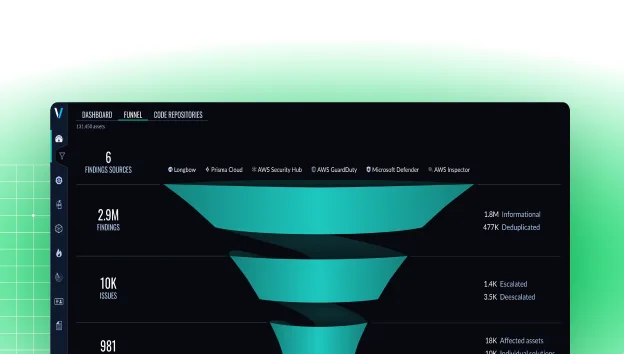
The key difference is Veracode’s binary analysis approach — you upload compiled bytecode rather than source code, which means the vendor never sees your source.
Veracode’s Pipeline Scan returns results in under 90 seconds for CI/CD integration. The full platform scan provides deeper analysis for release gates and compliance. The platform supports 100+ languages and frameworks.
Best for: Enterprise teams that want Checkmarx-class depth without sharing source code with the vendor. License: Commercial Key difference: Binary analysis means no source code leaves your organization. Faster Pipeline Scan for CI/CD.
Veracode review · Full Checkmarx vs Veracode head-to-head
2. Semgrep#
Semgrep is the open-source alternative that security engineers reach for first. Its pattern-based rule syntax lets you write custom detection rules that look like the code you are searching for — no specialized query language needed.
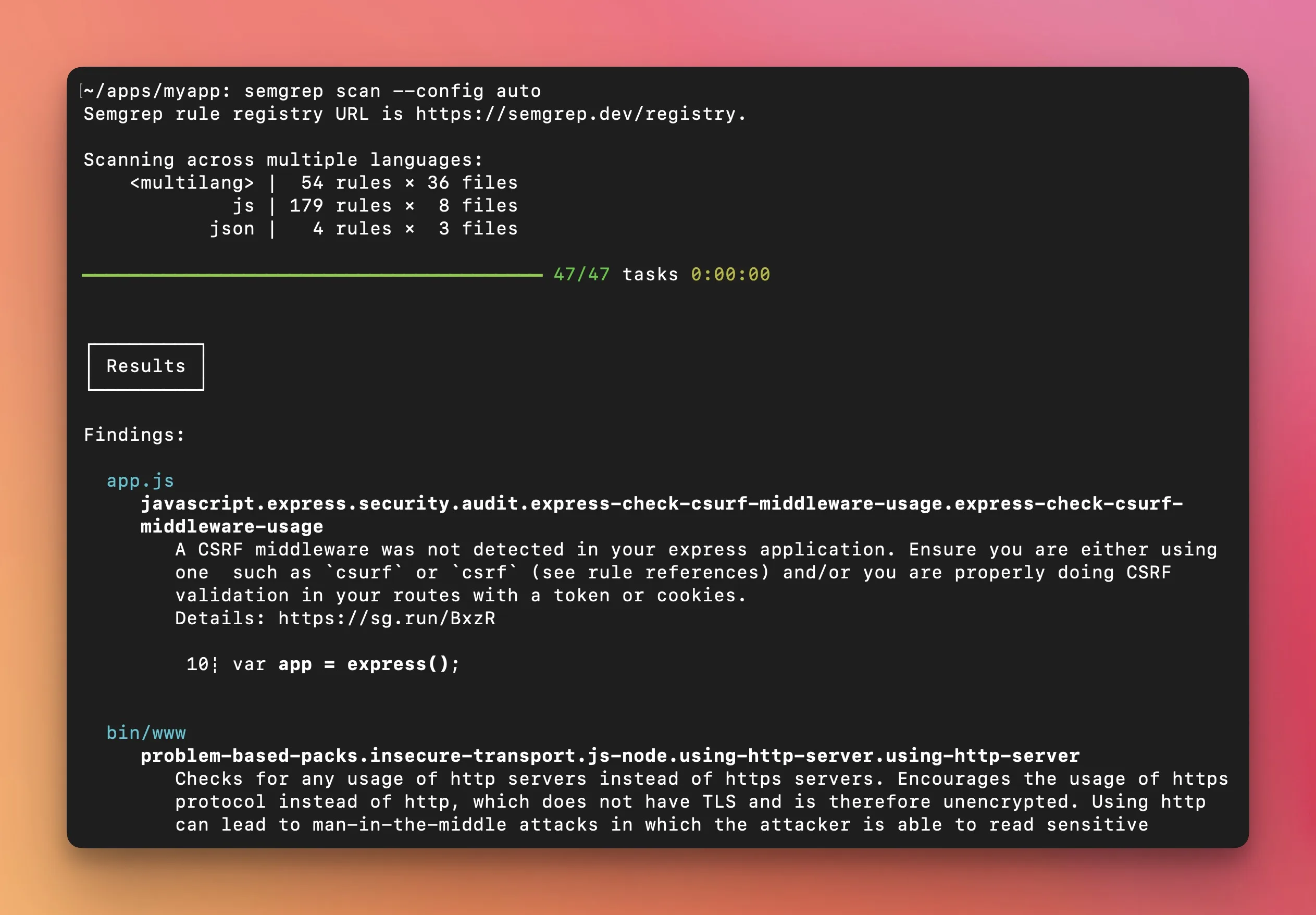
Semgrep Community Edition (CE) covers 30+ languages and runs scans in seconds.
Semgrep Code adds cross-file dataflow analysis, taint tracking, and a managed rule registry. Semgrep Supply Chain adds SCA, and Semgrep Secrets handles credential detection.
Together, the Semgrep AppSec Platform covers much of what Checkmarx offers but with a lighter-weight, CLI-first approach.
Best for: Security engineers who want fast scans, custom rule authoring, and an open-source foundation they can extend.
License: Open-source (LGPL-2.1) with commercial Semgrep Code tier Key difference: Custom rules in minutes, not weeks. Open-source core. Lacks DAST, container, and API scanning that Checkmarx bundles.
Semgrep review · Full Semgrep vs Checkmarx head-to-head
3. SonarQube#
SonarQube combines code quality analysis with security scanning across 35+ languages. The open-source Community Edition covers 19 languages with basic security rules.
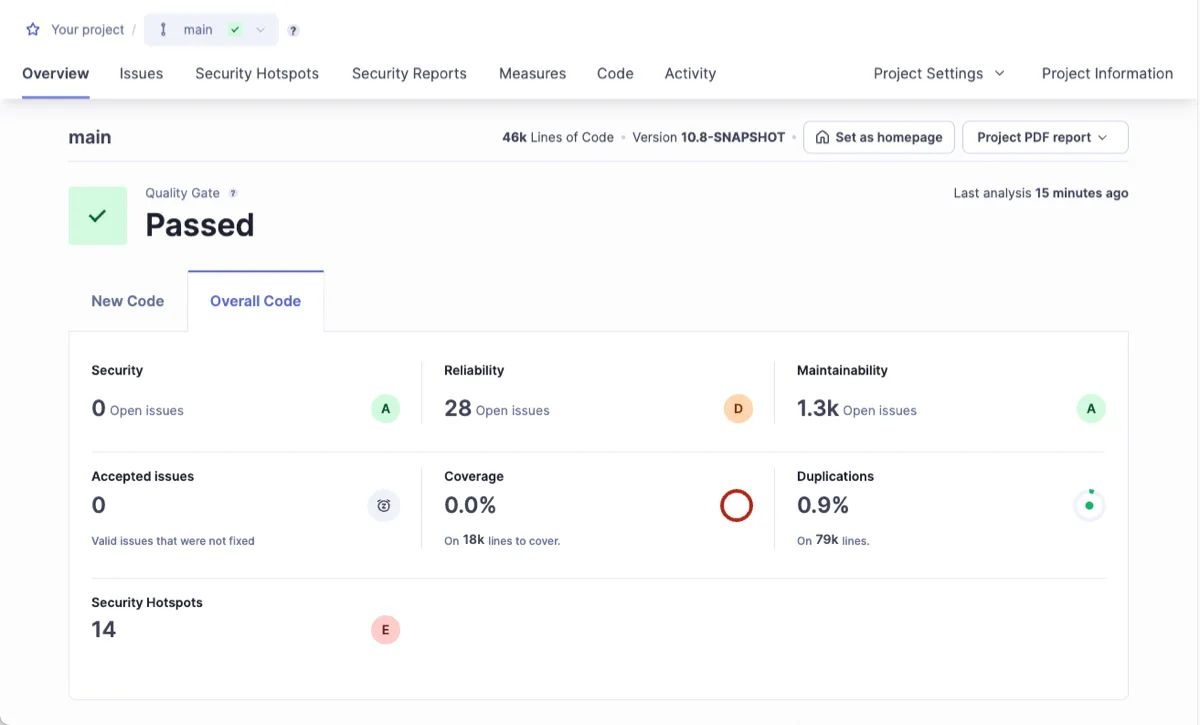
Commercial tiers add taint analysis, branch analysis, and PR decoration. The platform’s quality gate system is one of the most mature available.
SonarQube is not as security-deep as Checkmarx — about 85% of its rules target code quality rather than security. But for teams that want code quality and security in one tool, SonarQube covers both at a lower price point.
Best for: Teams that want unified code quality and security analysis with mature quality gates at a lower cost than Checkmarx. License: Commercial (with free Community Edition) Key difference: Code quality plus security in one platform. Not as deep on security as Checkmarx, but broader on quality.
SonarQube review · Full SonarQube vs Checkmarx head-to-head
4. Snyk Code#
Snyk Code provides real-time SAST scanning inside IDEs with AI-powered fix suggestions. The DeepCode AI engine was trained on millions of real-world code fixes and provides semantic analysis across 20+ languages. Findings appear as you type, before you even commit.
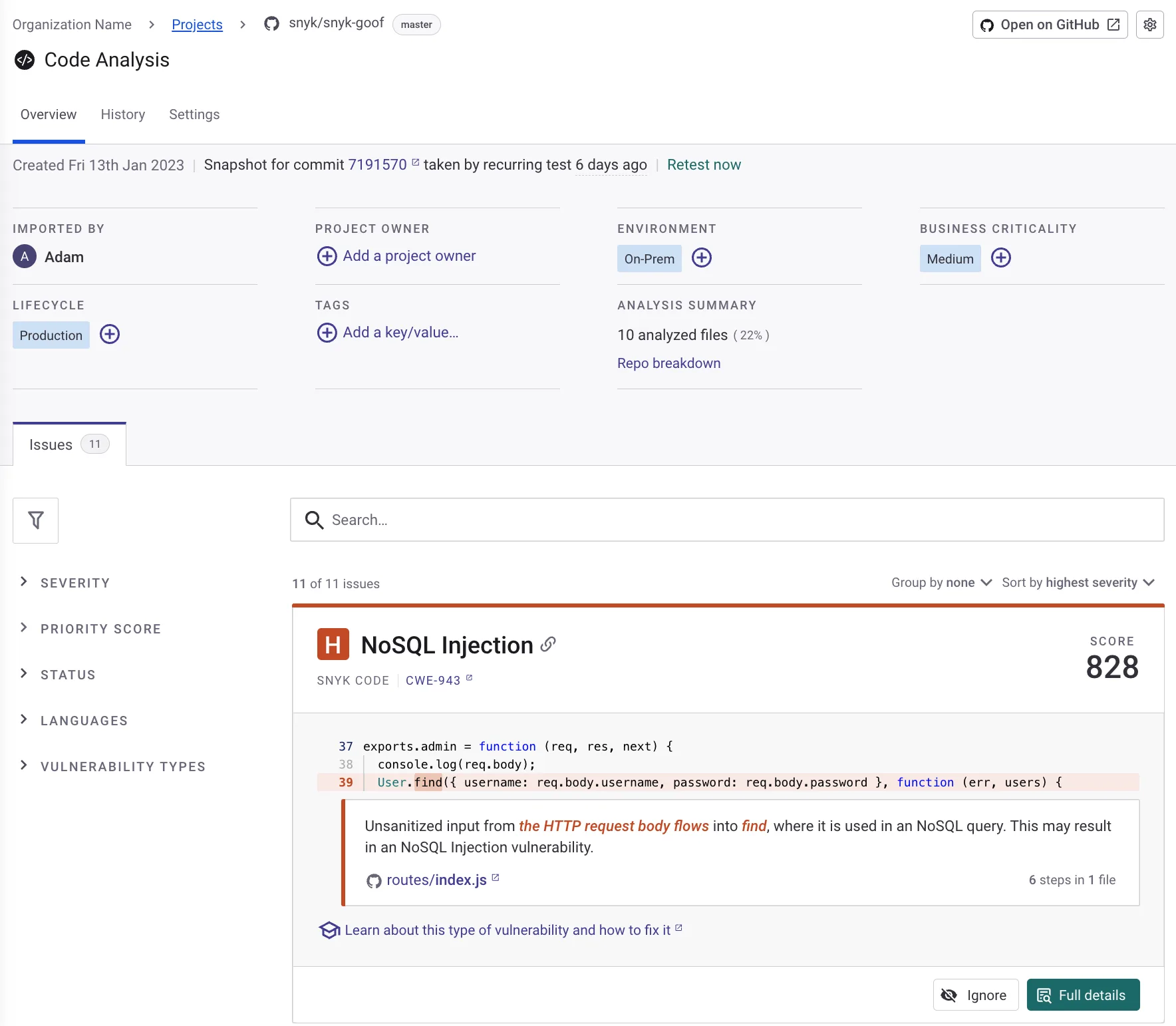
As part of the Snyk platform, Snyk Code integrates with Snyk Open Source (SCA), Snyk Container, and Snyk IaC. This gives teams a platform approach similar to Checkmarx but with a stronger emphasis on developer experience.
Best for: Developer teams that want fast IDE feedback with AI-generated remediation suggestions. License: Commercial (free tier available) Key difference: Real-time IDE scanning catches issues before commit. AI fix suggestions reduce manual remediation work.
Snyk Code review · Full Checkmarx vs Snyk head-to-head
5. Fortify Static Code Analyzer#
Fortify (now part of OpenText) is the longest-running commercial SAST tool on the market, with a two-decade track record in government, defense, and financial services. It covers 33+ languages and 1,700+ vulnerability categories with deep taint analysis and dataflow tracking.
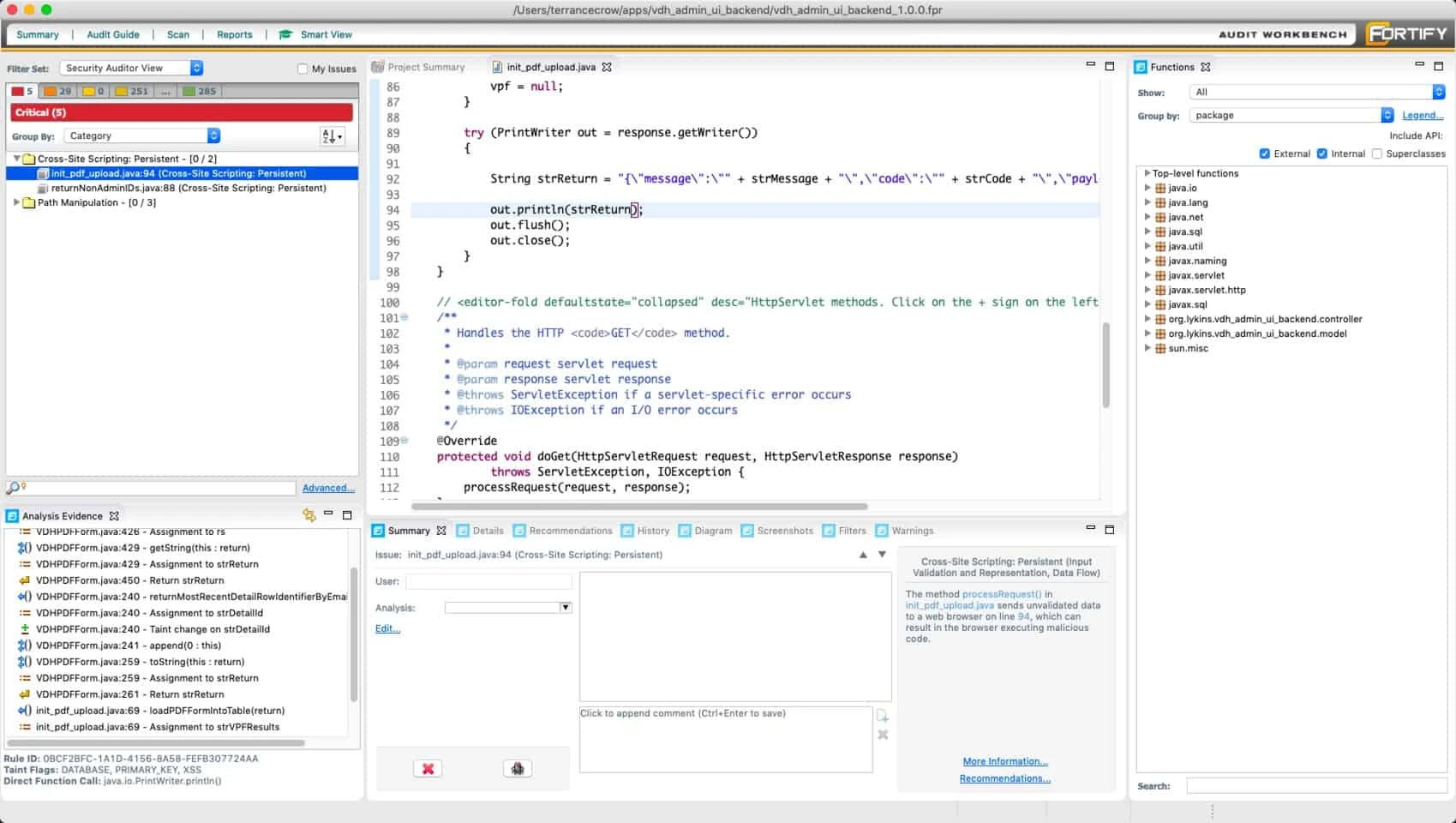
Fortify Aviator brings AI-powered remediation to the IDE. The tool supports both on-premises and cloud deployment.
Fortify’s audit workflow is mature and well-suited for organizations with dedicated security teams that review and triage findings before passing them to developers.
Best for: Organizations that have used Fortify for years and rely on its audit workflow, or those in government and defense where Fortify is a compliance standard.
License: Commercial Key difference: Longest market tenure in enterprise SAST. Strong in government and defense. Audit-centric workflow suits security team-led processes.
Fortify review · Full Checkmarx vs Fortify head-to-head
6. GitHub CodeQL#
CodeQL is GitHub’s semantic code analysis engine. It treats code as queryable data and supports deep dataflow and taint analysis across 12 languages.
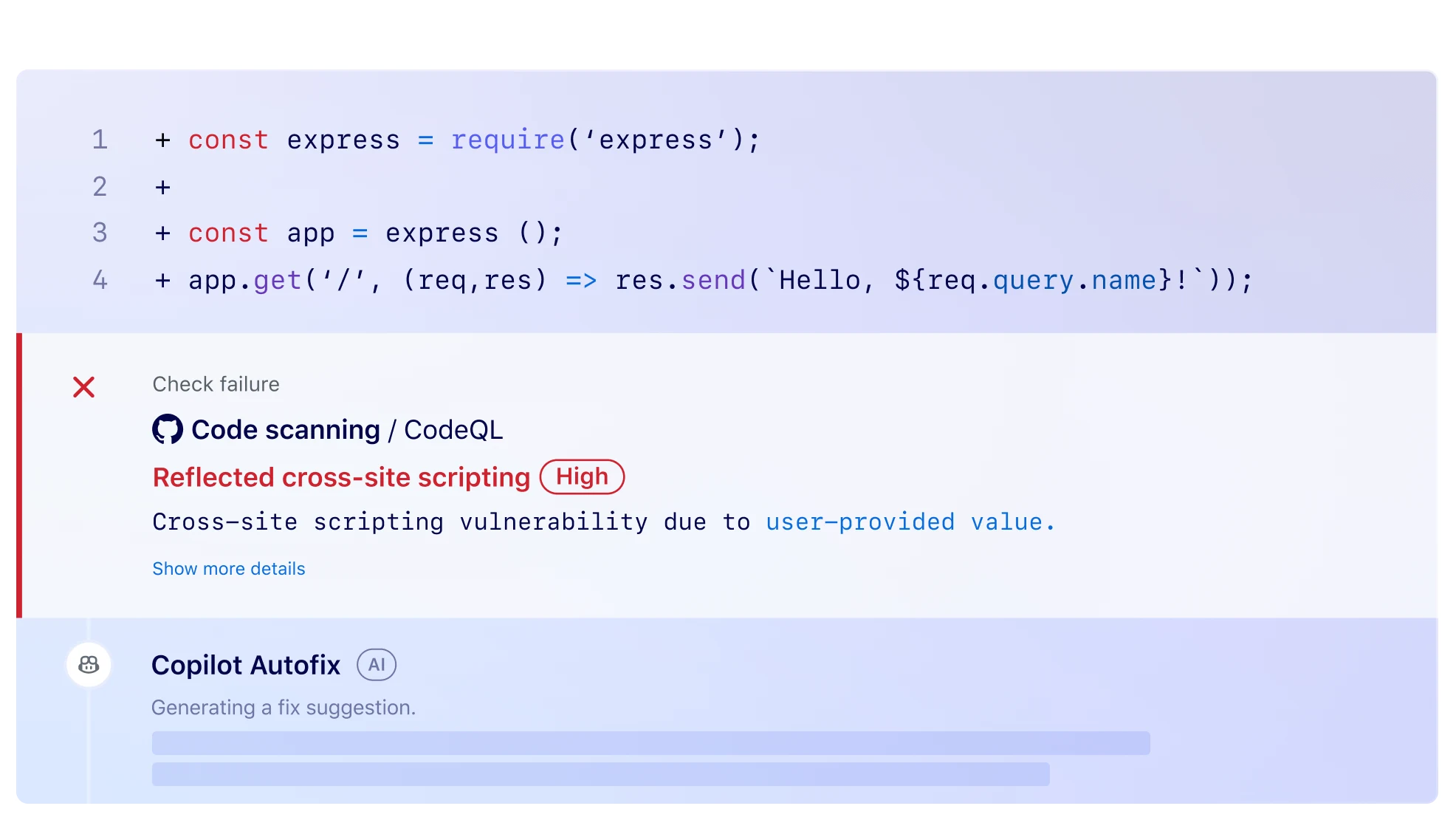
CodeQL queries are precise and catch complex vulnerability patterns that simpler scanners miss.
Free for public repositories, CodeQL is included with GitHub Advanced Security for private repos. The native GitHub Actions integration means zero infrastructure to manage for teams already on GitHub.
Best for: GitHub-based teams that want deep semantic analysis without managing additional infrastructure. License: Free (public repos), commercial (private repos via GitHub Advanced Security) Key difference: Query-based approach enables very precise detection patterns. GitHub-native with no separate server.
7. Coverity#
Coverity provides interprocedural dataflow and path-sensitive analysis at a depth few tools match. It covers 22 languages and 200+ frameworks, with particular strength in C/C++ and Java.
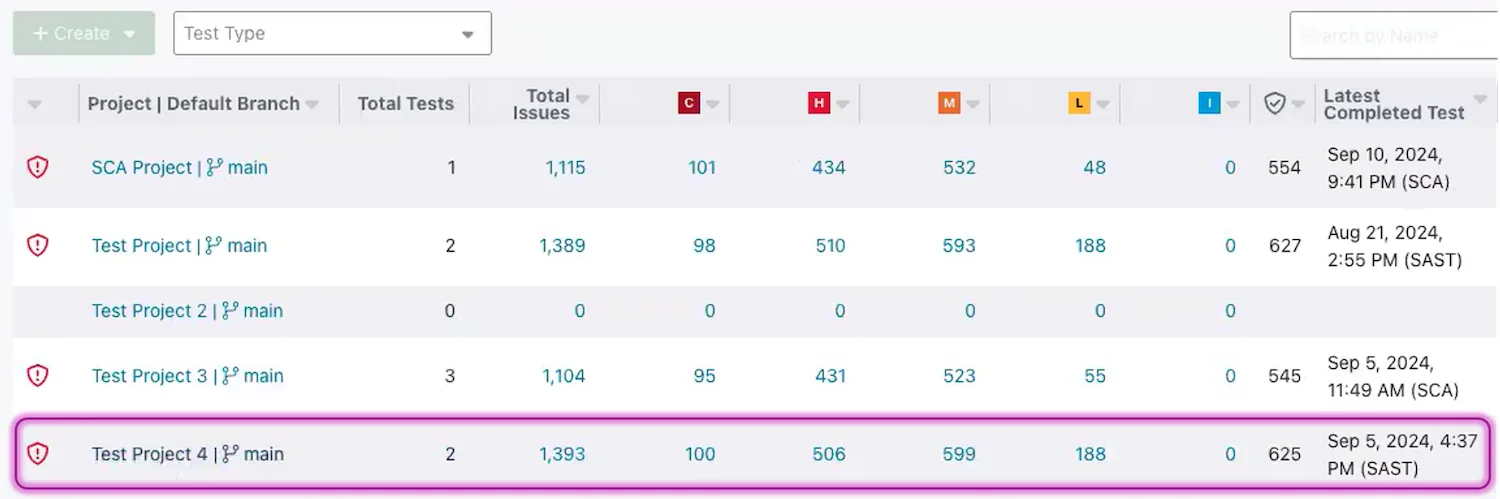
The tool is TUV SUD certified for safety-critical development (ISO 26262, IEC 61508).
Coverity’s precision is its selling point. It produces fewer false positives than most SAST tools, which matters when scanning large codebases where alert fatigue becomes the primary blocker to remediation.
Best for: Enterprise teams with large, complex codebases where precision matters more than speed.
License: Commercial Key difference: Deepest interprocedural analysis available. Safety-certified for automotive and industrial applications. Fewer false positives than most alternatives.
8. HCL AppScan#
HCL AppScan is a long-established enterprise AppSec platform that combines SAST, DAST, IAST, and SCA.
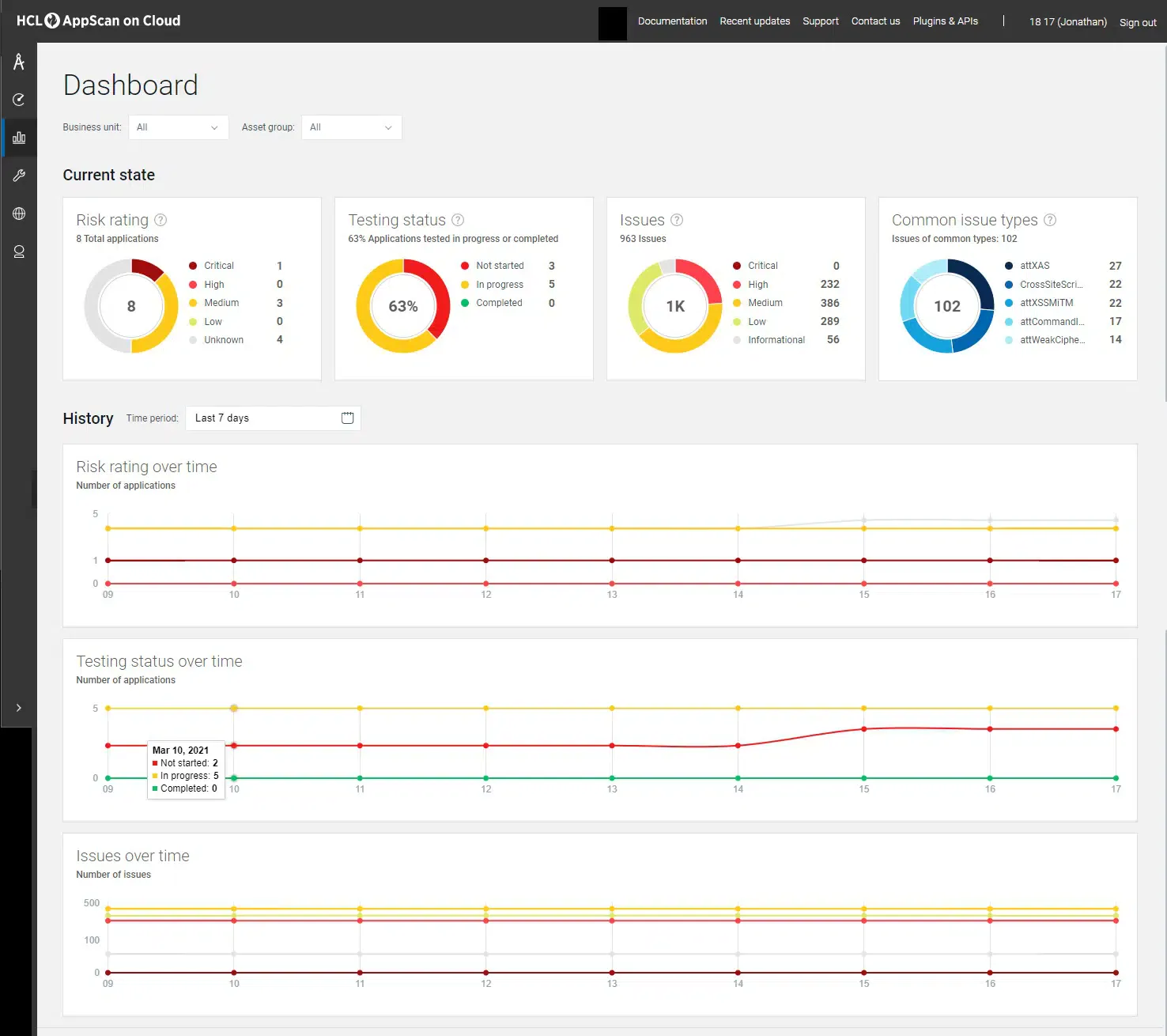
The free CodeSweep IDE plugin provides basic SAST scanning at zero cost — a rare offering from a commercial vendor. RapidFix uses AI to generate fix suggestions.
AppScan supports 30+ languages and integrates with Jenkins, GitHub Actions, GitLab CI, Azure DevOps, and Bitbucket. The platform offers cloud, on-premises, and hybrid deployment models.
Best for: Enterprise teams that want a multi-scanner platform at a lower price point than Checkmarx, with a free IDE plugin. License: Commercial (CodeSweep plugin is free) Key difference: Free CodeSweep IDE plugin for basic SAST. Multi-scanner platform at typically lower enterprise pricing than Checkmarx.
9. Endor Labs#
Endor Labs is an AI-native AppSec platform built around function-level reachability analysis, and it now leads most 2026 “Checkmarx alternative” shortlists.
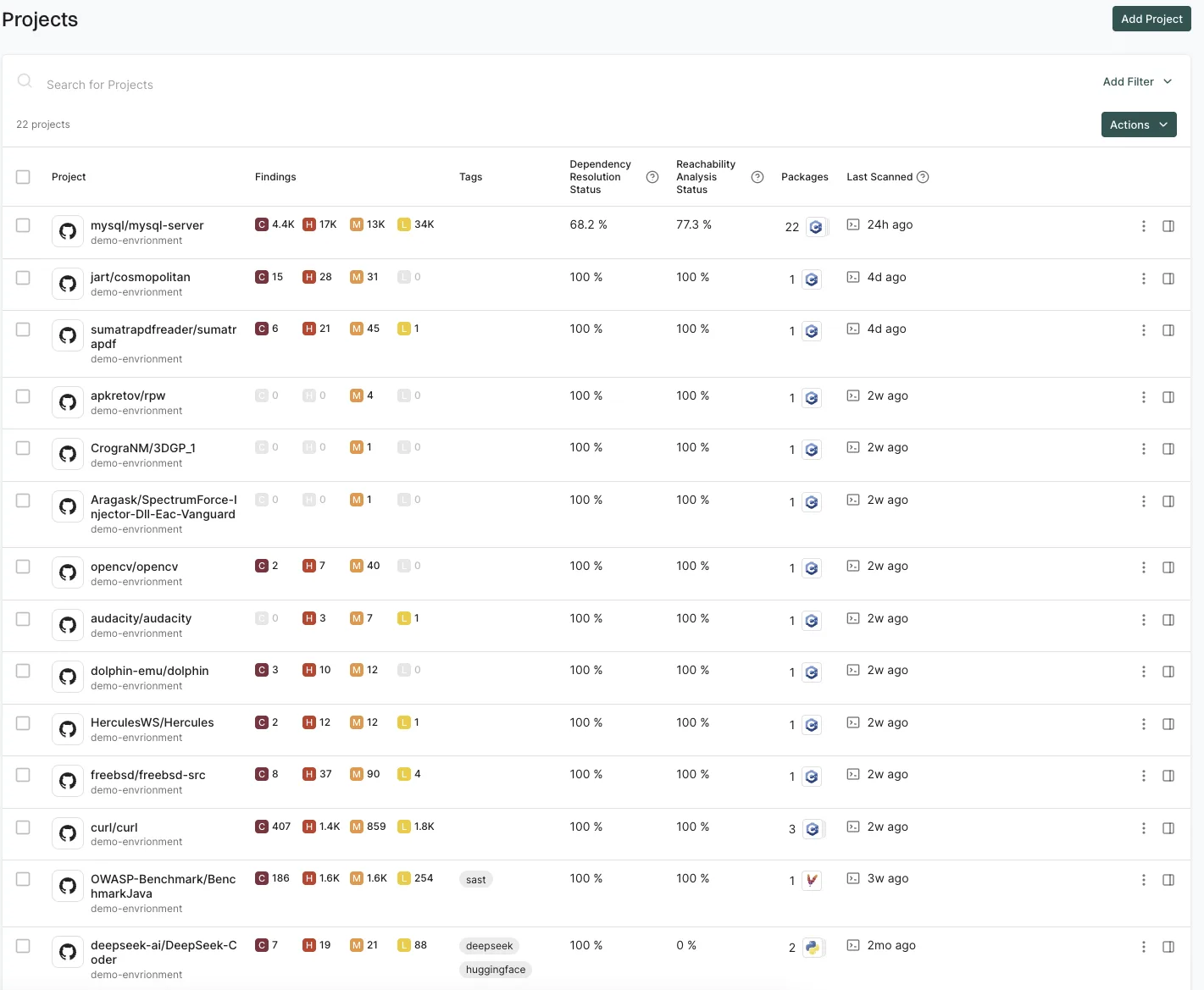
Instead of flagging every finding, it determines which vulnerabilities actually reach running code, cutting alert noise by up to 97% across 40+ languages.
The platform combines SAST, SCA, container scanning, secrets, and malware detection, and counts OpenAI, Cursor, Snowflake, and Atlassian among its users.
Compared to Checkmarx, Endor Labs trades the legacy enterprise suite for a reachability-first, developer-friendly model. It is the strongest pick for teams whose noise problem is worse than their coverage problem.
Best for: Teams that want modern, reachability-based prioritization rather than a traditional enterprise scanner. License: Commercial Key difference: Function-level reachability cuts noise up to 97%. AI-native and developer-friendly rather than security-team-led.
10. Aikido Security#
Aikido matches Checkmarx’s breadth with a lighter footprint, bundling SAST, SCA, DAST, IaC, secrets, container scanning, and cloud posture into one platform used by 50,000+ organizations.

Where Checkmarx uses ASPM to prioritize across its scanners, Aikido’s AutoTriage cuts alert volume by up to 95% through deduplication and reachability, with flat per-developer pricing instead of custom enterprise quotes.
The free tier and public pricing are the main reasons smaller teams pick it over Checkmarx. It does not match Checkmarx’s depth in regulated-industry compliance reporting.
Best for: Teams that want Checkmarx-style breadth with transparent flat pricing and aggressive noise reduction. License: Commercial (free tier available) Key difference: All-in-one platform with 95% noise reduction and flat per-developer pricing. Lighter on enterprise compliance depth than Checkmarx.
Open-source Checkmarx alternatives#
For teams replacing Checkmarx with free SAST, six open-source projects cover most of the ground:
- Semgrep Community Edition — pattern-based scanner with 30+ languages and a public rule registry. The closest free analogue to Checkmarx’s rule-based detection. Custom rules are written in YAML and look like the code they match.
- SonarQube Community Edition — 19 languages with code quality plus basic security rules; lacks the taint analysis available in commercial tiers, but ships a mature quality-gate workflow that Checkmarx does not.
- GitHub CodeQL — free for public repositories, paid via GitHub Advanced Security for private. Query-based semantic analysis catches the inter-procedural taint flow that Bandit-class scanners miss.
- Brakeman — Ruby on Rails-only SAST that has been the de-facto Rails security scanner for over a decade. Drop it in any Rails project and it works without configuration.
- gosec — Go-only AST scanner with rule packs for the OWASP Top 10. Maintained by the securego team; integrates cleanly with golangci-lint.
- Bandit — PyCQA-maintained Python scanner with 47 built-in checks. The Python equivalent of Brakeman or gosec — narrow scope, fast feedback, no commercial pressure.
Free SAST is good enough for Checkmarx replacement when the codebase is single-language and the team already runs ASPM, SCA, and secrets scanning through other tools.
The trade-off is breadth: Checkmarx One bundles SAST, SCA, DAST, IaC, container, API, and secrets in one platform; replacing it with open-source tools means assembling that stack yourself. For a wider open-source SAST view, the open-source SAST tools guide ranks every active project.
Feature Comparison#
| Feature | Checkmarx | Veracode | Semgrep | SonarQube | Snyk Code | Fortify | CodeQL | Endor Labs | Aikido |
|---|---|---|---|---|---|---|---|---|---|
| License | Commercial | Commercial | CE / Commercial | Free CE / Commercial | Commercial (free tier) | Commercial | Free (public) / Commercial | Commercial | Commercial (free tier) |
| Languages | 35+ | 100+ | 30+ | 35+ | 20+ | 33+ | 12 | 40+ | 30+ |
| Scan approach | Source code | Binary | Pattern + dataflow | Source code | Source code | Source code | Semantic queries | Source + reachability | Source code |
| Taint analysis | Yes | Yes | Semgrep Code | Paid tiers | Yes | Yes | Yes | Yes (reachability) | Yes |
| Custom rules | Yes | Core feature | Core feature | Limited | No | Yes | Yes (QL) | Limited | Limited |
| AI remediation | Yes (Assist) | Yes (Veracode Fix) | Yes (Assistant) | AI CodeFix | Yes (DeepCode) | Yes (Aviator) | No | Yes | Yes (AutoFix) |
| Multi-scanner platform | SAST, SCA, DAST, IaC, API, containers | SAST, DAST, SCA | SAST, SCA, Secrets | SAST only | SAST (+ SCA via Snyk) | SAST (+ DAST via WebInspect) | SAST only | SAST, SCA, containers, secrets | SAST, SCA, DAST, IaC, containers |
| ASPM | Yes | Limited | No | No | No | No | No | Yes | Yes |
Checkmarx competitors at a glance#
Four more Checkmarx competitors I see come up in evaluations but did not warrant a full section above:
- Black Duck Coverity — formerly Synopsys, now under the Black Duck name following the 2024 spin-off. Long-running enterprise SAST with safety-certified pedigree (ISO 26262, IEC 61508) for automotive and industrial codebases.
- Cycode — ASPM-led platform that markets reachability analysis as the primary differentiator. Combines SAST, SCA, IaC, secrets, and CI/CD posture in one console.
- GitHub Advanced Security — bundles CodeQL SAST, secret scanning, and Dependabot SCA. A fit when the codebase already lives on GitHub Enterprise and procurement prefers a single vendor.
- Invicti — Netsparker rebrand focused on DAST + IAST first, with SAST added more recently. Compares against Checkmarx mainly for teams that want runtime-anchored vulnerability evidence rather than source-only detection.
When to Stay with Checkmarx#
Checkmarx remains the right choice in several scenarios:
- You need a unified application security platform. No other single vendor covers SAST, SCA, DAST, IaC, container, API, and secrets scanning with ASPM prioritization on top. Replacing Checkmarx means assembling and integrating multiple tools.
- ASPM-level prioritization is critical. If you scan large applications with thousands of findings, Checkmarx’s ASPM layer correlates results across scanner types and prioritizes by business context. This cross-scanner prioritization is hard to replicate with separate tools.
- You serve regulated industries. Checkmarx’s compliance reporting, audit trails, and depth of scanning satisfy regulatory requirements that lighter tools may not cover.
- You have 35+ language coverage needs. Checkmarx supports more languages and frameworks than most alternatives. Polyglot enterprise codebases benefit from this breadth.
- Your organization is already invested. Migration from Checkmarx means retraining developers, reconfiguring CI/CD pipelines, re-establishing baselines, and losing historical trend data. The switching cost is high for large deployments.
For detailed reviews of each alternative, browse the AppSec Santa SAST tools category.
Sources#
- Checkmarx One product page — vendor product surface for the comparison baseline.
- Snyk Code — alternative #1 capability and pricing reference.
- SonarQube features — alternative #2 capability reference.
- Semgrep platform — alternative #3 capability and pricing reference.
- Veracode platform — alternative #4 capability reference.
- Coverity (Synopsys → Black Duck) — alternative #5 capability reference.
- Fortify (OpenText) — alternative #6 capability reference.
- GitHub Advanced Security — alternative #7 (CodeQL) capability reference.
- Gartner Peer Insights — Application Security Testing — buyer feedback across all listed vendors.
Frequently Asked Questions
What is the best free alternative to Checkmarx?
How does Checkmarx compare to Veracode?
Which Checkmarx alternative has the fastest scan times?
Is Checkmarx overkill for small teams?
Can open-source SAST tools match Checkmarx accuracy?

Written & maintained by
Suphi CankurtEight years on the vendor side of application-security sales — thousands of evaluations and demos. I started AppSec Santa in 2022 to put that insider view to work for buyers. Independent of any vendor, paid by none, and honest about what fits whom.