
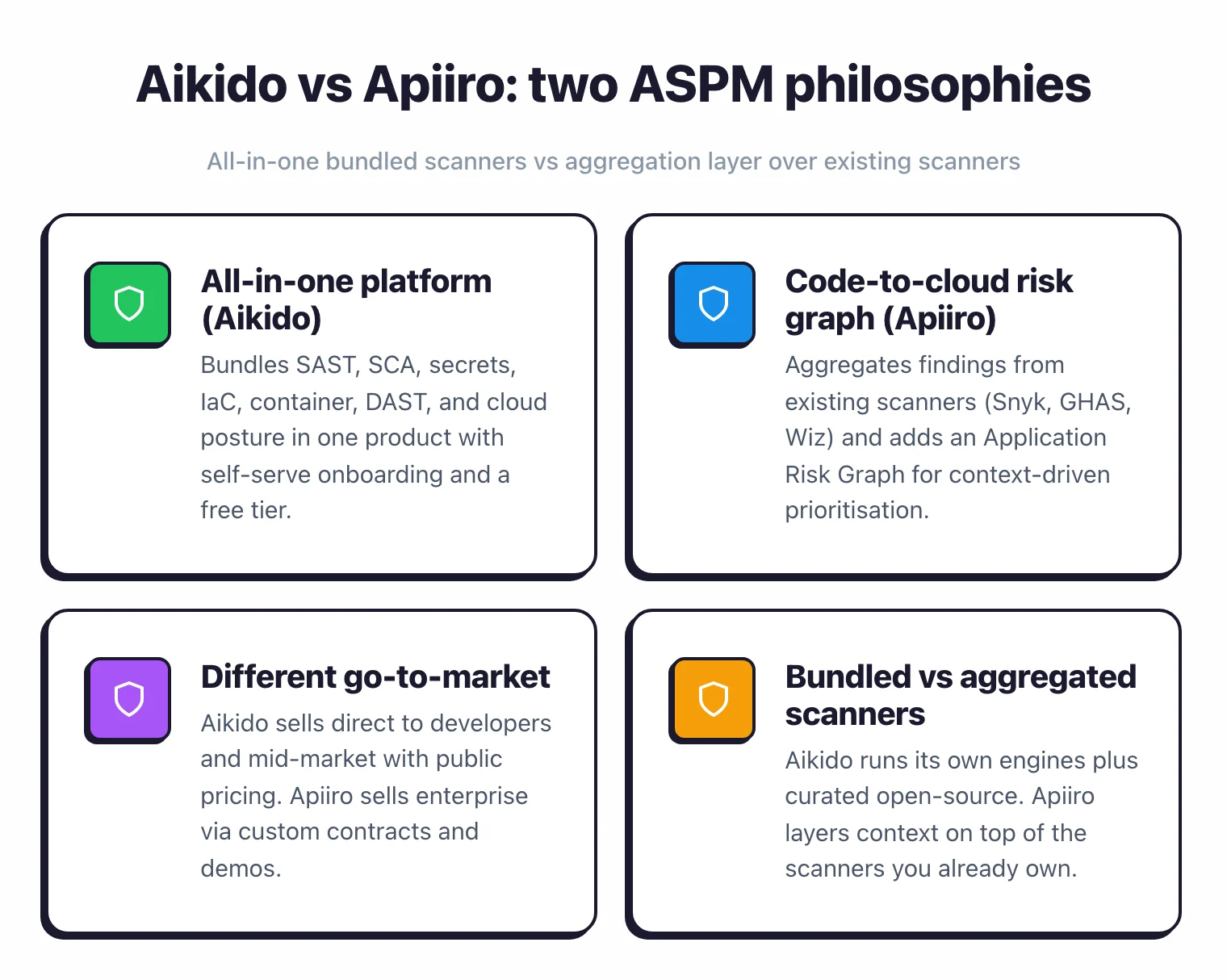
- Aikido Security positions as a developer-first all-in-one AppSec platform covering SAST, SCA, secrets, IaC, DAST, container, and cloud posture in one product. Apiiro positions as a deep ASPM with a code-to-cloud risk graph built for enterprise context.
- Aikido publishes pricing across Free, Basic, Pro, Advanced, and Enterprise tiers on its pricing page. Apiiro is enterprise sales only with no public pricing.
- Aikido bundles its own scanning engines plus curated open-source scanners across SAST, SCA, secrets, IaC, and containers. Apiiro layers on top of existing scanners and focuses on risk-context aggregation rather than running its own SAST.
- Apiiro’s differentiator is its Application Risk Graph, which maps code changes to deployed services, owners, business context, and runtime exposure. Aikido’s differentiator is one platform that mid-market teams can self-serve without a sales call.
- Aikido fits startup-to-mid-market shops that want one platform fast. Apiiro fits enterprises with mature AppSec programs that need risk-context aggregation across many existing scanners.
Which Is Better: Aikido or Apiiro?#
Aikido vs Apiiro comes down to buyer fit: Aikido wins for fast self-serve adoption and mid-market budgets, Apiiro wins for deep risk-context aggregation in mature enterprise programs.
The two tools target different buyers despite both being labelled ASPM. Aikido is a bundle of scanners (SAST, SCA, secrets, IaC, container, DAST, cloud) with a developer-friendly UX, public pricing, and a free tier. A startup or mid-market shop can self-serve onto it in an afternoon.
Apiiro is a code-to-cloud risk graph layered on top of existing scanners. It is built for enterprise AppSec teams managing risk across hundreds or thousands of services.
The assumption is that you already have scanners, and what you need is the context to make their findings actionable.
For a startup picking a first AppSec platform, Aikido is the easier starting point. For a Fortune 500 with an established AppSec program and twenty existing tools, Apiiro fits the gap.
Key Differences#
| Dimension | Aikido Security | Apiiro |
|---|---|---|
| Position | All-in-one AppSec platform | Deep ASPM with code-to-cloud risk graph |
| Scanner approach | Bundles its own + curated OSS engines across the AppSec stack | Aggregates risk context across existing scanners |
| Pricing model | Public: Free, Basic, Pro, Advanced, Enterprise tiers | Enterprise sales only |
| Coverage | SAST, SCA, secrets, IaC, container, DAST, cloud | Code to cloud risk graph + integrations to scanners |
| Best for | Startup to mid-market self-serve | Enterprise with mature AppSec programs |
| UX target | Developer-first | AppSec team-first |
| Differentiator | One platform, fast onboarding, free tier | Application Risk Graph mapping code to runtime exposure |
Head-to-Head#
Platform philosophy#
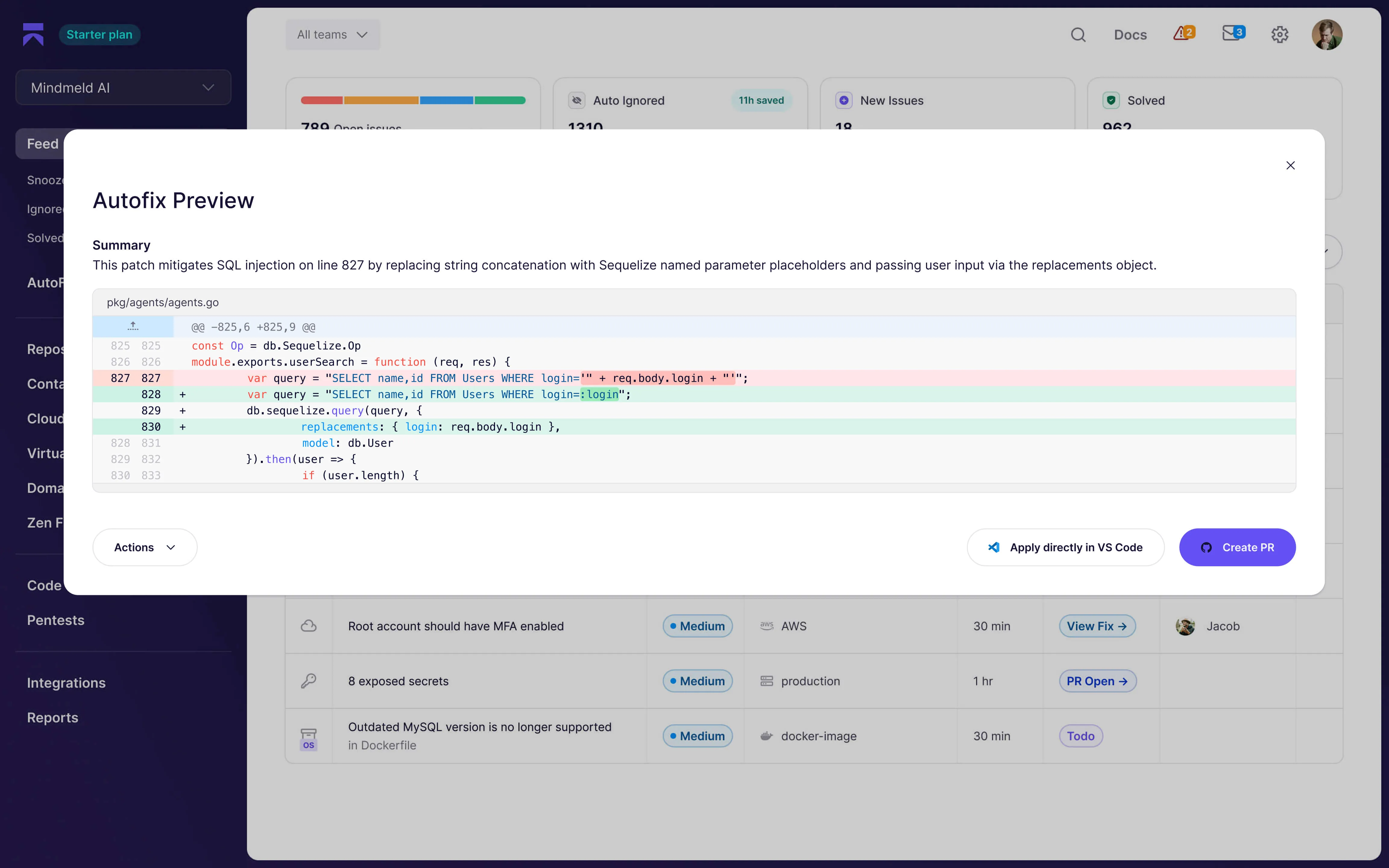
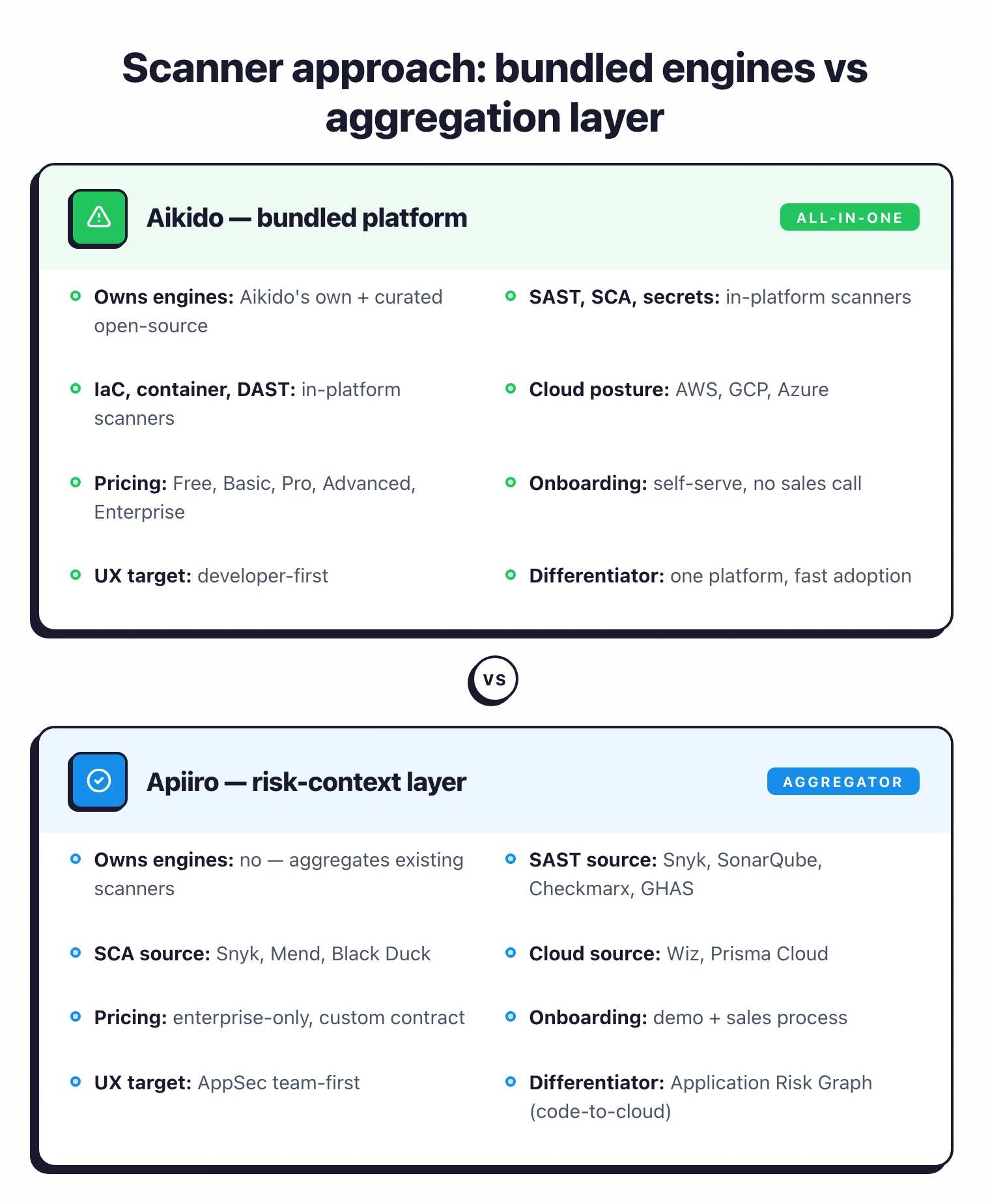
Aikido is the bundle. SAST, SCA, secrets, IaC, container, DAST, and cloud posture all live in one product, blending Aikido’s own engines with curated open-source scanners. The pitch is one tool covering the full stack.
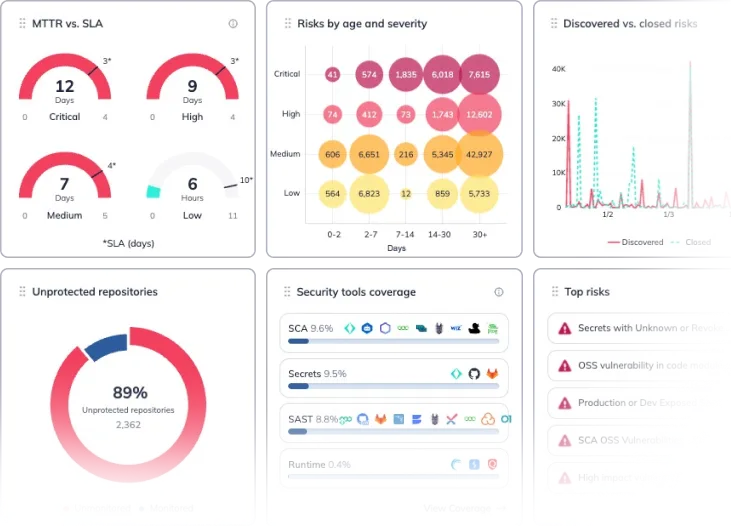
Apiiro is the aggregation layer. It does not try to be the SAST or the SCA. Instead, it pulls findings from your existing scanners (Snyk, SonarQube, Checkmarx, GHAS, Wiz, and so on).
The added value is context: who owns the code, where it runs, who can reach it, and what business function it supports.
The two tools answer different questions. Aikido: “What scanners do I need?” Apiiro: “How do I make sense of the scanners I already have?”
Scanner coverage and depth#
Aikido covers the full AppSec stack with bundled engines. SAST, SCA, secrets, IaC, container, and DAST scanning all run inside the platform, mixing Aikido’s own engines with curated open-source scanners. Cloud posture covers AWS, GCP, and Azure.
Apiiro integrates with the scanners you already have. The integrations list covers Snyk, GitHub Advanced Security, SonarQube, Checkmarx, Veracode, Mend, Black Duck, Wiz, Prisma Cloud, and others. The depth of any specific finding type comes from the underlying scanner, not Apiiro itself.
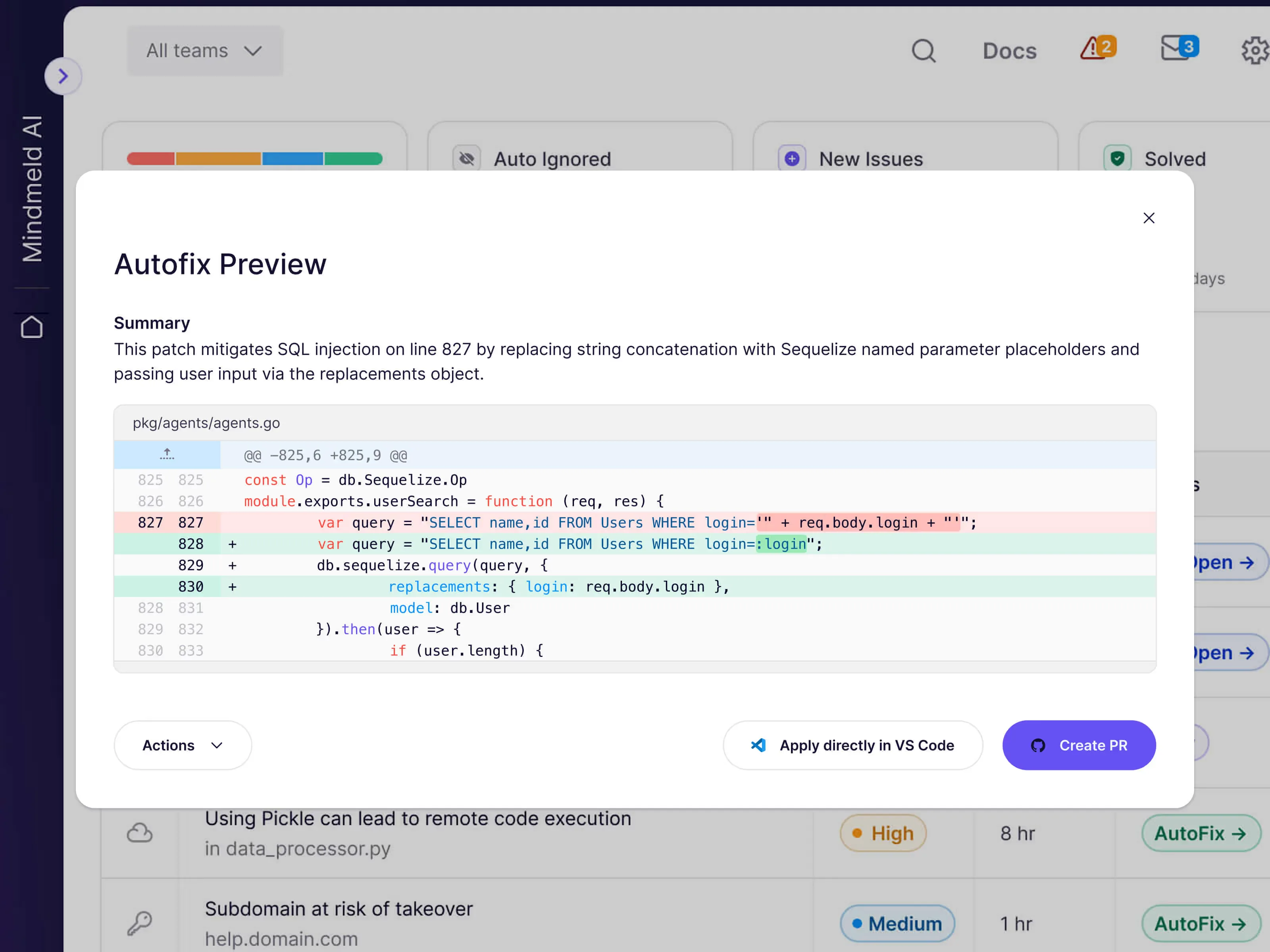
For teams without existing scanners, Aikido is the faster path to coverage. For teams that already invested in scanners, Apiiro adds the layer that makes them work together.
The Application Risk Graph#
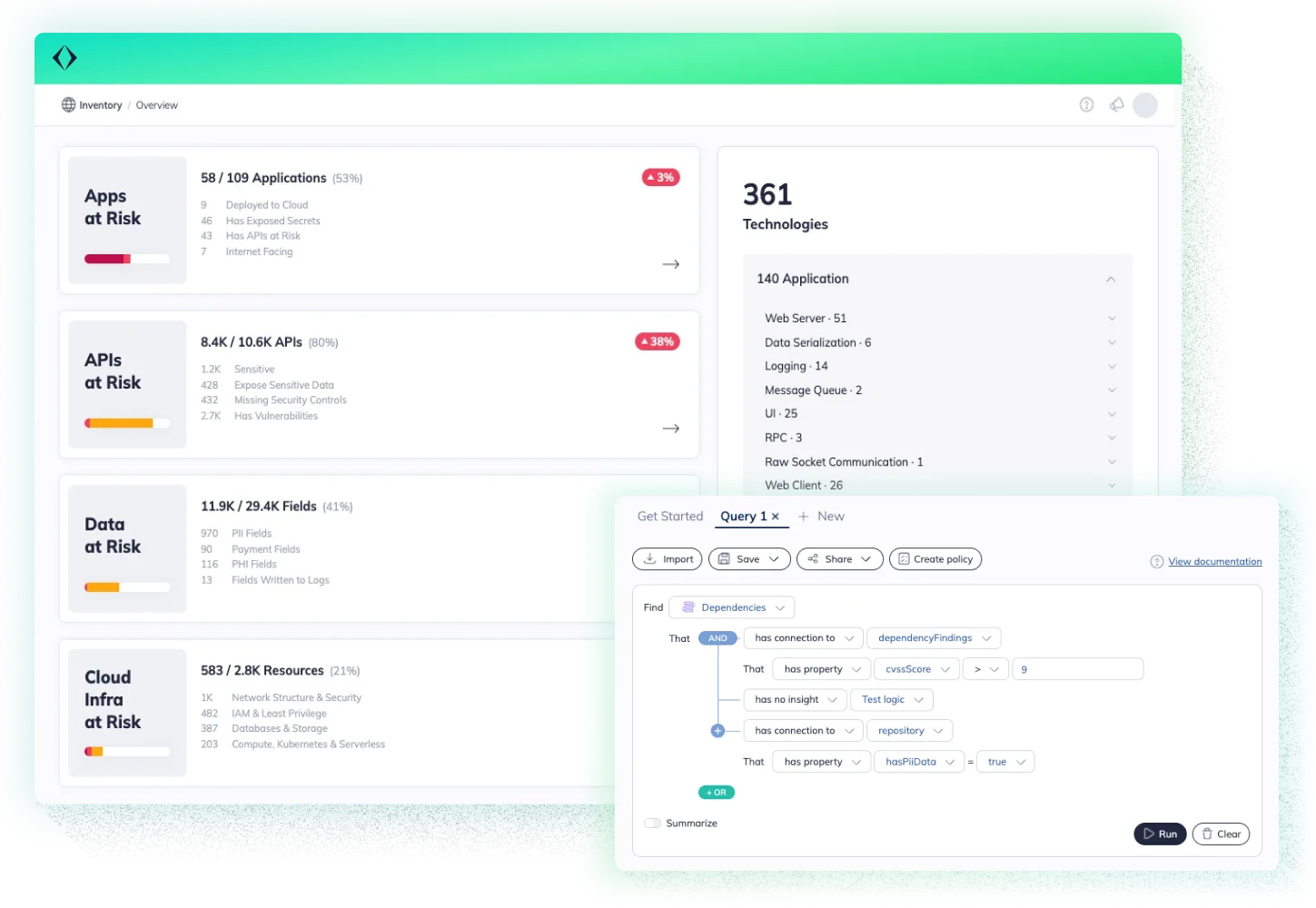
Apiiro’s flagship feature is its Application Risk Graph, a model that connects source repositories, deployed services, ownership, runtime exposure, and business context. The graph powers risk prioritisation: a vulnerability in a public-facing payment service surfaces above the same vulnerability in an internal demo.
Aikido has prioritisation features (the “95% noise reduction” is part of its pitch), but the model is rules-based deduplication and context-light prioritisation rather than a code-to-cloud graph. For very large enterprises with thousands of services, the graph is meaningfully more useful.
For mid-market shops with dozens of services, the graph is overkill, and the simpler dedup-and-prioritise model is enough.
Pricing transparency#
Aikido publishes pricing on its website. The lineup runs Free, Basic, Pro, Advanced, and Enterprise, with each tier and its contents listed publicly. Onboarding is self-serve: credit card, connect a repo, start scanning.
Apiiro does not publish pricing. All deals are enterprise sales with custom contracts. The shortest path to evaluating Apiiro is requesting a demo.
For procurement, Aikido is much easier on the budget conversation. For larger enterprises that already negotiate enterprise software contracts, the lack of public pricing is normal.
Developer experience#
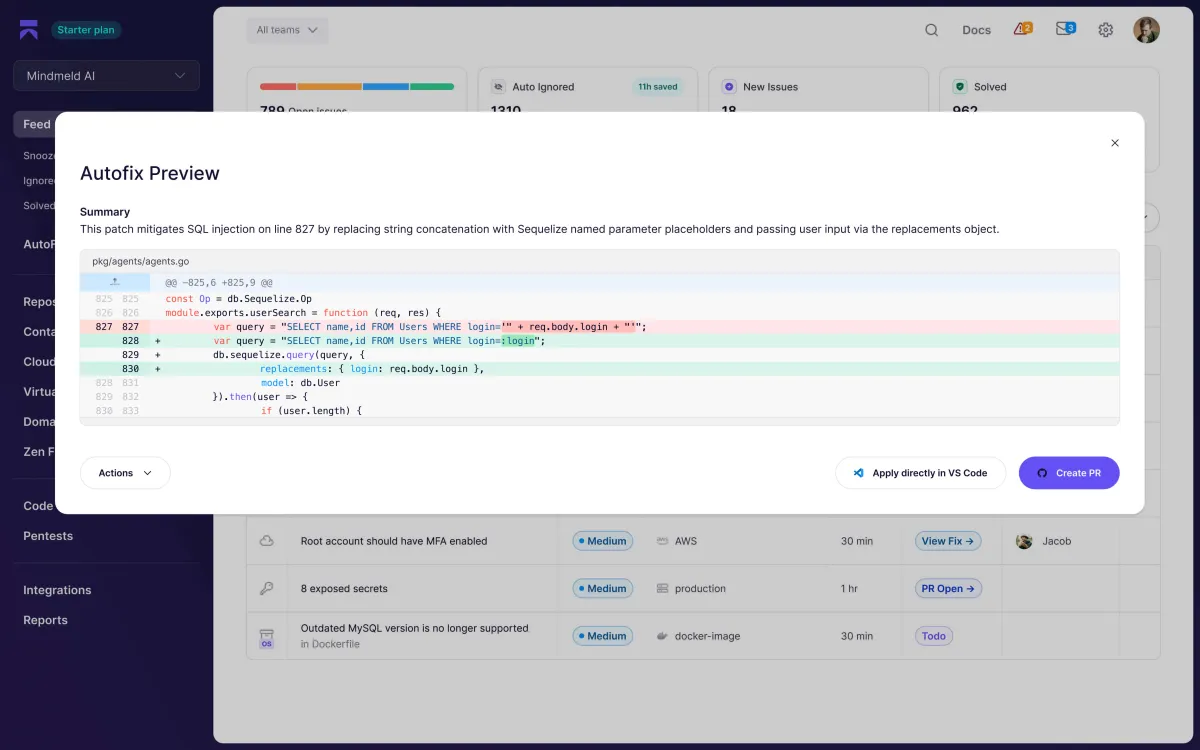
Aikido is designed to be picked up and used by developers without an AppSec team between them and the tool. Connect a repo, get findings, click “fix” on supported issues. No training, no professional services, no sales call.
Apiiro is designed for AppSec teams to operate. Developers consume findings via PR comments, IDE integrations, and ticketing systems, but the dashboard, triage workflows, ownership rules, and SLA management are AppSec-team responsibilities.
For a startup or scale-up where the same engineer doing the security work also writes the code, Aikido fits. For an enterprise with a dedicated AppSec function, Apiiro’s operating model is more familiar.
When to Choose Each#
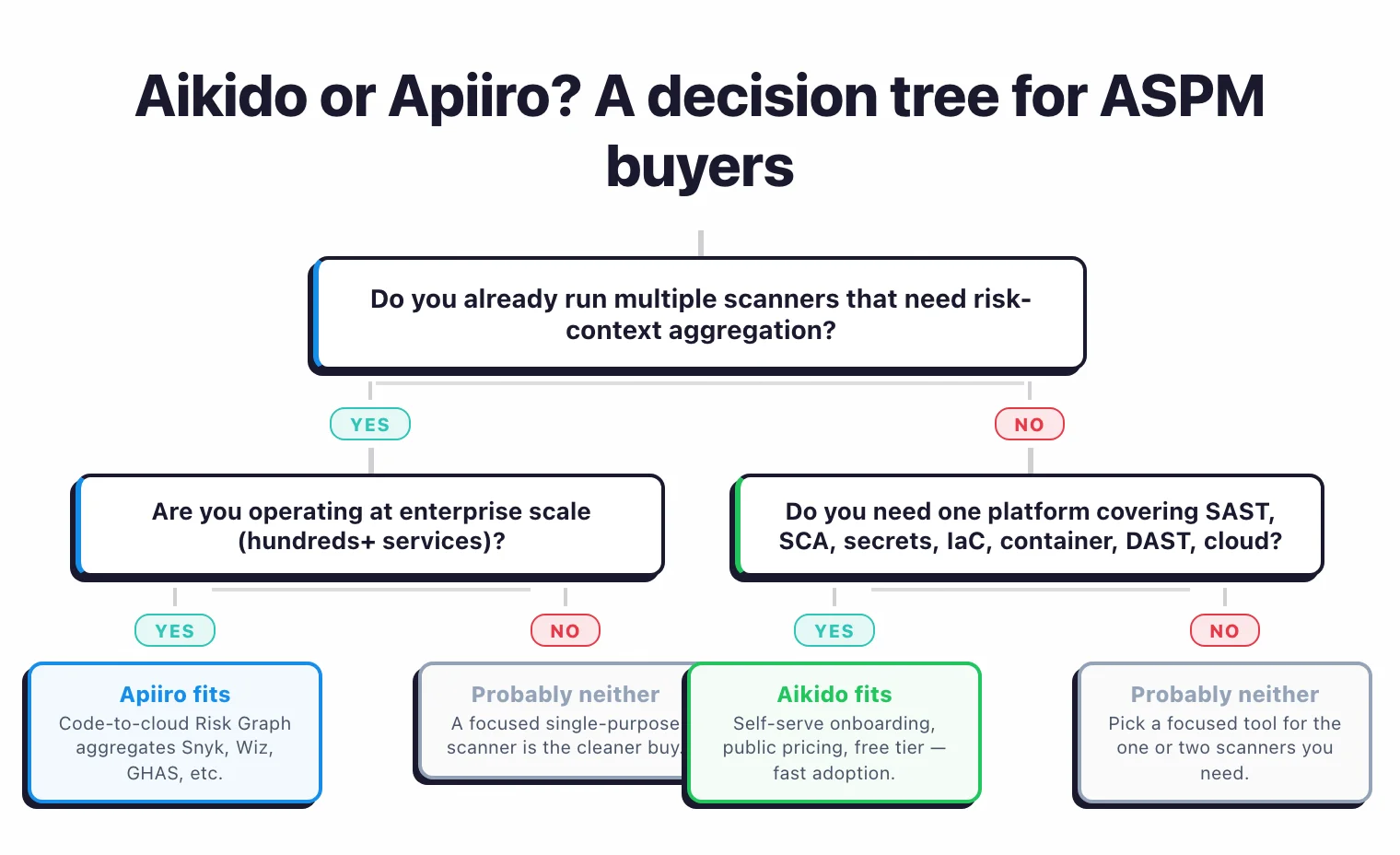
Choose Aikido when#
- You are a startup or mid-market team without a dedicated AppSec function.
- You want one platform covering SAST, SCA, secrets, IaC, container, DAST, and cloud.
- Public pricing and a free tier matter for procurement.
- Self-serve onboarding without sales calls is part of the requirement.
- You want to consolidate or replace existing tools rather than aggregate them.
Choose Apiiro when#
- You operate at enterprise scale with hundreds or thousands of services.
- You already have multiple scanners (Snyk, SonarQube, Wiz, etc.) and need aggregation.
- Code-to-cloud risk-graph context is what is missing from your AppSec program.
- You have a dedicated AppSec team to operate the platform.
- Enterprise procurement and contracting are normal for your organisation.
Choose neither when#
- The team needs only one or two specific scanners (e.g. just SAST or just SCA), so a focused tool is the better buy.
- You are early enough to not yet have scanner sprawl that needs aggregating, and lightweight enough that a single OSS scanner stack is sufficient.
Related comparisons#
- Aikido alternatives — Wider field of ASPM and AppSec platforms.
- Aikido vs Snyk — Bundled platform vs Snyk’s developer-first multi-product model.
- Endor Labs vs Snyk — Reachability-aware SCA vs Snyk’s broader platform.
- Wiz vs Orca Security — Two CNAPPs that overlap with ASPM at the cloud-posture layer.
Frequently Asked Questions
Is Aikido or Apiiro better for ASPM?
Does Aikido replace tools like Snyk or SonarQube?
What is the Application Risk Graph?
Can I get pricing for Aikido and Apiiro?
Which has better developer experience?

Written & maintained by
Suphi CankurtEight years on the vendor side of application-security sales — thousands of evaluations and demos. I started AppSec Santa in 2022 to put that insider view to work for buyers. Independent of any vendor, paid by none, and honest about what fits whom.