
20 Best ASPM Tools for 2026 (by an ex-ASPM sales lead)
Independent ranking — no vendor pays to appear here. See methodology.
I led sales for an ASPM tool before the category had a name. Here I compare these 20 by use case — ArmorCode, Cycode, Apiiro, Wiz, DefectDojo.






At a glance
The best ASPM tools in 2026: ArmorCode, Cycode, Apiiro, OX Security, and DefectDojo — plus Invicti ASPM (my former employer) for proof-based, DAST-led posture.
- Best orchestration hub: ArmorCode — ingests findings from hundreds of scanners and bug-bounty feeds
- Best full-lifecycle platform (native scanners + ASPM overlay): Cycode — Risk Intelligence Graph with a scanner-agnostic policy engine
- Best for code-to-cloud, attack-path context: Apiiro — deep code-to-runtime risk with material-change detection
- Best for exploitability-first prioritization: OX Security — evidence-based scoring that cuts findings down to what is genuinely exploitable
- Best open-source ASPM: DefectDojo — self-hosted, scriptable, 200+ scanner parsers
- Best for proof-based, DAST-led posture: Invicti ASPM — pairs scanner orchestration with proof-based DAST that confirms exploitability before a finding hits the queue (formerly Kondukto)
How I picked: 20 ASPM platforms evaluated on finding aggregation, risk prioritization, remediation orchestration, and integration depth — vendor docs, customer case studies, and Gartner’s ASPM analysis. No vendor paid to appear. Selection updated September 2026.
Over the past decade in application security, I have tracked nearly every ASPM tool on the market — including three years leading sales at Kondukto, back when analysts still filed this category under ASOC , until we exited to Invicti in 2025.
Selling in a space that small, I watched every competitor up close: what they pitched, what actually shipped, and where the two diverged.
Today I am comparing these 20 of them for you, open-source and commercial alike, across three architectures: orchestration hubs, full-lifecycle platforms, and cloud-to-code platforms.
So which one do you actually need? It depends on the gap you are closing — the goal is to match a tool to your stack, not to a vendor’s roadmap.
My headline picks? ArmorCode, Cycode, Apiiro, OX Security, and DefectDojo, plus Invicti ASPM (my former employer) for its proof-based DAST.
First, what is ASPM? ASPM (Application Security Posture Management) platforms sit at the management layer of a broader application security program , aggregating findings from your SAST, DAST, SCA, and other scanners into one prioritized view. For the full definition and history, see what is ASPM .
Okay, no more rambling. Let’s get into my picks.
What do ASPM tools do? Three core functions
ASPM tools do three jobs: aggregate findings from every scanner, prioritize them by real exploitability, and route each one to an owner who can close it. Vendors separate on the third.
- Data aggregation. Pull SAST, SCA, DAST, secrets, container, and IaC output into one queue, then collapse the duplicates that overlapping scanners produce.
- Risk prioritization. Re-rank by reachability, runtime exposure, and asset criticality rather than raw scanner severity.
- Workflow automation. Assign an owner, open the ticket or pull request, track the SLA, and rescan to confirm the fix.
Aggregation is table stakes and prioritization models converge quickly, so the platforms worth paying for are the ones that get findings closed.
For the capability-by-capability evaluation checklist, see what is ASPM .
The 20 best ASPM tools (2026)
These 20 selections are listed alphabetically and not by rank. Here is how they compare at a glance — architecture, whether they bring their own scanners, deployment model, and the use case each fits best.
| Tool | Architecture | Native scanners | Deployment | Best for |
|---|---|---|---|---|
| AccuKnox | Cloud / code-to-cloud | Yes (full suite) | SaaS + self-managed | Runtime-aware ASPM (eBPF/KubeArmor) |
| Aikido | Full-lifecycle | Yes (full suite) | SaaS | SMBs wanting all scanners bundled |
| Apiiro | Cloud / code-to-cloud | Partial | SaaS | Deep application-risk context |
| ArmorCode | Orchestration hub | No (aggregator) | SaaS | Unifying scanner sprawl |
| Arnica | Orchestration hub | Yes (SCA, secrets) | SaaS | Dev-first posture on AI-generated code |
| Checkmarx One | Full-lifecycle | Yes | SaaS + on-prem | PR-native enterprise AppSec |
| CrowdStrike Falcon ASPM | Cloud / code-to-cloud | Runtime analysis | SaaS (Falcon) | Runtime-driven posture on Falcon |
| Cycode | Full-lifecycle | Yes (SAST via Bearer) | SaaS | Code-to-cloud with a native scanner |
| DefectDojo | Orchestration hub | No (aggregator) | Self-hosted / SaaS | Free, open-source aggregator |
| Faraday | Orchestration hub | No (orchestrator) | Self-hosted + SaaS | Open-source orchestration & pentest |
| Invicti ASPM | Full-lifecycle | Yes (proof-based DAST) | SaaS + on-prem | Proof-based, DAST-led posture |
| Jit | Full-lifecycle | Yes | SaaS | Dev-first teams wanting built-in scans |
| Legit Security | Full-lifecycle | Yes (SAST, SCA, secrets) | SaaS | Supply chain & SDLC posture |
| OX Security | Orchestration hub | Partial | SaaS | Exploitability-first prioritization |
| Phoenix Security | Orchestration hub | No (correlation + AI) | SaaS | Threat-centric posture + ownership |
| Pi | Orchestration hub | No (ingests findings) | SaaS | Root-cause analysis and variant hunting |
| Seemplicity | Orchestration hub | No (remediation ops) | SaaS | Remediation ops at high finding volume |
| Snyk AppRisk | Full-lifecycle | Yes | SaaS | Dev-first teams on Snyk |
| Software Risk Manager | Orchestration hub | No (correlates 150+) | Self-hosted / air-gapped | Black Duck shops on one ASPM |
| Wiz | Cloud / code-to-cloud | Partial | SaaS | Cloud-first code-to-cloud correlation |
Which ASPM tools lead in 2026?
- ArmorCode is the best orchestration hub: it ingests findings from hundreds of scanners and bug-bounty feeds into one prioritized queue.
- Cycode is the best full-lifecycle platform: its Risk Intelligence Graph correlates code, pipeline, and cloud, with native SAST via Bearer.
- Apiiro is the best for code-to-cloud attack-path context, using material-change detection across code, supply chain, and deployment.
- OX Security is the best for exploitability-first prioritization, with evidence-based scoring that cuts findings to what is genuinely exploitable.
- DefectDojo is the best open-source ASPM: self-hosted, BSD-3 licensed, and reading over 200 scanner report formats.
- Invicti ASPM is the best for proof-based, DAST-led posture, confirming exploitability before a finding reaches the queue. It is my former employer.
I evaluate each one in depth below.
1. AccuKnox — Best for runtime-aware ASPM via eBPF and KubeArmor
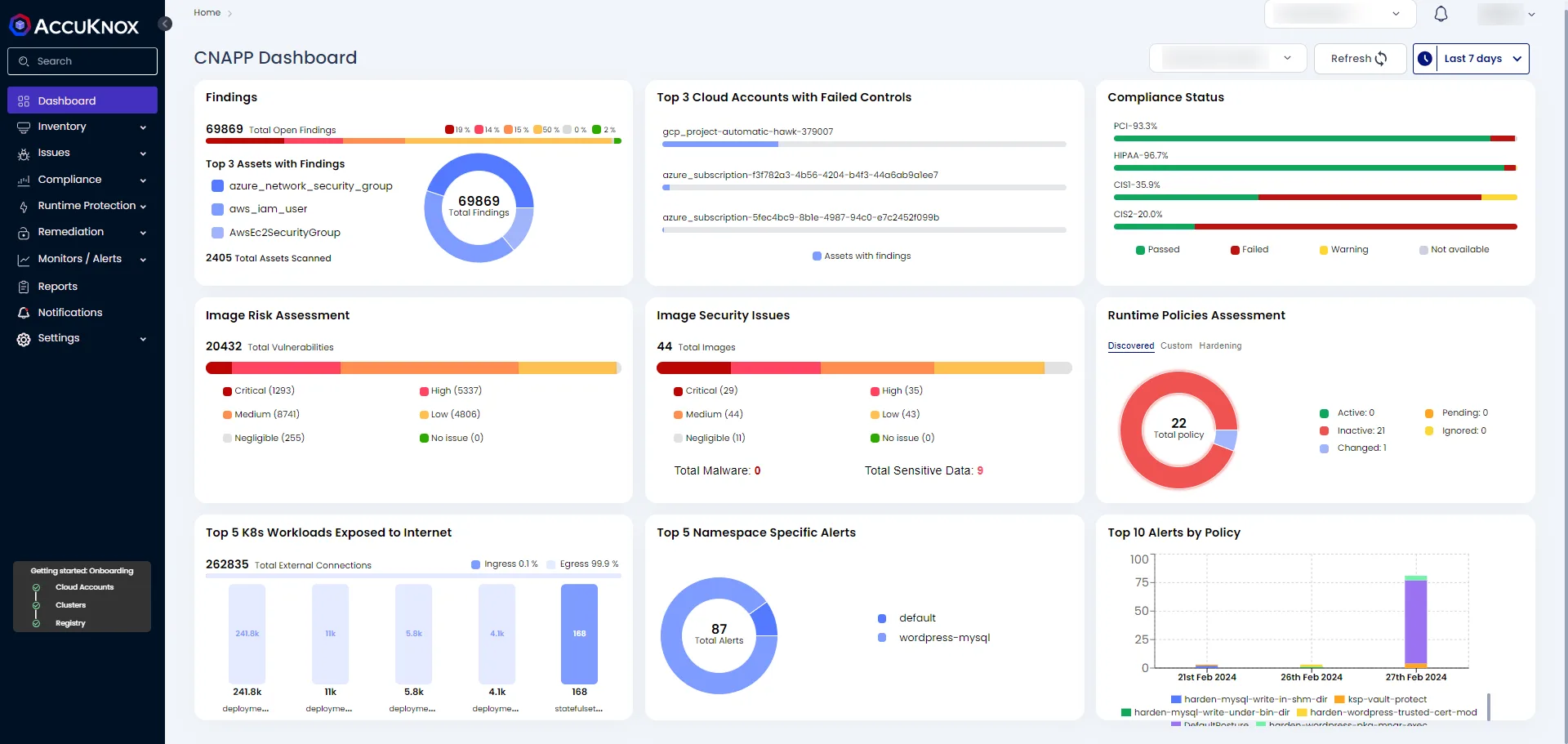
AccuKnox is a runtime-aware ASPM that bundles SAST, DAST, SCA, IaC, container, and secrets scanning with runtime visibility from its open-source KubeArmor project. Its eBPF and LSM engine watches what containers actually do in production, a runtime signal most ASPM tools only infer.
Best if your stack is Kubernetes-heavy.
- Architecture: Cloud / code-to-cloud
- Native scanners: Yes (SAST, DAST, SCA, IaC, container, secrets)
- Deployment: SaaS + self-managed
- License: Commercial (KubeArmor open-source)
2. Aikido Security — Best for SMBs wanting all scanners bundled
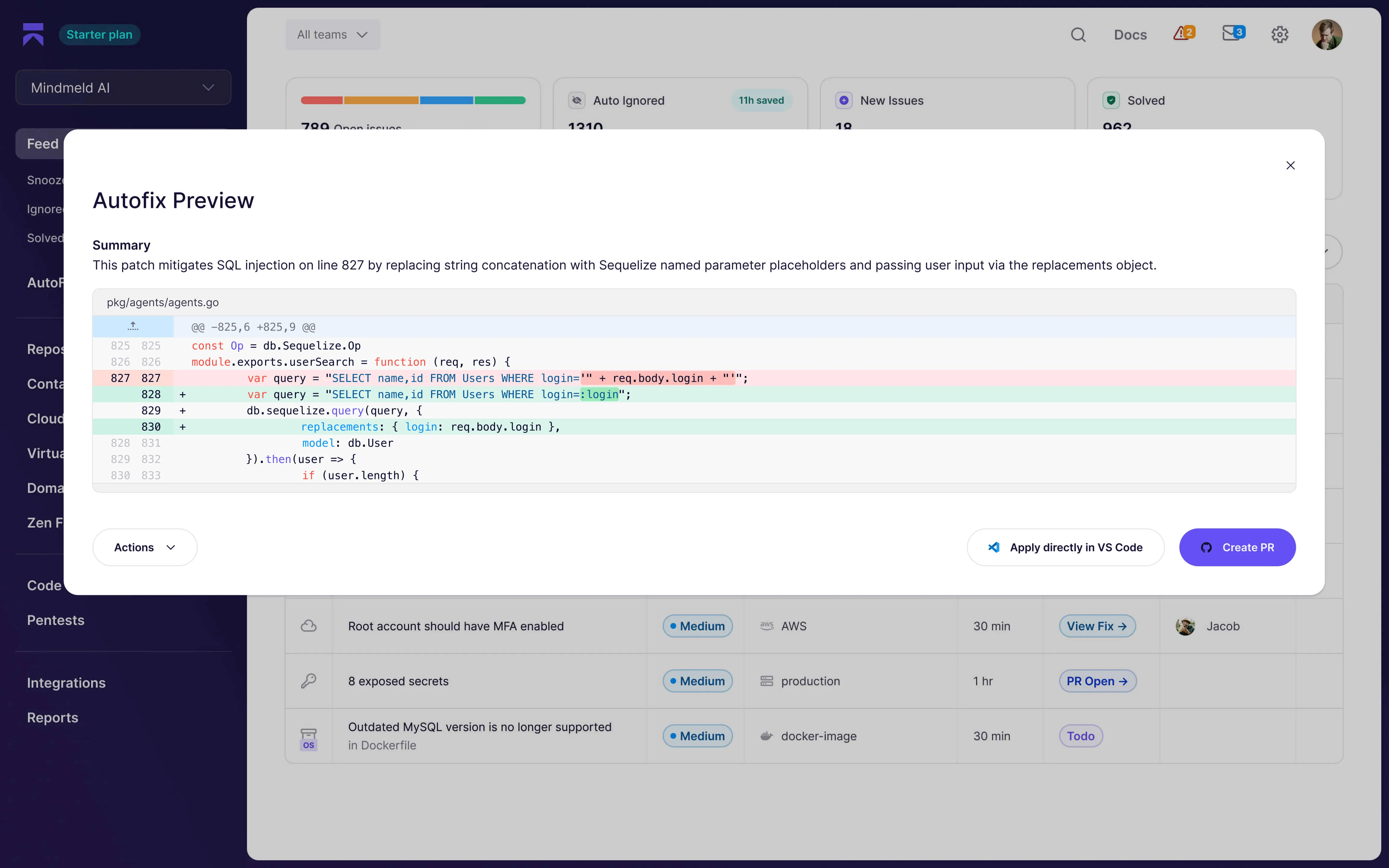
Aikido is an all-in-one platform that folds SAST, SCA, DAST, container, secrets, IaC, and CSPM into one place, with AutoTriage to cut noise and AutoFix to open fix PRs. Used by 50,000+ organizations, it sets up in minutes.
In return, you give up fine-grained control over individual scanners.
- Architecture: Full-lifecycle
- Native scanners: Yes (SAST, SCA, DAST, secrets, IaC, CSPM)
- Deployment: SaaS
- License: Commercial (free tier)
3. Apiiro — Best for deep application-risk context
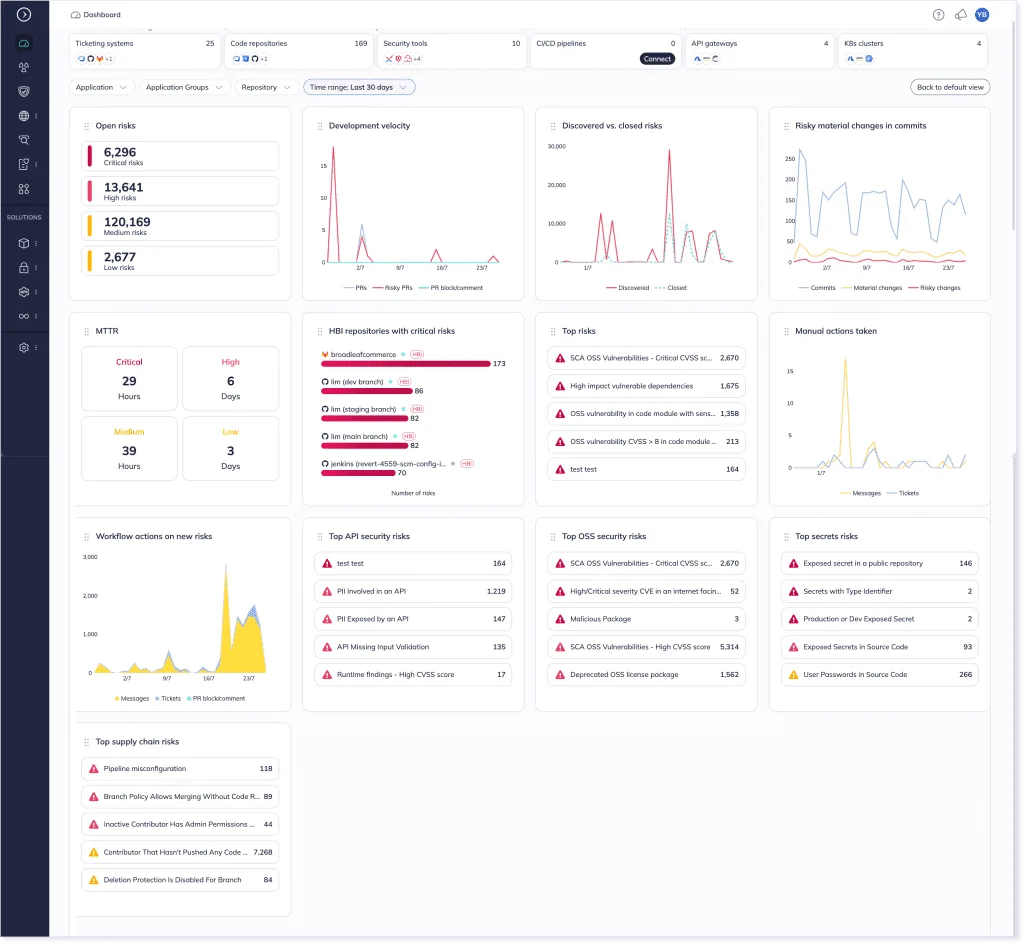
Apiiro builds an application risk graph that combines code, supply chain, and deployment context, using material-change detection to surface the riskiest changes. It gives you code-to-runtime risk context instead of raw scanner output.
It is enterprise-oriented, so expect a heavier setup.
- Architecture: Cloud / code-to-cloud
- Native scanners: Partial
- Deployment: SaaS
4. ArmorCode — Best for unifying scanner sprawl
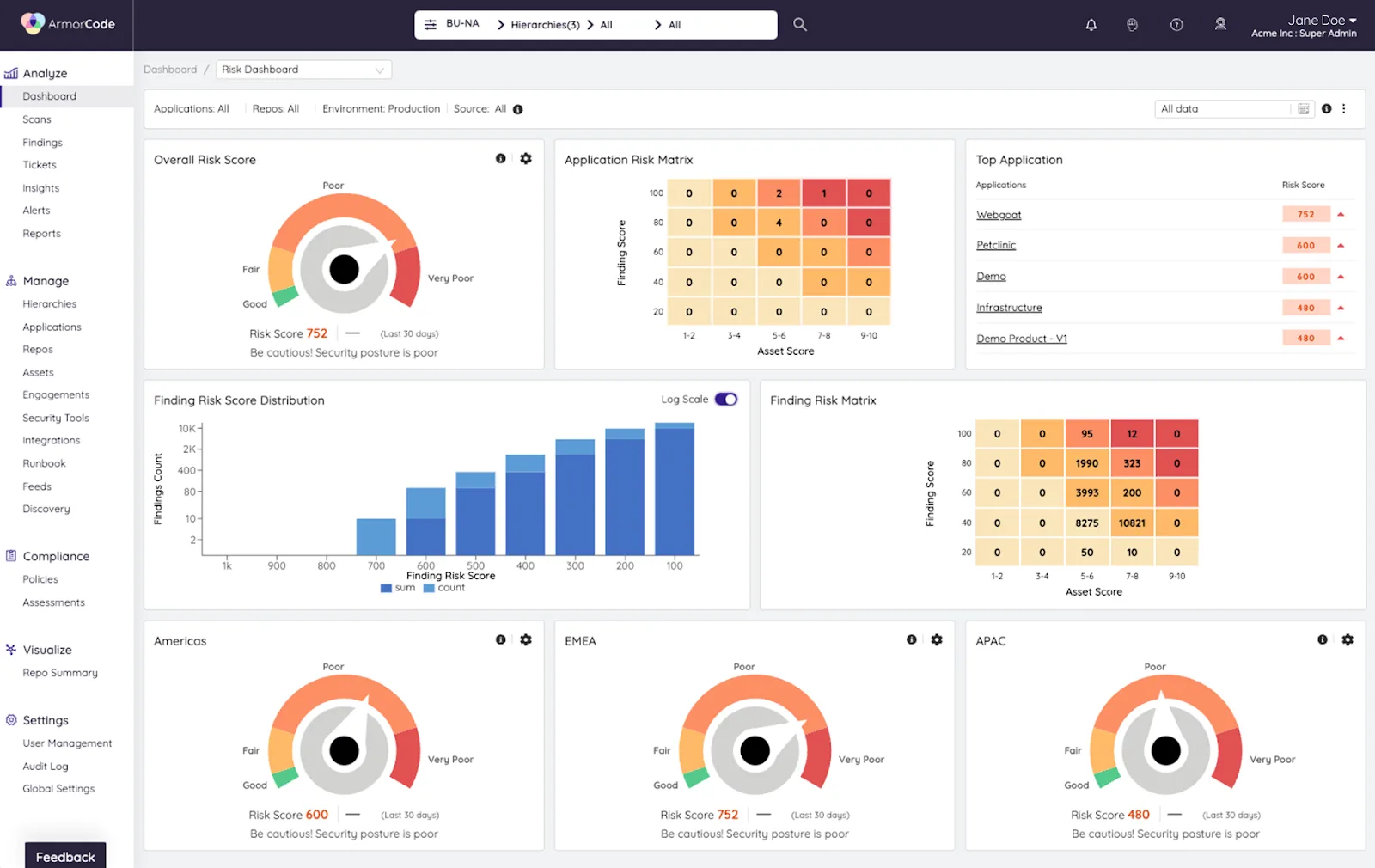
ArmorCode is an orchestration hub that ingests findings from hundreds of scanners and bug-bounty feeds, then scores each by asset criticality, exploitability, and reachability. If you run many AppSec tools and need one prioritized queue, it fits.
Onboarding usually needs a security data engineer.
- Architecture: Orchestration hub
- Native scanners: No (aggregator)
- Deployment: SaaS
5. Arnica — Best for developer-first posture on AI-generated code
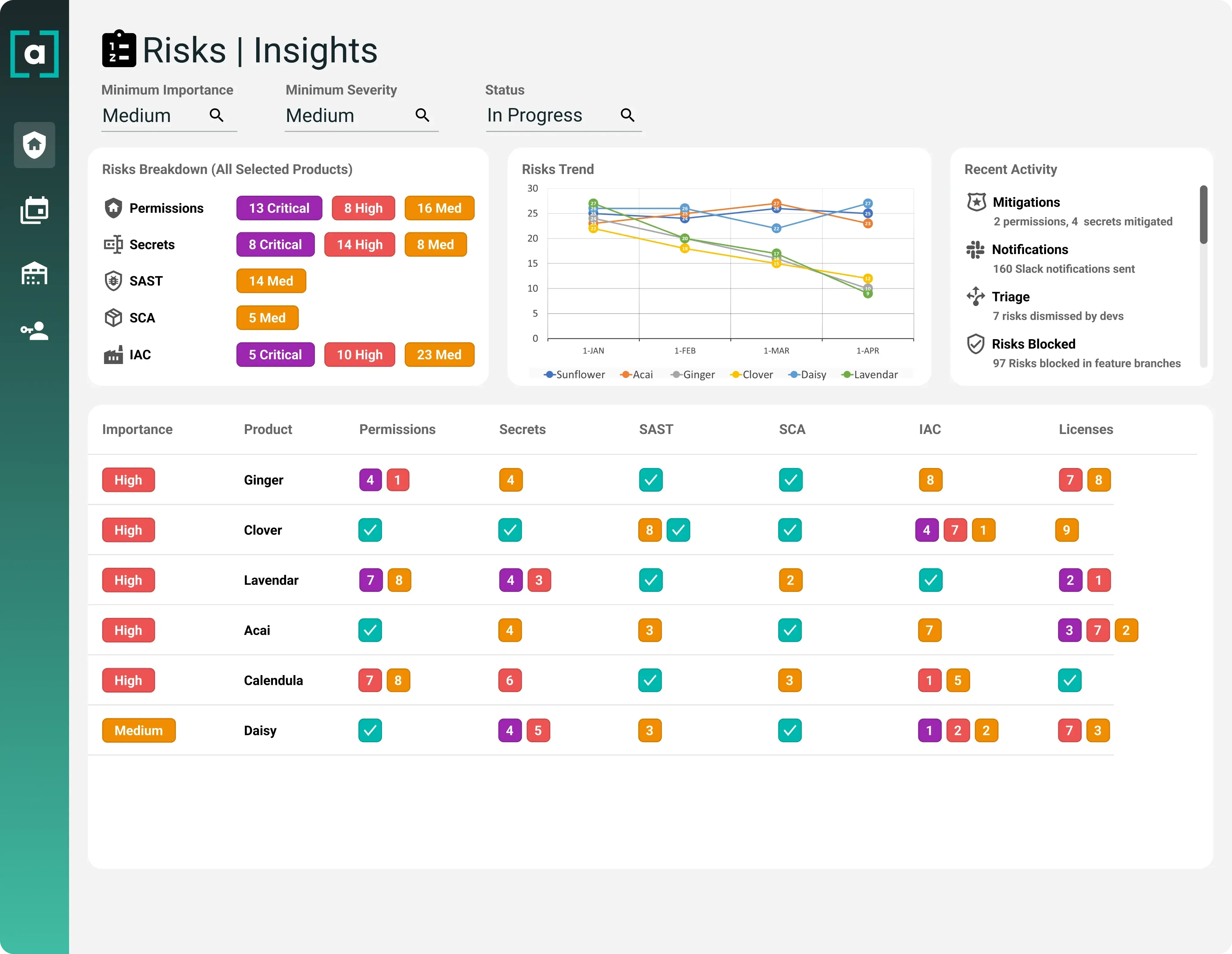
Arnica installs as a GitHub or GitLab app with no CI/CD changes, then continuously scans for vulnerable dependencies, hardcoded secrets, and risky permissions. Its package reputation scoring and developer risk profiling target supply-chain risk in AI-generated code.
It is newer and narrower than full-lifecycle suites.
- Architecture: Orchestration hub
- Native scanners: Yes (SCA, secrets)
- Deployment: SaaS (on-prem on Enterprise)
- License: Freemium
6. Checkmarx One — Best for PR-native enterprise AppSec
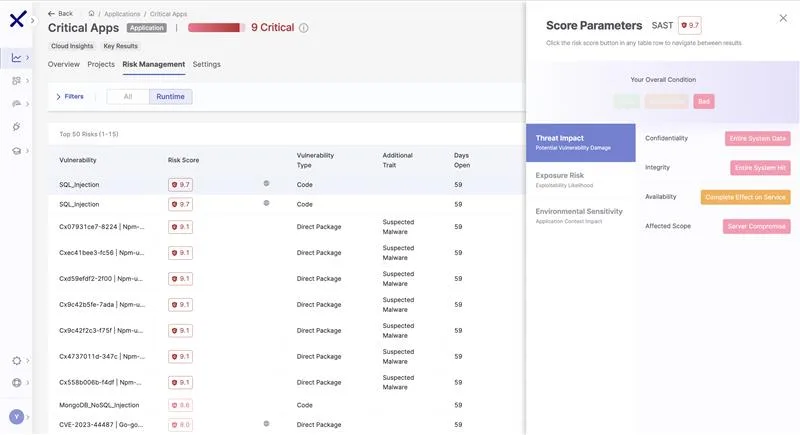
Checkmarx One is a single end-to-end platform: native SAST, SCA, DAST, and API testing plus an ASPM layer that maps risk to asset owners and runs in the pull request. It fits regulated enterprises that want one vendor for everything.
Expect enterprise procurement and setup overhead.
- Architecture: Full-lifecycle
- Native scanners: Yes
- Deployment: SaaS + on-prem
7. CrowdStrike Falcon ASPM — Best for runtime-driven posture on Falcon
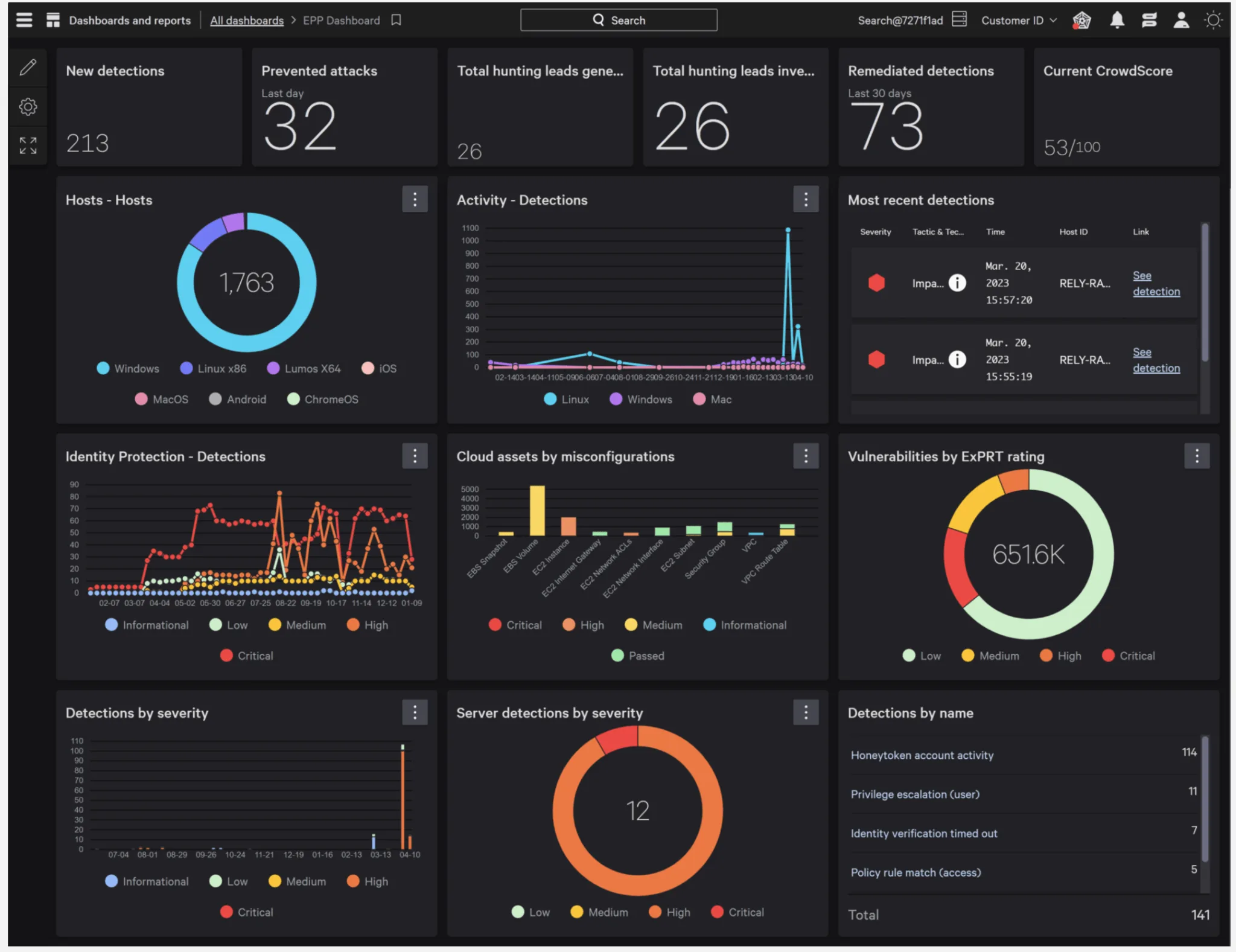
CrowdStrike Falcon ASPM is the runtime-driven ASPM module of the Falcon platform, building its risk picture from how workloads behave rather than static scanner output. It adds shadow AI detection and sensitive data flow mapping.
Reach for it on cloud-native workloads where runtime instrumentation is feasible and Falcon is already deployed.
- Architecture: Cloud / code-to-cloud
- Native scanners: Runtime analysis (no static scanners)
- Deployment: SaaS (Falcon platform)
8. Cycode — Best for code-to-cloud with a native scanner
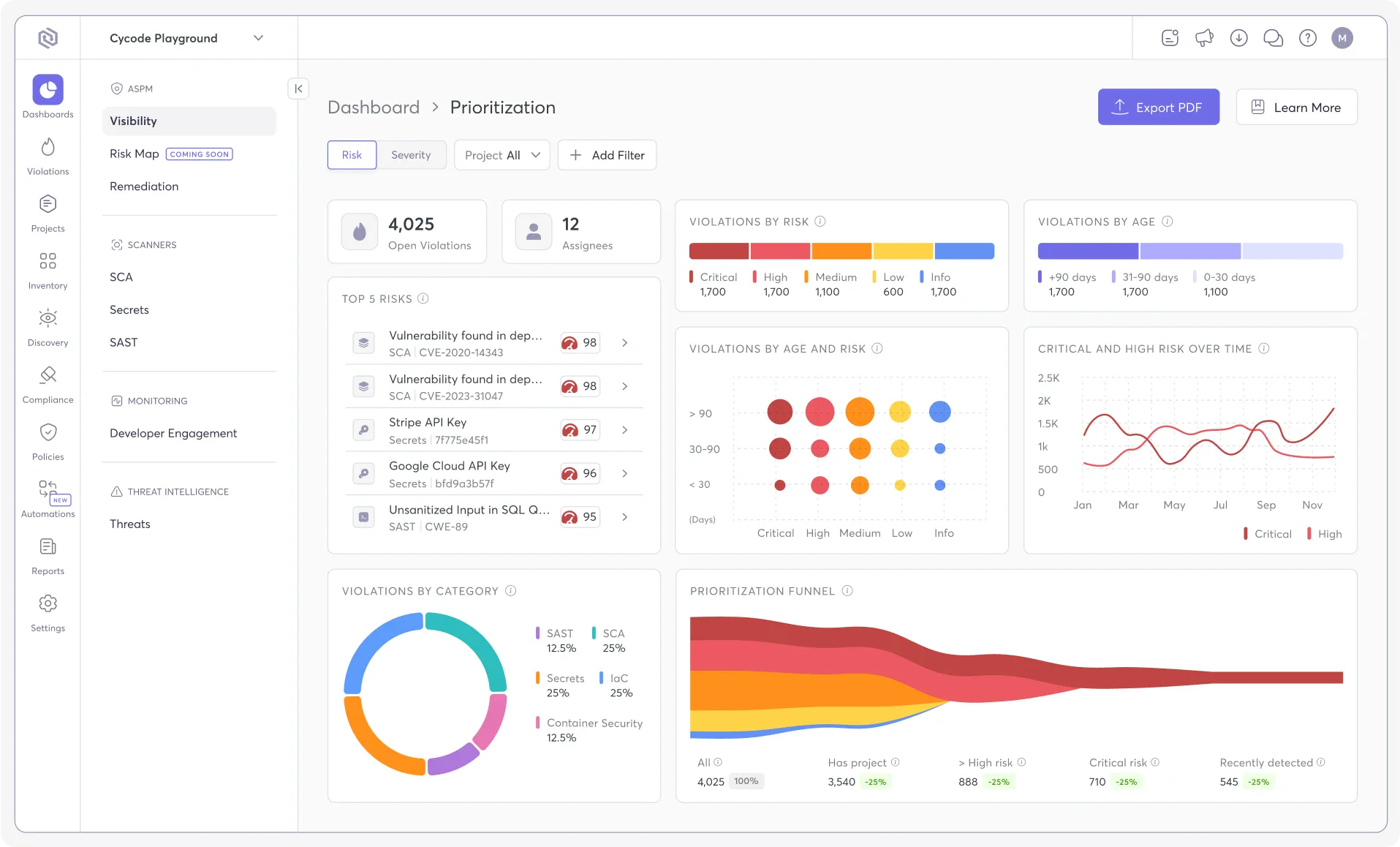
Cycode is a full-lifecycle platform whose Risk Intelligence Graph correlates code, pipeline, and cloud findings and filters by reachability. Its 2024 Bearer acquisition added native SAST, and it stays scanner-agnostic through its connectors.
Public G2 reviews note some AWS-integration gaps.
- Architecture: Full-lifecycle
- Native scanners: Yes (SAST via Bearer)
- Deployment: SaaS
9. DefectDojo — Best free, open-source aggregator
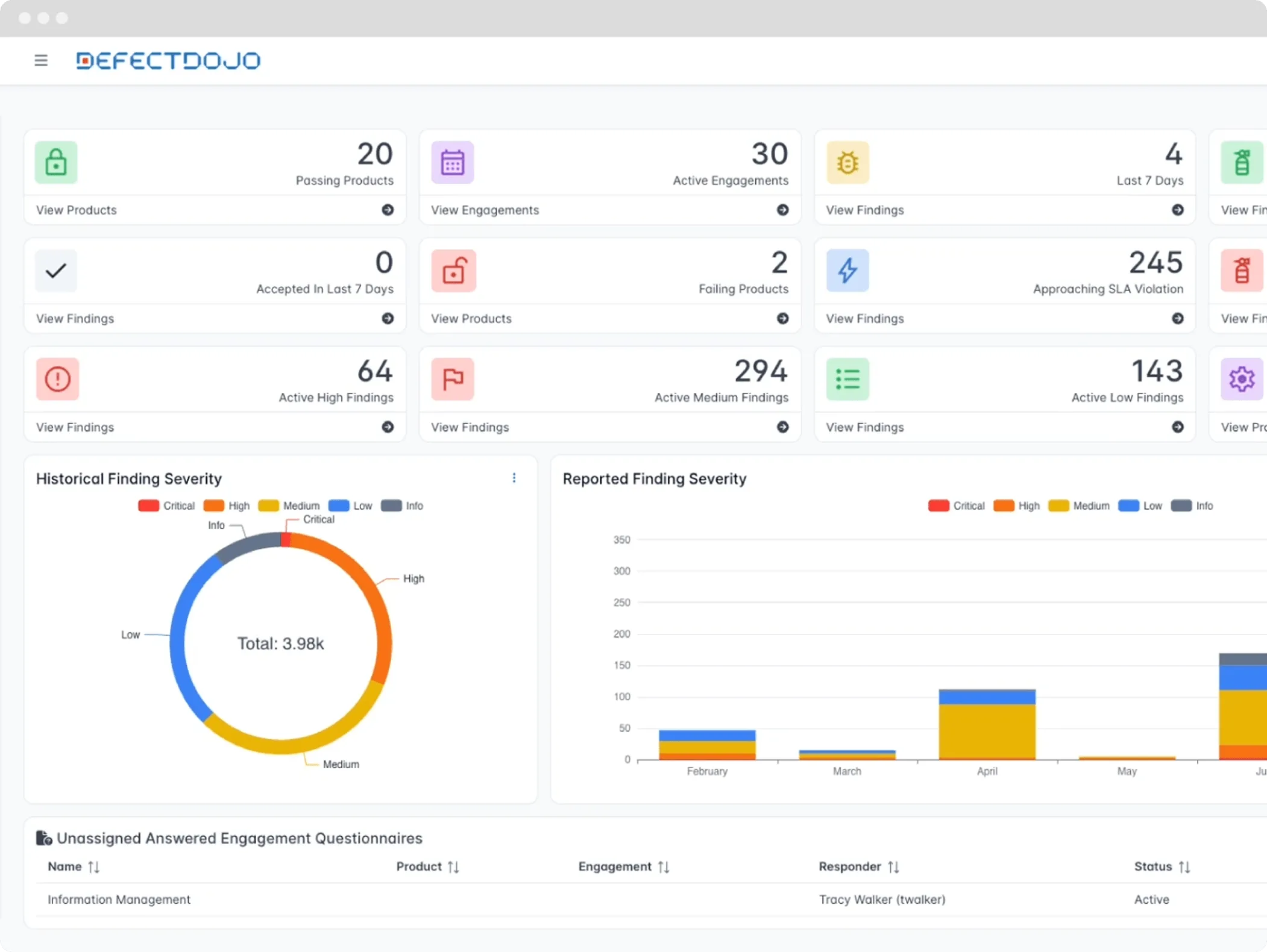
DefectDojo is the open-source standard: it ingests over 200 scanner report formats, deduplicates findings, and tracks risk acceptance and SLAs. It is ideal if you already own scanners and want a self-hosted queue.
It is self-managed, so scaling takes engineering effort.
- Architecture: Orchestration hub
- Native scanners: No (aggregator)
- Deployment: Self-hosted / SaaS (Pro)
- License: Open source (BSD-3) + commercial Pro
10. Faraday — Best for open-source scan orchestration and pentest workflows
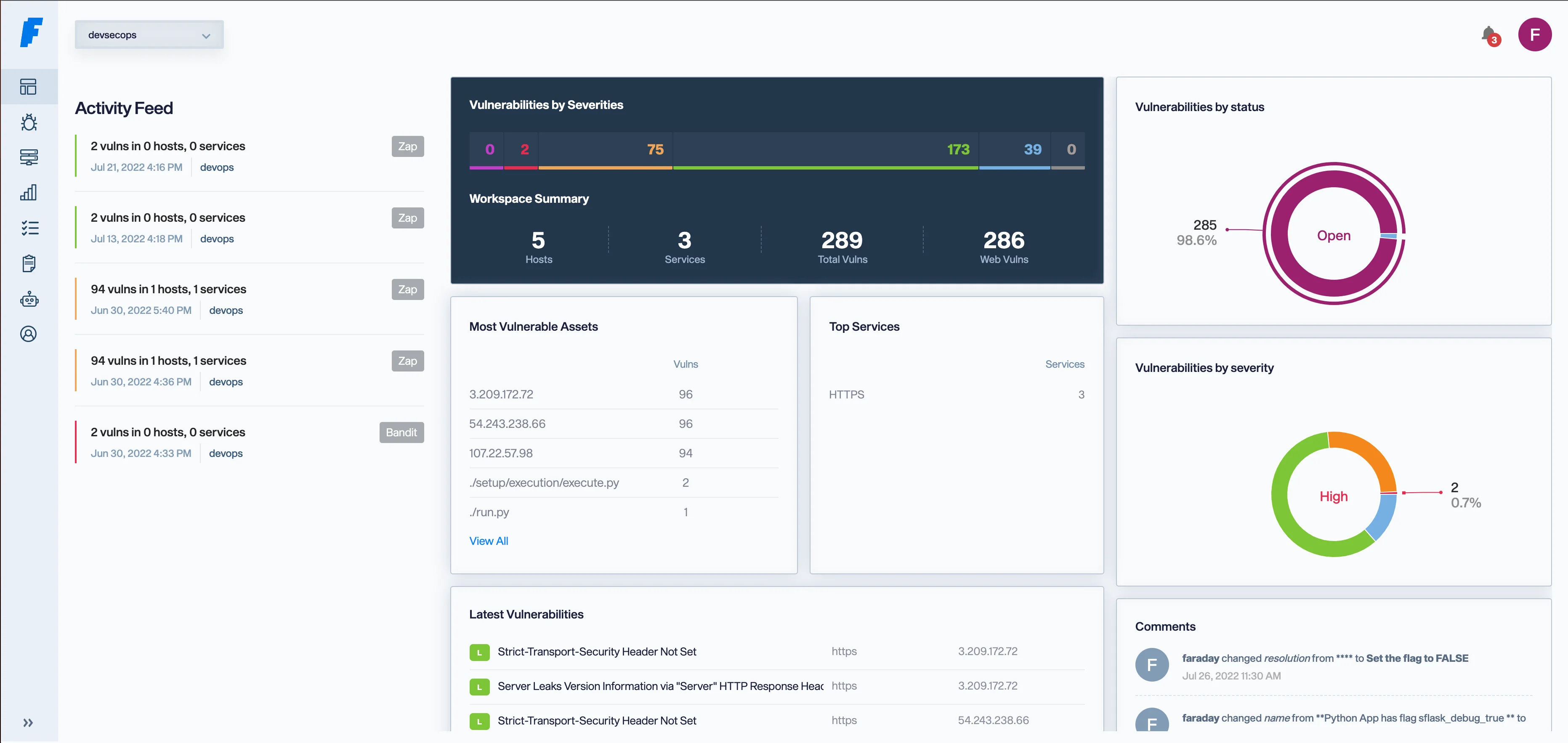
Faraday is an open-source vulnerability manager (6.7k GitHub stars) that orchestrates over 100 security tools and deduplicates their findings into one workspace. Its Agents Dispatcher runs scans remotely, and the shared workspace suits collaborative pentests.
The Community Edition is free and self-hosted; cloud is paid.
- Architecture: Orchestration hub
- Native scanners: No (orchestrator)
- Deployment: Self-hosted + SaaS
- License: Freemium (open-source Community Edition)
11. Invicti ASPM — Best for proof-based, DAST-led posture
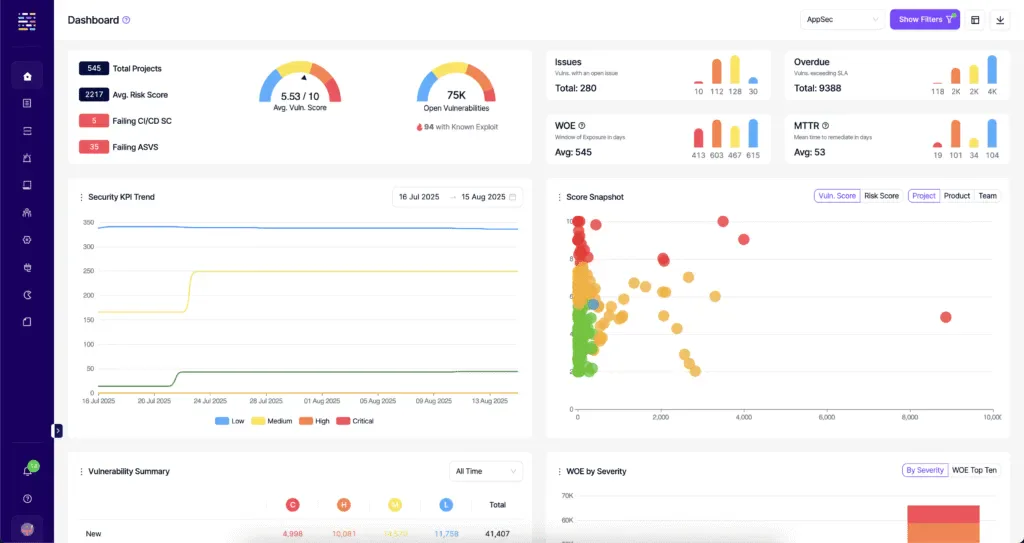
Invicti ASPM (formerly Kondukto, acquired August 2025) pairs scanner orchestration with proof-based DAST, which confirms a vulnerability is exploitable before it ever reaches the queue. It suits teams that want fewer false positives at the source and a DAST-led view of posture.
It offers both SaaS and on-premises deployment.
- Architecture: Full-lifecycle
- Native scanners: Yes (proof-based DAST)
- Deployment: SaaS + on-prem
12. Jit — Best for dev-first teams wanting built-in scans
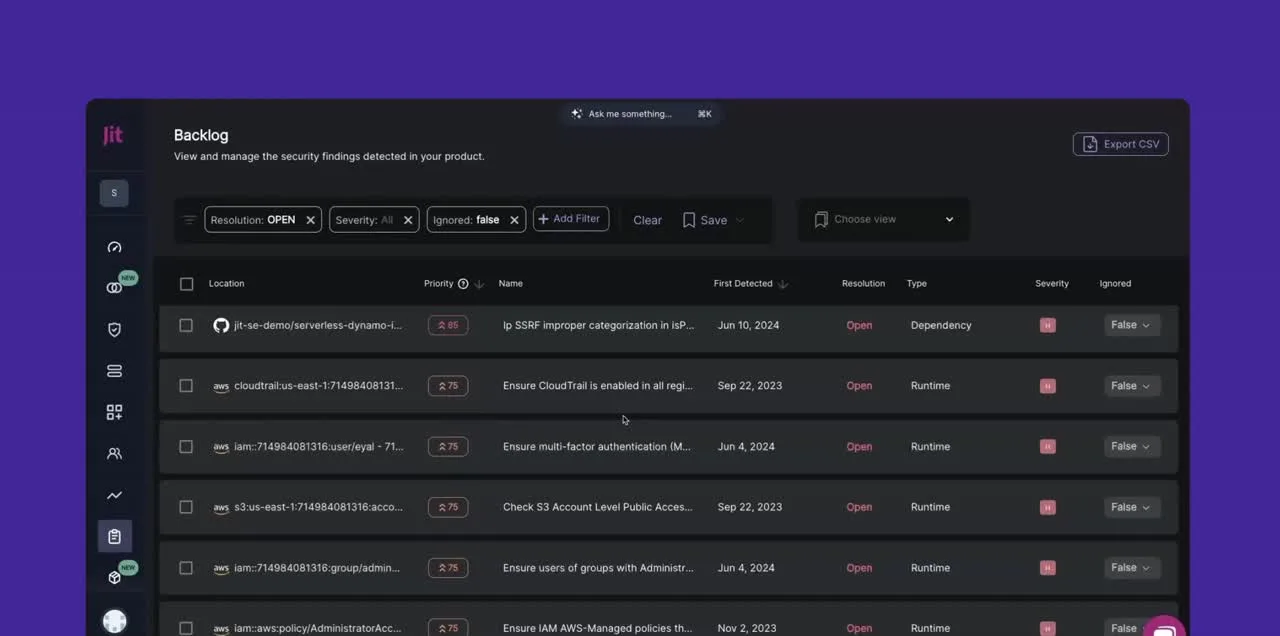
Jit (acquired by Torq in May 2026) bundles built-in scanners (SAST, SCA, secrets, IaC) and orchestrates them through developer-friendly security plans aligned to frameworks like SOC 2. It gets a small team to a working posture without wiring up separate tools.
Its integration catalog is smaller than the orchestration hubs.
- Architecture: Full-lifecycle
- Native scanners: Yes
- Deployment: SaaS
13. Legit Security — Best for software supply chain and SDLC posture
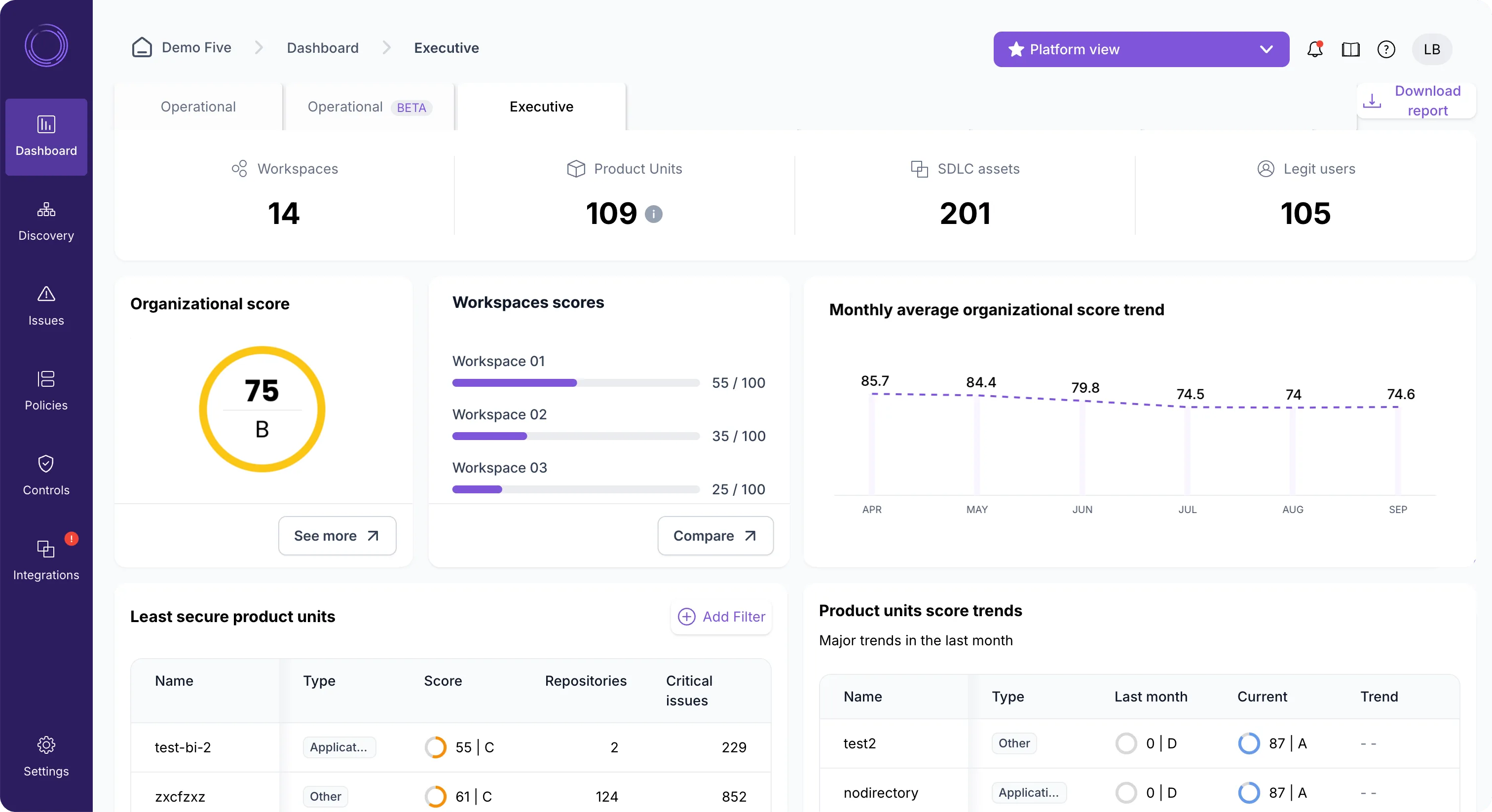
Legit Security is an AI-native ASPM that maps the entire SDLC and secures the software supply chain across a reported 120+ integrations. It pairs native SAST, SCA, and secrets scanning with aggregation, built for Fortune 500 estates with hundreds of pipelines.
The depth targets large organizations, not small teams.
- Architecture: Full-lifecycle
- Native scanners: Yes (SAST, SCA, secrets)
- Deployment: SaaS
14. OX Security — Best for exploitability-first prioritization
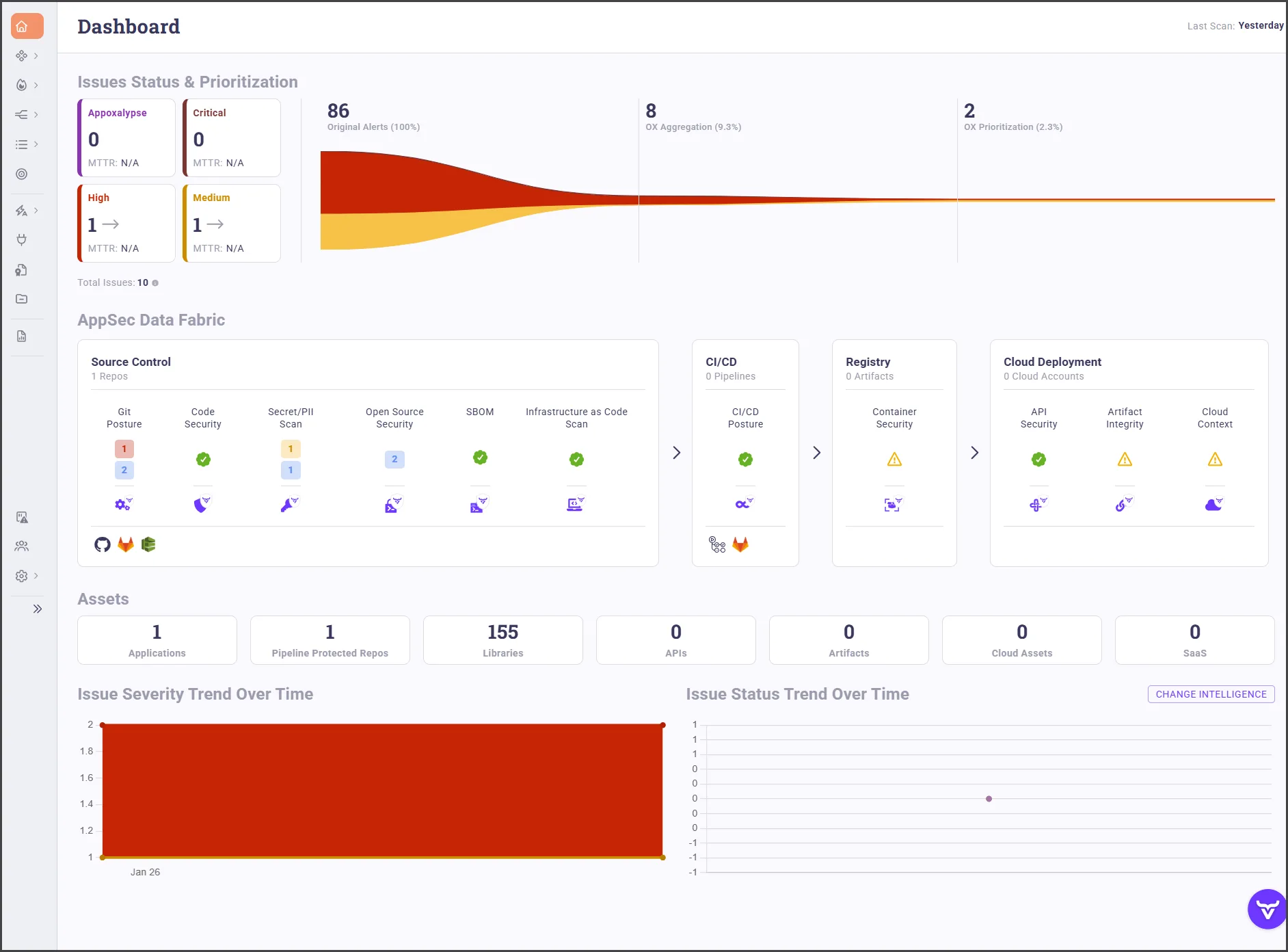
OX Security uses evidence-based scoring and reachability to reduce findings to what is genuinely exploitable, with root-cause consolidation and PR gates. It suits teams drowning in scanner noise that need a defensible fix order.
Public G2 reviews mention limited GCP and Jira coverage.
- Architecture: Orchestration hub
- Native scanners: Partial
- Deployment: SaaS
15. Phoenix Security — Best for threat-centric posture with ownership attribution
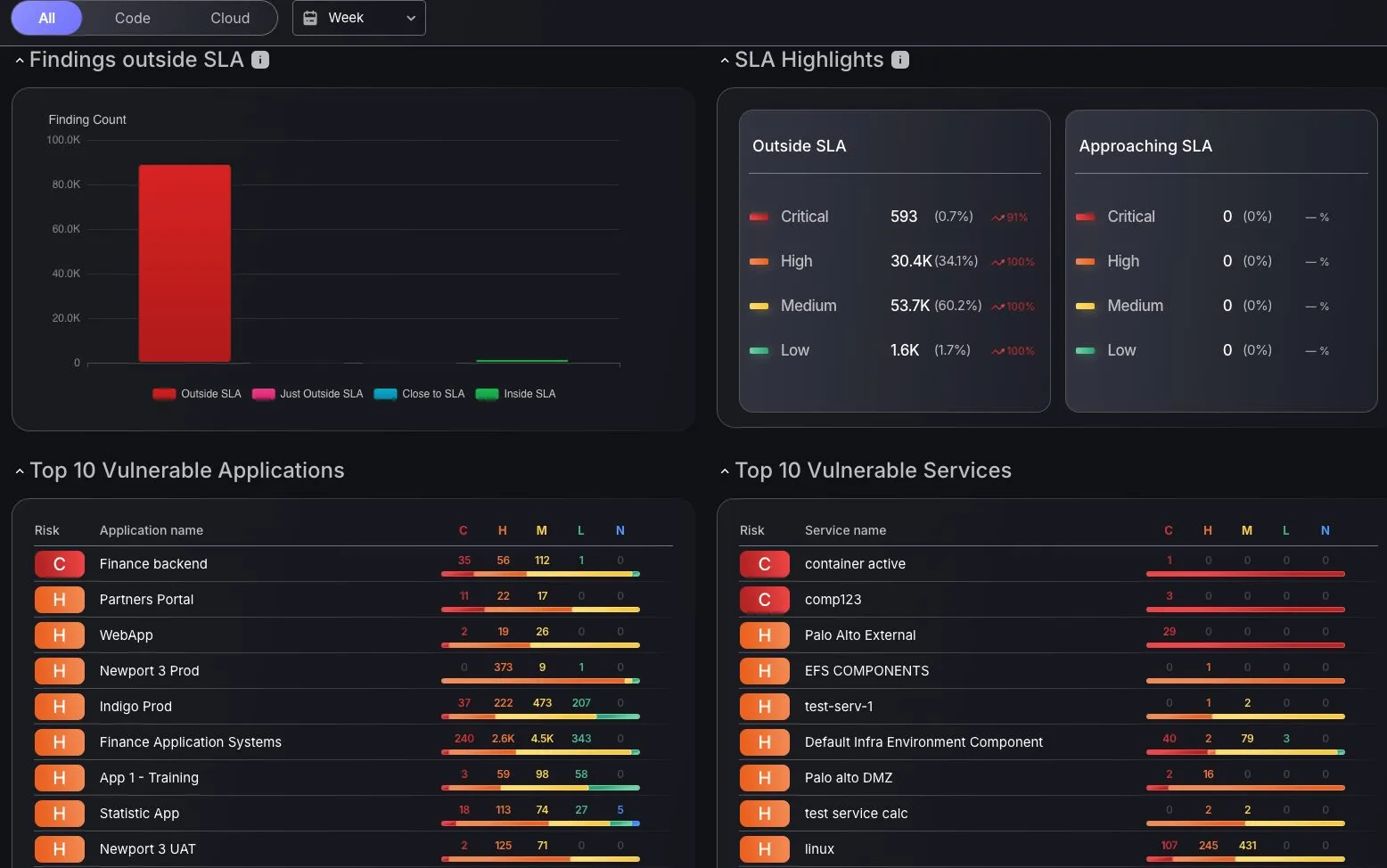
Phoenix Security is a threat-centric ASPM that connects findings across the SDLC, auto-assigns them to repo owners, and validates exploitability before flagging. It then ships AI-generated pull requests, closing the loop from prioritization to fix.
It is built around remediation ownership rather than dashboards.
- Architecture: Orchestration hub
- Native scanners: No (correlation + AI remediation)
- Deployment: SaaS
16. Pi — For root-cause analysis and variant remediation
Pi is a remediation-focused addition to this selection. Its product page describes ingesting code and past security findings, tracing root causes, finding related variants, and preparing fixes.
Confirm the ingestion and ownership workflows you need during an evaluation; the published product description does not establish that Pi replaces a general-purpose scanner aggregation hub.
17. Seemplicity — Best for remediation operations at high finding volume
Seemplicity is a remediation-operations layer that automates the grind between finding a vulnerability and closing the ticket: routing, ownership, and SLA tracking via AI agents. It reports processing 1.5 billion findings daily and up to 80% less manual remediation work — vendor figures, not independent benchmarks.
It does not scan or aggregate; it sits on top of the tools that do.
- Architecture: Orchestration hub
- Native scanners: No (remediation ops)
- Deployment: SaaS
18. Snyk AppRisk — Best for developer-first teams on Snyk
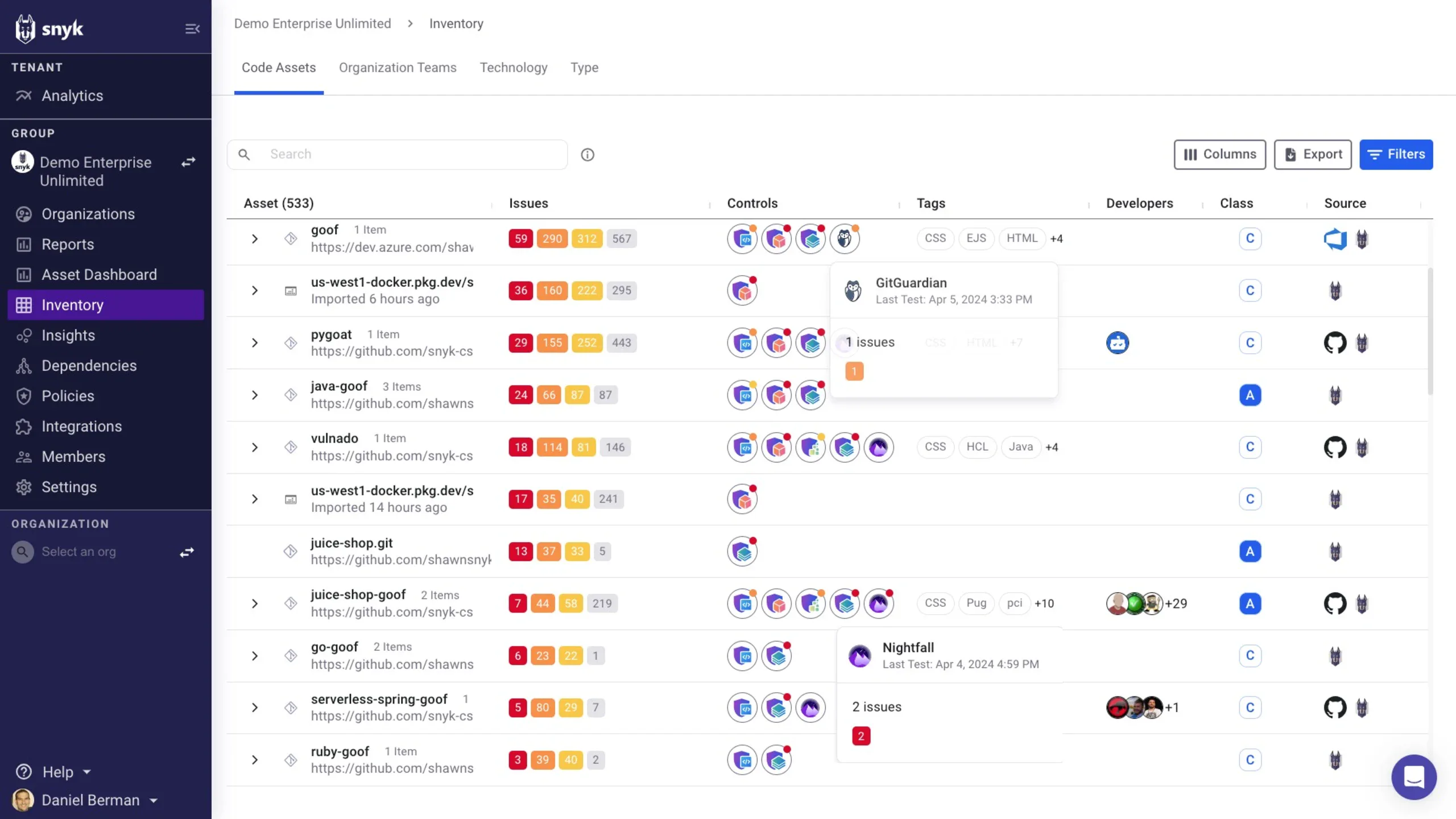
Snyk AppRisk layers posture management over Snyk’s developer-first scanners, prioritizing risk across dependencies, containers, and configuration with business context. It is the obvious extension if you already run Snyk.
Its value is strongest inside the Snyk ecosystem.
- Architecture: Full-lifecycle
- Native scanners: Yes
- Deployment: SaaS
- License: Commercial (Snyk core has free tiers)
19. Software Risk Manager — Best for Black Duck shops standardizing on one ASPM
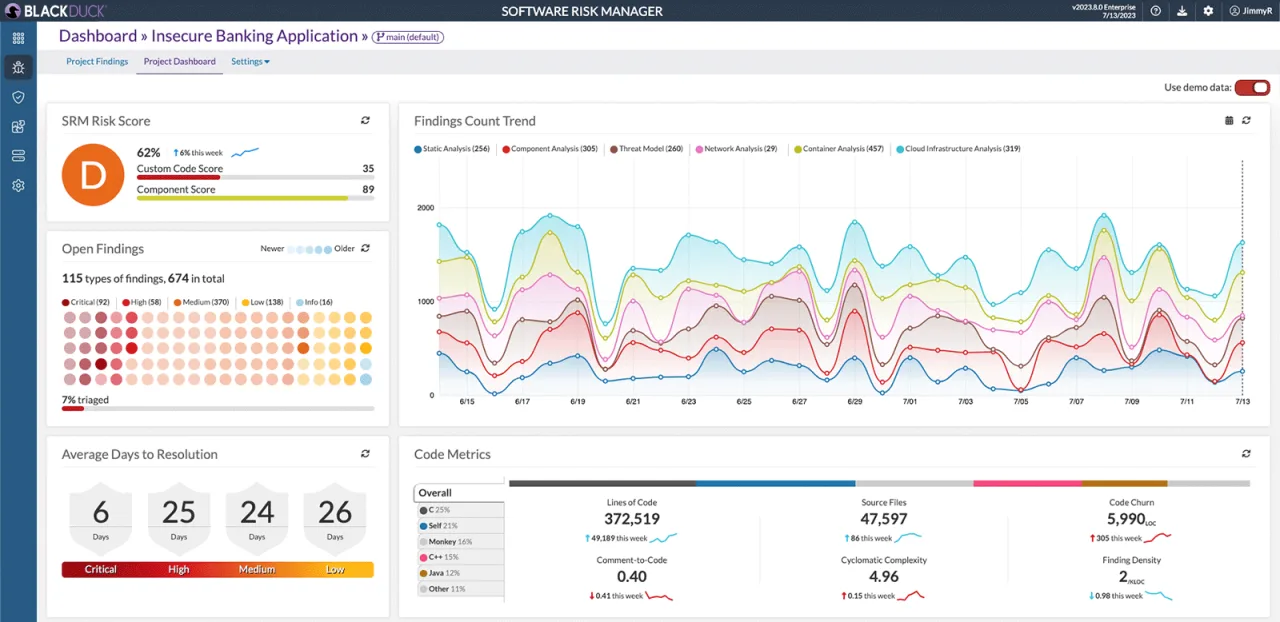
Software Risk Manager (formerly Code Dx) is Black Duck’s ASPM correlation layer, unifying 150+ tools across SAST, DAST, IAST, SCA, and pentesting into one deduplicated view. It adds SBOM generation, reporting against 20+ compliance frameworks, and air-gapped on-prem deployment.
It fits regulated teams already in the Black Duck ecosystem.
- Architecture: Orchestration hub
- Native scanners: No (correlates 150+ tools)
- Deployment: Self-hosted / air-gapped on-prem
20. Wiz — Best for cloud-first teams correlating code to cloud
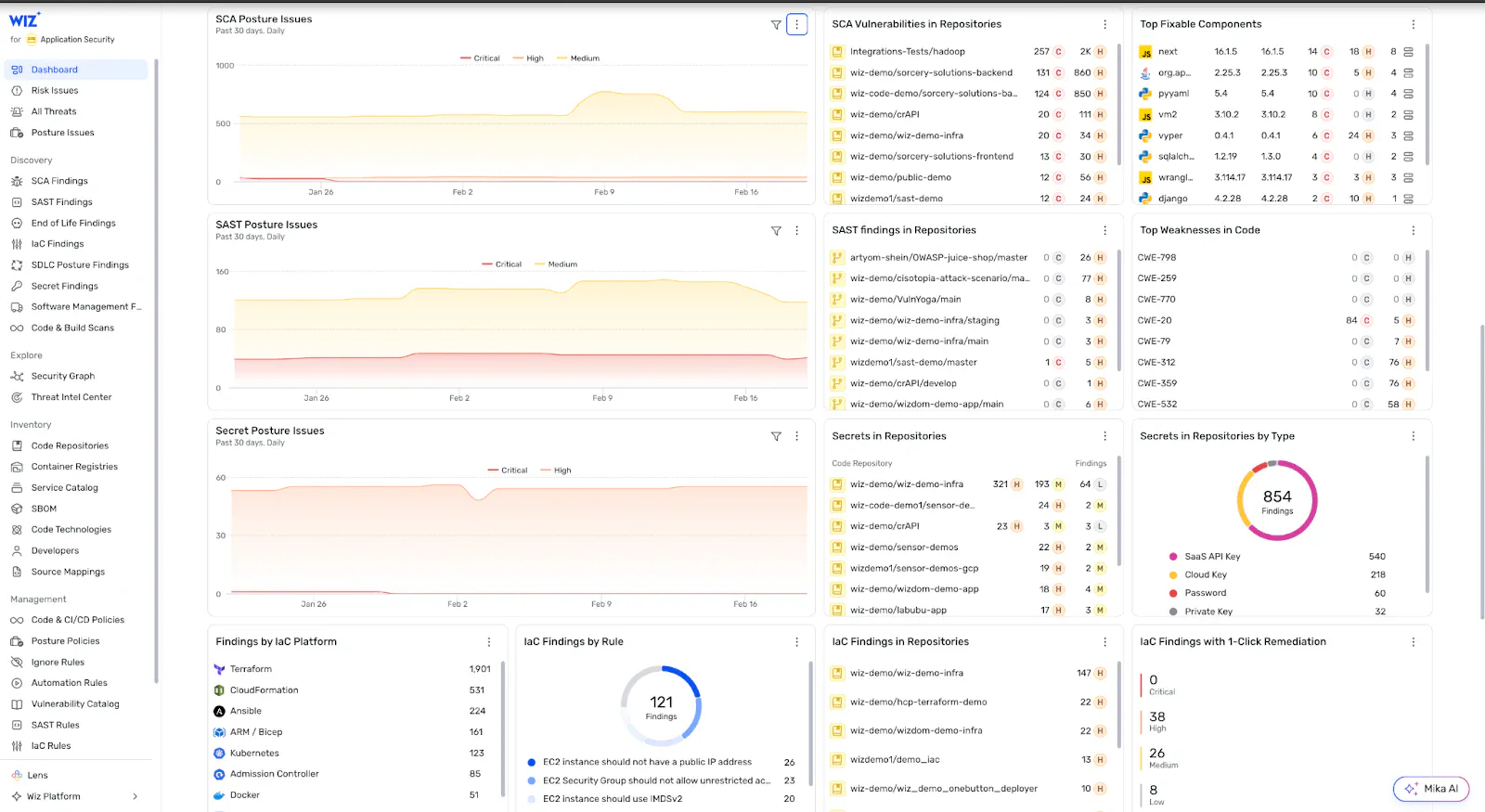
Wiz extends its cloud Security Graph into application findings, linking code and CI/CD issues to real identity, network, and runtime exposure. It is the natural pick if you have already standardized on Wiz for cloud security.
Its ASPM extends a cloud platform rather than being AppSec-first.
- Architecture: Cloud / code-to-cloud
- Native scanners: Partial
- Deployment: SaaS
How I evaluate ASPM tools
I evaluated all 20 ASPM platforms against the same six criteria, using only public evidence: vendor documentation, customer case studies, G2 and Gartner Peer Insights reviews, Gartner’s ASPM market analysis, and GitHub activity for the open-source options.
- Scanner integration breadth — how many SAST, DAST, SCA, secrets, container, and IaC sources it ingests, and how cleanly.
- Deduplication and correlation — whether the same finding from overlapping scanners collapses into one issue.
- Risk prioritization — reachability, runtime exposure, and asset criticality, not just scanner severity.
- Remediation workflow — ticketing, PR automation, SLA tracking, and rescan-to-close.
- SDLC and CI/CD fit — native hooks into the developer toolchain and policy gates.
- Deployment and licensing — SaaS, self-hosted, or open source, and what is genuinely free.
Where an integration count or capability comes from vendor marketing rather than independently verifiable documentation, I note it. No vendor pays to appear, rank higher, or be excluded.
Outside the selected 20: design-time entrants
The newest money in this category is moving upstream of scanners. Clover Security , launched November 2025 with $36M led by Notable Capital, puts AI agents into the design stage — security design review and continuous threat modeling before code exists.
It does not aggregate scanner findings, so I have not folded it into the ranked list above. It gets its own review instead.
Xygeni sits outside the ranked list for the opposite reason. It runs its own scanners across the SDLC and layers ASPM on top, but gates third-party finding ingestion behind its Enterprise tier, so the consolidation story only applies at the top plan.
The bottom line
So which one do you pick?
There is no single best ASPM tool. It comes down to the gap you are closing: your scanner sprawl, your deployment limits, and how much remediation you want automated.
Find the line below that describes your team.
- Five or more scanners, findings piling up, no budget for another platform: DefectDojo or Faraday . Both are open source, so you pay in engineering time instead of licenses.
- Five or more scanners, regulated industry, business-unit reporting required: ArmorCode . Built for exactly this shape of estate, and plan to staff a security data engineer through onboarding.
- Scanners already produce more findings than anyone triages: OX Security , Phoenix Security , or Seemplicity . All three optimize for shrinking the queue.
- False positives are the actual bottleneck: Invicti ASPM , my former employer, which confirms exploitability with proof-based DAST before a finding reaches the queue.
- No scanners yet, small team, want one bill: Aikido for SMBs, or Jit if you also need SOC 2 scaffolding, keeping its Torq acquisition in mind.
- Enterprise, one vendor across both scanning and posture: Checkmarx One or Cycode , and Software Risk Manager if you are already a Black Duck shop.
- Already standardized on a platform: Snyk AppRisk if you run Snyk, Wiz if you run Wiz, CrowdStrike Falcon ASPM if you run Falcon.
- Worried about what AI coding assistants are committing: Arnica . It installs as a GitHub or GitLab app and needs no CI/CD changes.
- Kubernetes-heavy, want runtime signal instead of inference: AccuKnox , which watches container behavior through eBPF and KubeArmor.
- Need code-to-runtime attack-path context: Apiiro , or Legit Security if the concern is supply chain and SDLC posture.
Whichever you shortlist, run a short proof-of-value on your own backlog first. The tool that dedupes and prioritizes your real findings best is the one worth paying for.
Frequently Asked Questions
What is an ASPM tool?
What are the benefits of ASPM?
What is the difference between ASPM and CNAPP?
Is there a free or open-source ASPM tool?
Do I need ASPM if I already run SAST, DAST, and SCA?
Related ASPM Resources
Explore Other Categories
ASPM covers one aspect of application security tools. Browse other categories below.

Written & maintained by
Suphi CankurtEight years on the vendor side of application-security sales — thousands of evaluations and demos. I started AppSec Santa in 2022 to put that insider view to work for buyers. Independent of the vendors I review, paid by none of them, and honest about what fits whom.