
- Aikido uses flat-rate pricing with unlimited users; Snyk charges per developer seat starting at $25/month with each module (Code, OSS, Container, IaC) priced separately.
- Snyk's proprietary vulnerability database is 3x larger than the next largest public database with 47-day faster disclosure; Aikido relies on standard sources (NVD, GHSA).
- Aikido claims 95% noise reduction through AutoTriage cross-scanner deduplication; Snyk uses Risk Score with 12+ contextual factors but doesn't deduplicate across scanner types.
- Aikido covers 7 scanner types in one product (SAST, DAST, SCA, containers, secrets, CSPM, IaC); Snyk requires adding each module separately.
- Snyk serves 2M+ developers with IDE plugins for VS Code, JetBrains, Eclipse, and Cursor; Aikido targets 50,000+ organizations with faster onboarding under 10 minutes.
Which Is Better: Aikido or Snyk?
Aikido Security is an all-in-one application security platform that bundles seven scanner types into a single product. Snyk Open Source is a developer-focused SCA tool with the largest proprietary vulnerability database in the industry.
This comparison is not apples to apples. Aikido Security is an all-in-one ASPM platform that bundles SAST, DAST, SCA, container scanning, secrets detection, CSPM, IaC scanning, and runtime protection.
Snyk Open Source is a focused SCA tool that does dependency scanning very well, with a proprietary vulnerability database and automated fix PRs. Aikido consolidates your security toolchain into one product.
Snyk gives you the deepest possible SCA with a path to adding Snyk Code (SAST), Container, and IaC as separate modules.
The choice is between breadth under one roof and depth in each category from a larger ecosystem.
What Are the Key Differences?
| Feature | Aikido | Snyk Open Source |
|---|---|---|
| Category | ASPM (all-in-one) | SCA |
| License | Commercial (free tier available) | Freemium |
| Free Tier | Yes (no credit card) | Yes (200 tests/month) |
| SCA | Yes (built-in) | Yes (primary product) |
| SAST | Yes (built-in) | Via Snyk Code (separate product) |
| DAST | Yes (built-in) | No |
| Secrets Detection | Yes (built-in) | No (via Snyk separately) |
| Container Scanning | Yes (built-in) | Via Snyk Container (separate product) |
| IaC Scanning | Yes (built-in) | Via Snyk IaC (separate product) |
| CSPM | Yes (AWS, Azure, GCP) | No |
| Runtime Protection | Yes (Zen in-app firewall) | No |
| Malware Detection | Yes (typosquatting, supply chain) | Yes (malicious package detection) |
| Vulnerability Database | Standard sources (NVD, GHSA) | Proprietary (3x larger, 47-day faster disclosure) |
| Reachability Analysis | Yes (SCA noise filtering) | Yes (Java, JavaScript) |
| Noise Reduction | 95% via AutoTriage | Risk Score with 12+ factors |
| Auto-Fix PRs | Yes (AutoFix) | Yes (upgrade + Snyk patches) |
| SCA Languages | JS, TS, Python, Go, Ruby, PHP, Java | 13 languages, 20+ package managers |
| Pricing Model | Flat-rate, unlimited users | Per developer seat |
| Compliance Certs | SOC 2 Type II, ISO 27001:2022 | SOC 2 Type II |
| Users | 50,000+ organizations | 2M+ developers |
| AI Features | AI-powered pentesting, AutoFix | Risk Score, remediation guidance |
Aikido vs Snyk: How Do They Compare?
Platform Scope
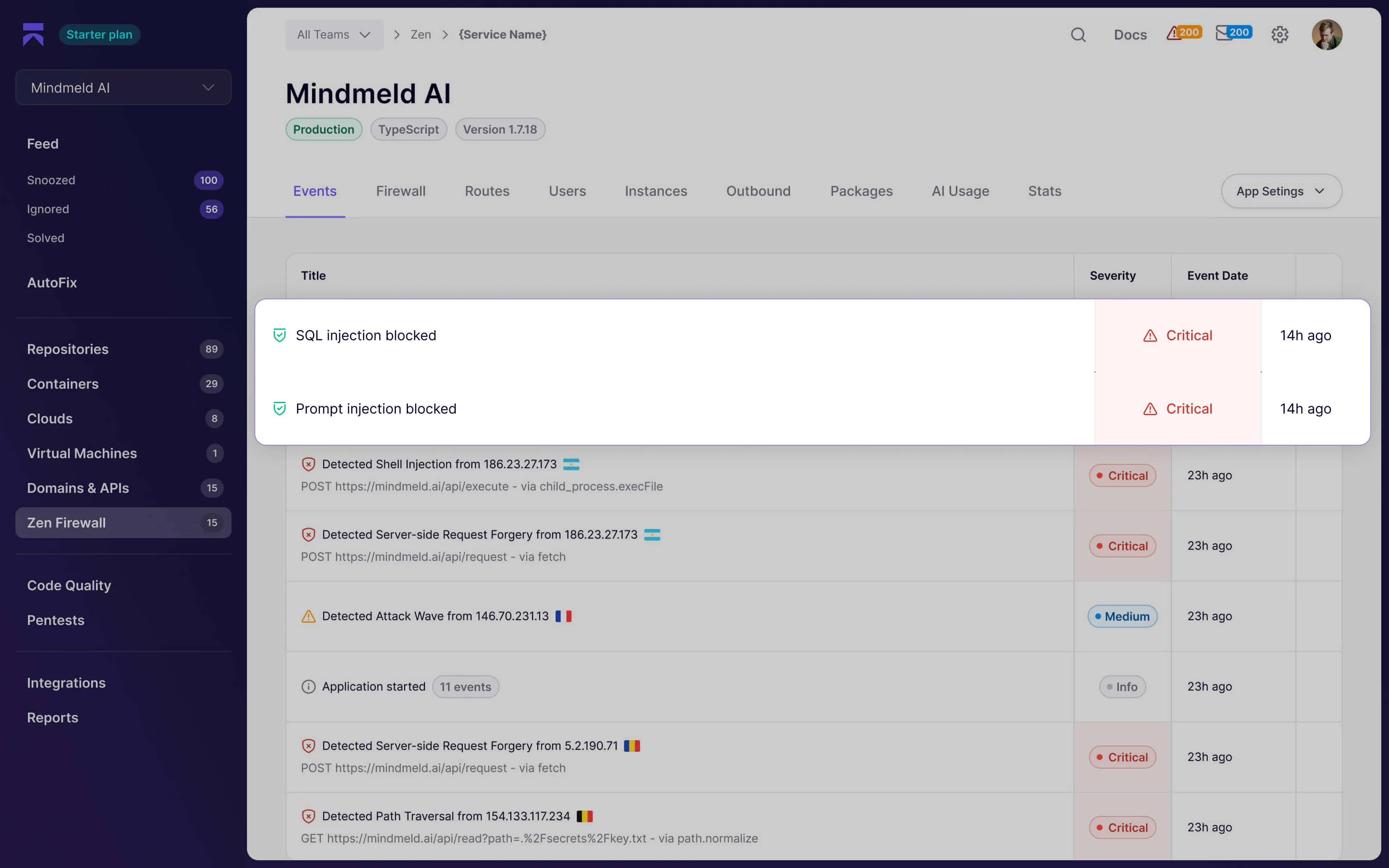
Aikido packs seven scanner types into one product: SAST, DAST, SCA, container scanning, secrets detection, CSPM, and IaC scanning. Add Zen (the in-app firewall for runtime protection) and you have code-to-cloud coverage from a single vendor.
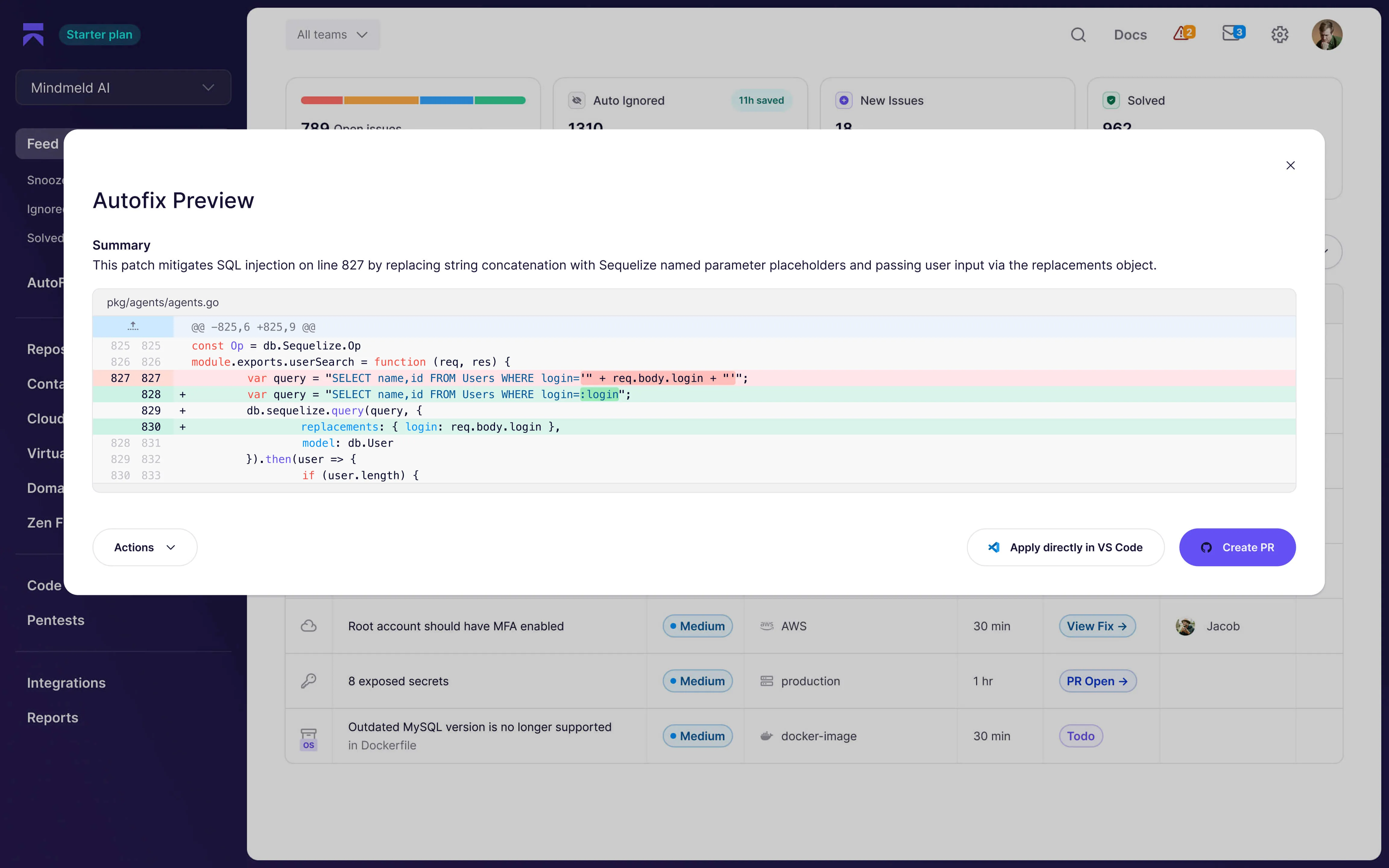
You connect your repositories, and scanning starts automatically across all these dimensions.
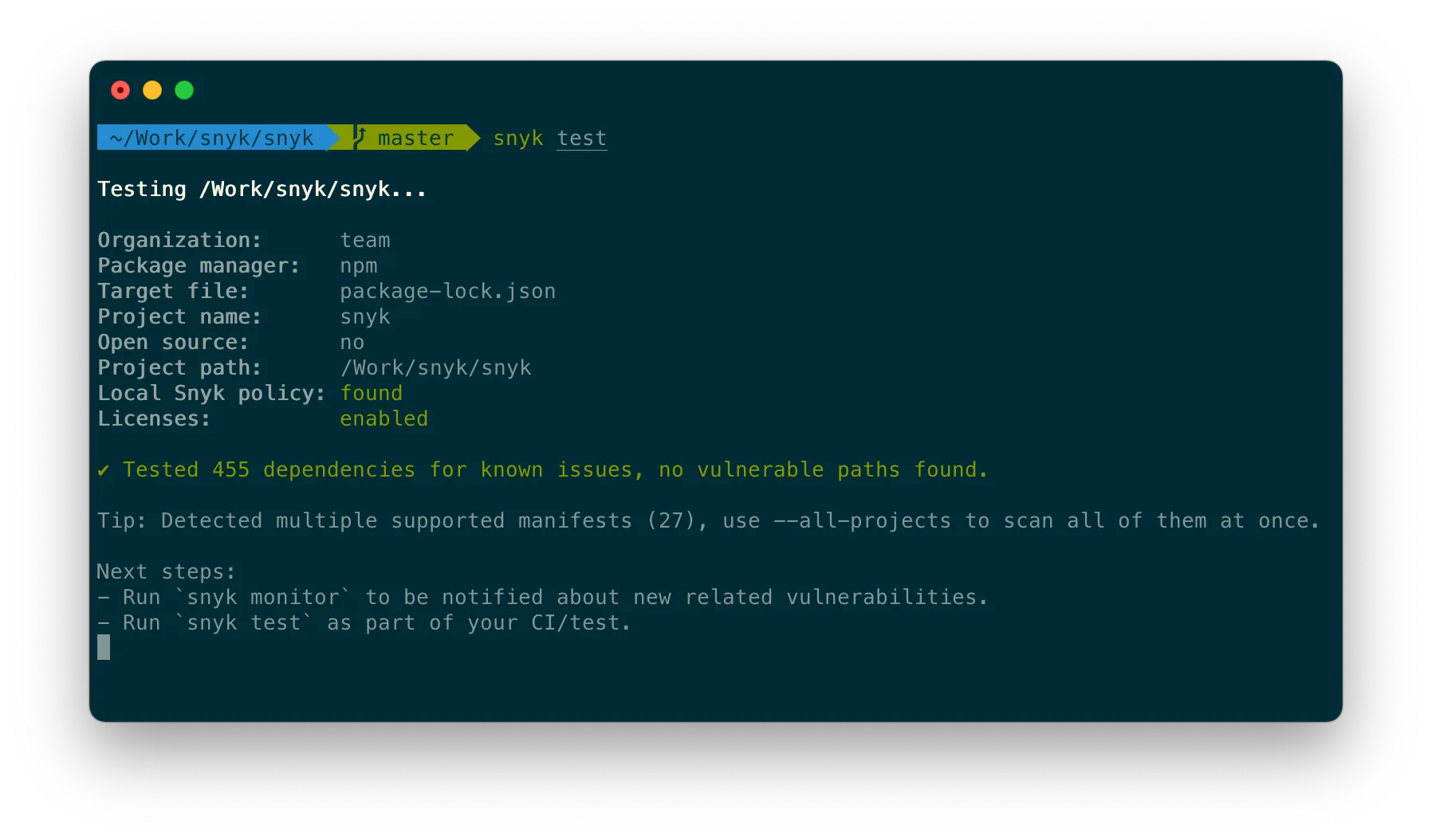
Snyk Open Source is purpose-built for SCA. It scans dependency manifests and lock files, maps transitive dependency trees, and generates fix PRs.
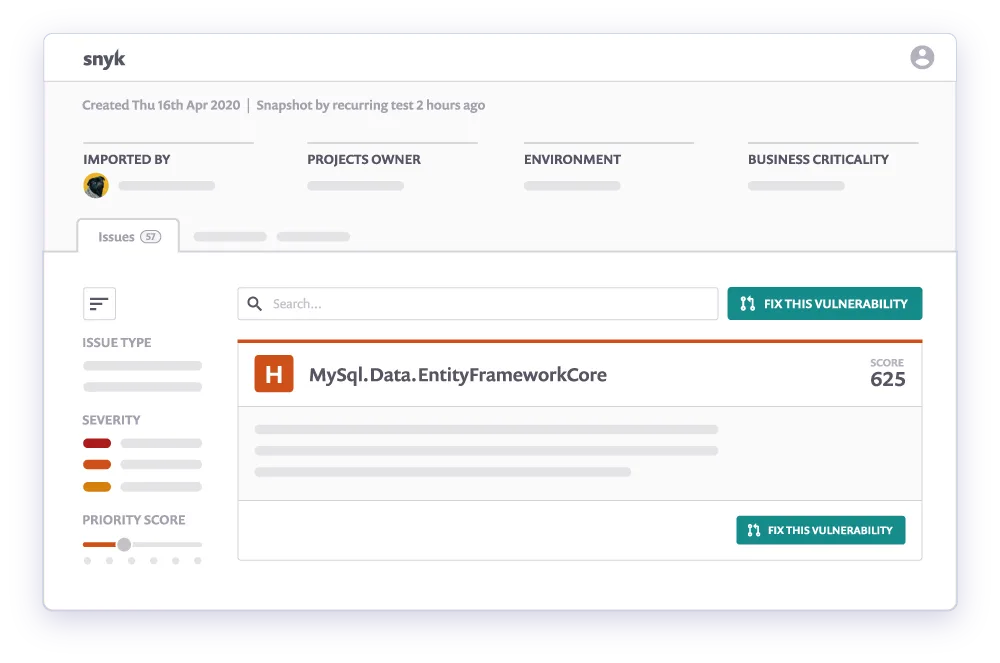
If you want SAST, you add Snyk Code. Container scanning requires Snyk Container.
IaC scanning requires Snyk IaC. Cloud security posture management requires Snyk Cloud.
Each is a separate module within the Snyk platform, priced and configured independently.
The consolidation question is straightforward: Aikido gives you one dashboard, one integration setup, and one invoice for all scanning types. Snyk gives you dedicated tools where each module is more mature in its specific domain but requires separate configuration and potentially separate pricing negotiations.
SCA Depth
In pure SCA capability, Snyk has the deeper offering. According to Snyk, its proprietary vulnerability database covers entries that the NVD has not yet published, an average of 47 days faster than competing sources.
Snyk’s security research team actively discovers and discloses vulnerabilities. When a new zero-day drops in a popular package, Snyk’s database is often already aware of it.
Snyk’s automated fix PRs include both version upgrades and proprietary patches for situations where upgrading would break compatibility.
The Risk Score factors in 12+ signals including exploit maturity, EPSS probability, reachability, and fix availability.
Reachability analysis traces call paths in Java and JavaScript to determine whether vulnerable functions are actually invoked.
Aikido’s SCA scanner covers the core use case — dependency scanning, vulnerability matching, license compliance — but draws from standard sources (NVD, GHSA, OSV).
Aikido does not maintain a vulnerability research team on the same scale as Snyk.
Where Aikido compensates is in cross-scanner correlation: a vulnerable dependency that also appears in SAST findings gets deduplicated into a single actionable issue through AutoTriage.
Noise Reduction
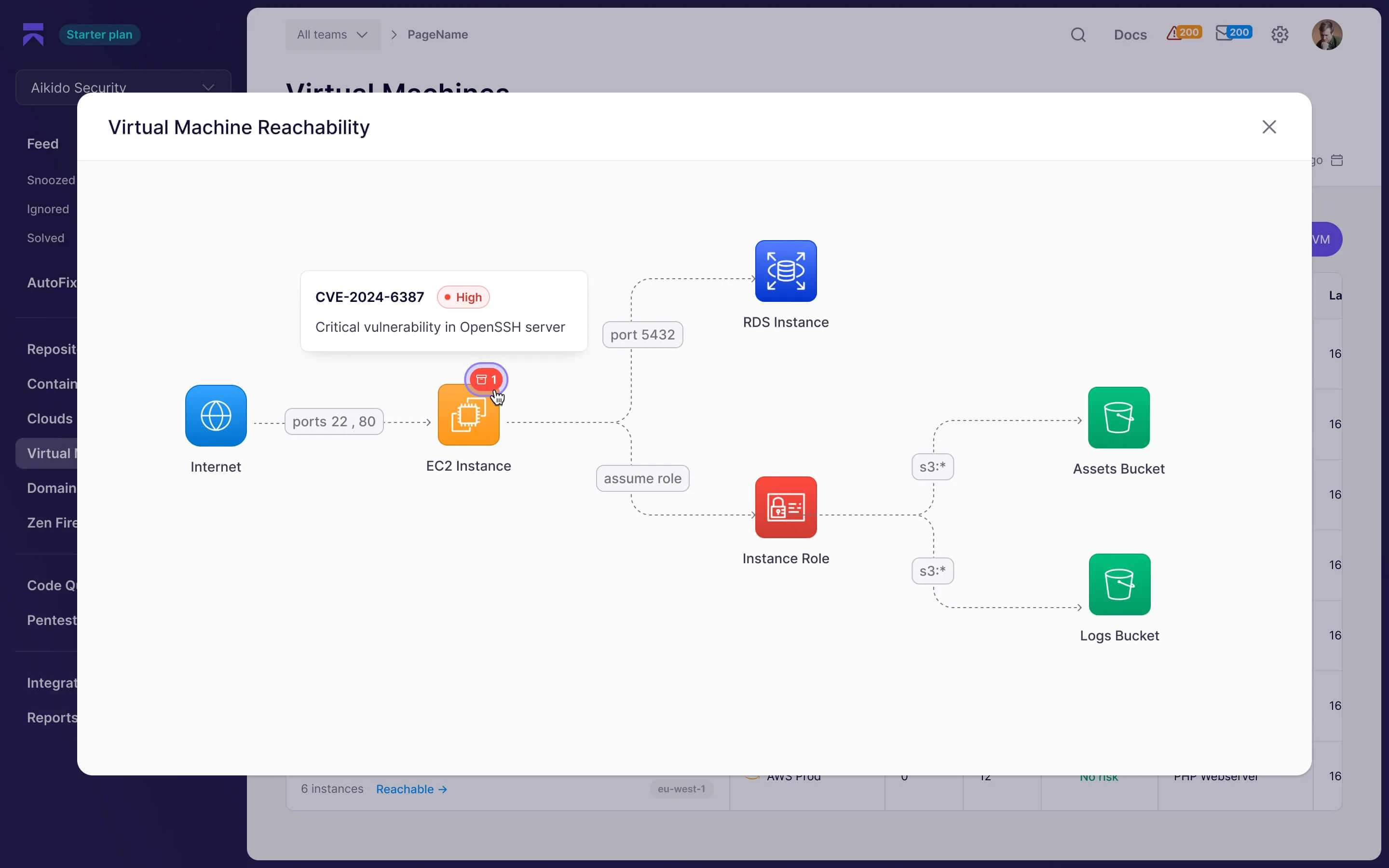
Aikido claims 95% noise reduction through AutoTriage.
The system deduplicates findings that appear across multiple built-in scanners, applies reachability analysis to filter SCA vulnerabilities by actual code usage, and groups related findings into single actionable issues.
Because Aikido runs all scanner types itself, it can correlate a vulnerable dependency finding with a SAST finding that shows the same code path, collapsing multiple alerts into one.
Snyk’s Risk Score assigns each vulnerability a score from 0 to 1000 based on 12+ contextual factors: CVSS severity, EPSS exploit probability, reachability status, fix availability, exploit maturity, and business context.
This scoring helps teams sort hundreds of findings by actual urgency.
But Snyk does not deduplicate across scanner types in the same way — SCA findings and Code (SAST) findings appear in their respective modules.
For organizations that run a single product, Aikido’s cross-scanner deduplication reduces total alert volume more effectively.
For organizations that focus exclusively on SCA, Snyk’s contextual Risk Score provides more nuanced prioritization within that domain.
Pricing and Scale
Aikido uses flat-rate pricing with unlimited users. Cost does not increase as your team grows.
This makes it predictable for scaling organizations and removes the incentive to limit who has access to security findings.
The free tier requires no credit card.
Snyk prices per contributing developer. The free tier covers 200 tests per month.
The Team plan starts at $25 per developer per month (minimum 5, maximum 10). Enterprise pricing is custom and scales with developer count and product selection.
If you add Snyk Code, Container, and IaC alongside Open Source, each module adds to the per-seat cost.
For startups and mid-market companies where headcount is growing fast, Aikido’s flat-rate pricing is simpler to budget.
For organizations that need only SCA and can start with a small team, Snyk’s free tier provides an easier entry point.
When Should You Choose Aikido?
Choose Aikido if:
- You want SAST, DAST, SCA, CSPM, secrets detection, and runtime protection from a single vendor
- Reducing tool sprawl and consolidating your security toolchain is a priority
- Flat-rate pricing with unlimited users matters for budget predictability
- Cross-scanner deduplication (95% noise reduction via AutoTriage) appeals to your team
- Runtime protection with an in-app firewall (Zen) is part of your requirements
- You are building a security program from scratch and want broad coverage fast
When Should You Choose Snyk?
Choose Snyk Open Source if:
- SCA depth matters more than breadth of scanning types
- Snyk’s proprietary vulnerability database (faster disclosure, larger coverage) is a differentiator
- You need Snyk-specific features: proprietary patches, Risk Score with 12+ factors, or compatibility scoring
- Your team prefers a modular approach — start with SCA, add SAST and Container later as separate modules
- Developer adoption is the strategy, with a free tier and IDE plugins (VS Code, JetBrains, Eclipse, Cursor) driving grassroots usage
- You already use other Snyk products (Code, Container, IaC) and want platform consistency
Neither choice is wrong. Aikido gives you broader coverage at the cost of SCA depth.
If SCA depth matters most, Snyk is the stronger choice. The right answer depends on whether your organization values consolidation or specialization.
For more AppSec Santa comparisons, browse the ASPM tools category.
Frequently Asked Questions
Is Aikido a replacement for Snyk?
Does Aikido have a free tier like Snyk?
How does Aikido's noise reduction compare to Snyk's?
Which tool has better vulnerability coverage?
Can I use Aikido and Snyk together?

Founder, AppSec Santa
Years in application security. Reviews and compares 209 AppSec tools across 11 categories to help teams pick the right solution. More about me →