
Acunetix Alternatives
Top Acunetix Alternatives

Fully managed WAAP with integrated DAST and WAF
AI-powered DAST with automated pentesting

Former Internal Pentest Tool

AI-Powered Continuous Pentest Platform
- Acunetix requires a 5-target minimum with a 2-year subscription and no free tier, pushing budget-conscious teams toward ZAP (free) or Burp Suite Pro ($499/year).
- Invicti shares Acunetix’s proof-based scanning engine and is the natural upgrade path for teams outgrowing Acunetix’s scale limits.
- ZAP with ~15,300 GitHub stars is the most capable free DAST alternative, though it lacks proof-based scanning and requires more manual triage.
- StackHawk reports a 20-minute timeline from signup to first CI/CD scan, compared to Acunetix’s API-based pipeline integration that was retrofitted after launch.
- Nuclei’s ~12,000 community templates provide near-zero false positives for known issues but cannot match Acunetix’s deep crawling and business logic testing.
Why Look for Acunetix Alternatives?#
The best Acunetix alternatives in 2026 are Invicti, Burp Suite, ZAP, Nuclei, StackHawk, Detectify, Bright Security, and Qualys WAS.
Acunetix is a solid scanner with a good accuracy track record. For full context, see the broader DAST tools landscape . Its proof-based scanning engine confirms vulnerabilities by safely exploiting them, which cuts false positives significantly.
The AcuSensor IAST agent adds code-level context during scans, and the Business Logic Recorder handles multi-step workflows that most automated crawlers cannot follow. Thousands of companies use it.
But the pricing model pushes some teams to look elsewhere. Acunetix uses target-based licensing with a five-target minimum and requires a two-year subscription commitment.
Pricing is not published on the website, so you cannot evaluate cost without going through a sales conversation. Budget-sensitive teams sometimes start with Pentest-Tools.com instead, which publishes its prices and sells per-scan access.
For small teams that only need to scan one or two applications, that five-target floor means paying for capacity you will not use.
The two-year lock-in adds risk if your needs change or the tool does not fit as expected.
There is no free tier or community edition. If you want to evaluate Acunetix, you request a demo and trial through sales.
Compare that to tools like ZAP (fully free) or Burp Suite (free Community Edition), and the barrier to entry is noticeably higher. StackHawk offers a 14-day free trial for pipeline-based evaluation.
Teams that want to prototype their DAST pipeline before committing budget often start with one of these alternatives and only move to Acunetix if they need its specific capabilities.
Acunetix also focuses exclusively on web applications and APIs. It does not cover infrastructure, cloud configuration, or network-level vulnerabilities.
Teams that need broader coverage either pair it with other tools or look for platforms that consolidate multiple testing types. AppCheck , for example, folds infrastructure scanning in alongside web application and API checks.
And because Acunetix was built as a standalone scanner, its CI/CD integration, while functional through APIs, was not the original design focus.
Developer-first tools like StackHawk and Bright Security were built for pipeline workflows from the start, and it shows in their setup experience.
Acunetix Alternatives at a Glance#
Before the deep ranking, here is the tri-axis snapshot.
| Track | Pick | One-line positioning |
|---|---|---|
| Open-source / free | ZAP | Most capable free DAST, GUI plus YAML automation; needs setup. |
| Open-source / free | Nuclei | Template-based; ~12,000 community templates; near-zero false positives. |
| Commercial DAST | Invicti | Same proof-based engine as Acunetix at enterprise scale. |
| Commercial DAST | Burp Suite | Pentester toolkit, BApp Store extensibility; Pro at $499/year. |
| Commercial DAST | StackHawk | CI/CD-native ZAP wrapper; 20-minute first-scan time. |
| Managed pentest | Detectify | Crowdsourced 400+ ethical hackers plus EASM coverage. |
These are the six names I expect on most Acunetix shortlists. The ranked sections below explain when each one fits.
Top Acunetix Alternatives#
1. Invicti#
Invicti is the enterprise sibling of Acunetix. Both products run the same proof-based scanning engine, which means vulnerability detection accuracy is comparable.
Where they diverge is in scale and management. Invicti handles thousands of applications across multiple teams, with role-based access control, scan scheduling across large portfolios, and enterprise integrations that Acunetix does not prioritize.
The acquisition of Kondukto in August 2025 gave Invicti ASPM (Application Security Posture Management) capabilities, letting teams aggregate findings from multiple security tools into a single view. Invicti also combines DAST with IAST and SCA scanning in one platform, reducing the number of separate tools in your pipeline.
If you are already on Acunetix and hitting limits around team management, scan volume, or integration depth, Invicti is the most natural step up. The scanning engine is familiar, and migration between the two products is straightforward since they share the same parent company.
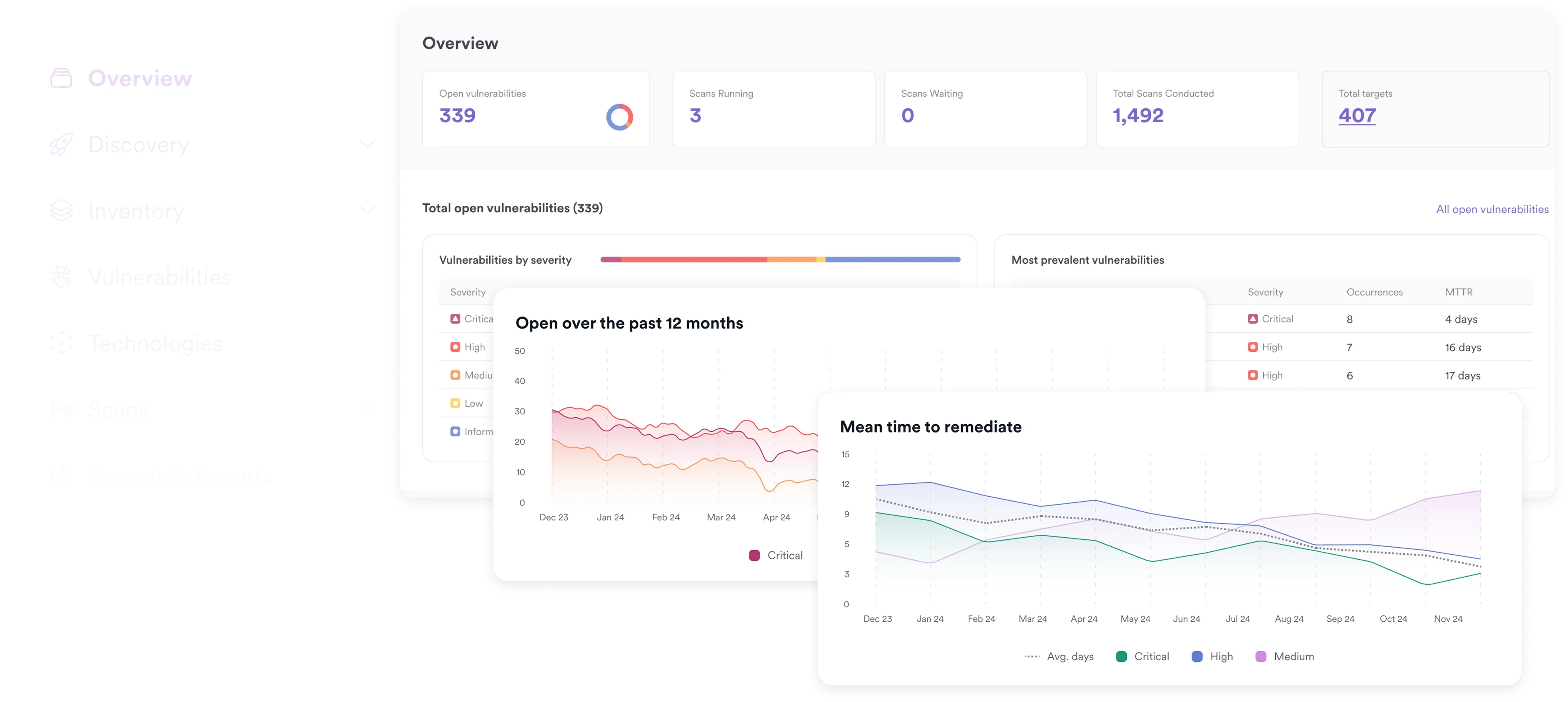
Best for: Teams outgrowing Acunetix that need enterprise-scale DAST with the same scanning engine. License: Commercial Key difference: Same proof-based engine but with enterprise multi-team management, ASPM, and scaling to thousands of apps.
2. Burp Suite#
Burp Suite Professional is the standard toolkit for hands-on web security testing.
Where Acunetix is an automated scanner you point at a target, Burp Suite is an interactive environment where you intercept traffic, modify requests in Repeater, fuzz parameters with Intruder, and use Collaborator for out-of-band detection.
The automated scanner is good, but the manual testing tools are what set it apart.
The BApp Store has over 500 extensions covering everything from JWT manipulation to authorization testing. This extensibility means Burp Suite can adapt to testing scenarios that a fixed scanner like Acunetix cannot handle.
For the DAST edition (the enterprise product), you get CI/CD integration and multi-user scanning, though at enterprise pricing.
At ~$499 per year for Professional, the entry cost is significantly lower than Acunetix for individual pentesters. The tradeoff is that Burp Suite requires more security knowledge to use effectively.
Acunetix guides you through scans with minimal configuration. Burp Suite expects you to know what you are looking for.
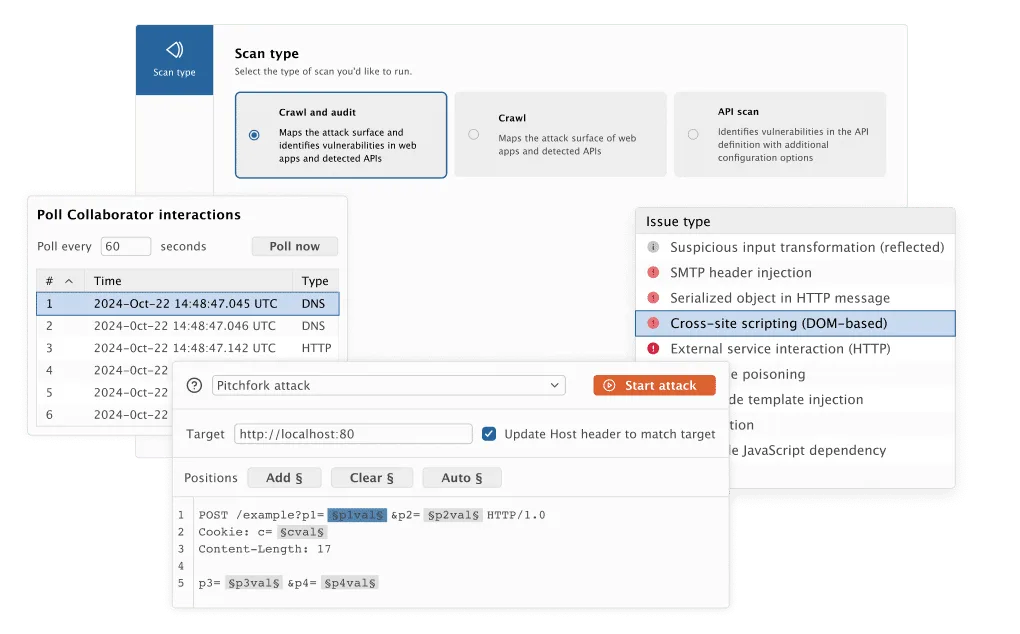
Best for: Security professionals who need deep manual testing capabilities alongside automated scanning.
License: Freemium (Community free, Pro $499/year) Key difference: Industry-standard manual testing tools. More extensible through BApp Store. Lower entry cost at $499/year for Pro.
3. ZAP#
ZAP is the most full-featured free DAST tool available. Maintained by Checkmarx (previously an OWASP project), it provides automated scanning, an intercepting proxy, spider, fuzzer, and API scanning for REST, GraphQL, and SOAP.
With ~15,300 GitHub stars, it has one of the largest communities in the application security space.
The YAML automation framework makes ZAP usable in CI/CD pipelines without the GUI.
You define scan configurations in YAML, run them through Docker or the CLI, and get results in formats like SARIF and JSON.
This is where ZAP competes most directly with Acunetix for automated scanning use cases.
The honest comparison: ZAP requires more setup and tuning than Acunetix. You will spend more time configuring authentication, handling session management, and tuning scan policies.
ZAP also lacks proof-based scanning, so you will do more manual triage of findings. But the price difference is hard to ignore.
ZAP is completely free with no feature restrictions, no target limits, and no subscription contracts.
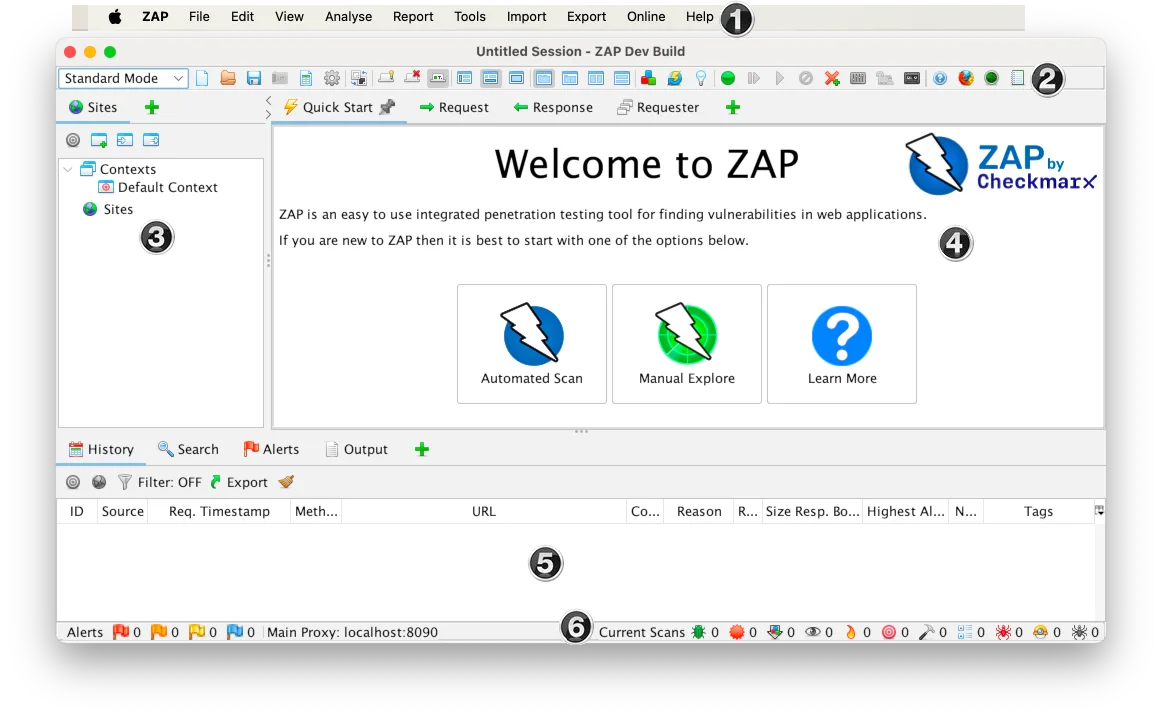
Best for: Teams that want capable DAST scanning without any licensing cost.
License: Free (Apache 2.0) Key difference: Completely free with no feature restrictions. Strong CI/CD integration. Requires more setup than Acunetix.
4. Nuclei#
Nuclei takes a different approach to DAST. Instead of crawling an application and probing for vulnerabilities dynamically, it runs specific checks defined in YAML templates.
The community maintains over 12,000 templates covering CVEs, misconfigurations, default credentials, and exposed panels. You can also write custom templates for your own applications.
This template-based design means Nuclei is fast. It can check thousands of targets against thousands of templates in minutes.
False positives are rare because each template tests for a specific, well-defined condition. The scanner supports HTTP, DNS, TCP, SSL, WebSocket, and headless browser protocols, going well beyond traditional web-only DAST.
The limitation is that Nuclei does not do the kind of deep crawling and dynamic analysis that Acunetix does. It will not discover a stored XSS vulnerability through a multi-step form submission.
It will not test your business logic workflows. Think of Nuclei as a precision tool for known issues and Acunetix as a broader dynamic analyzer. Many teams run both.
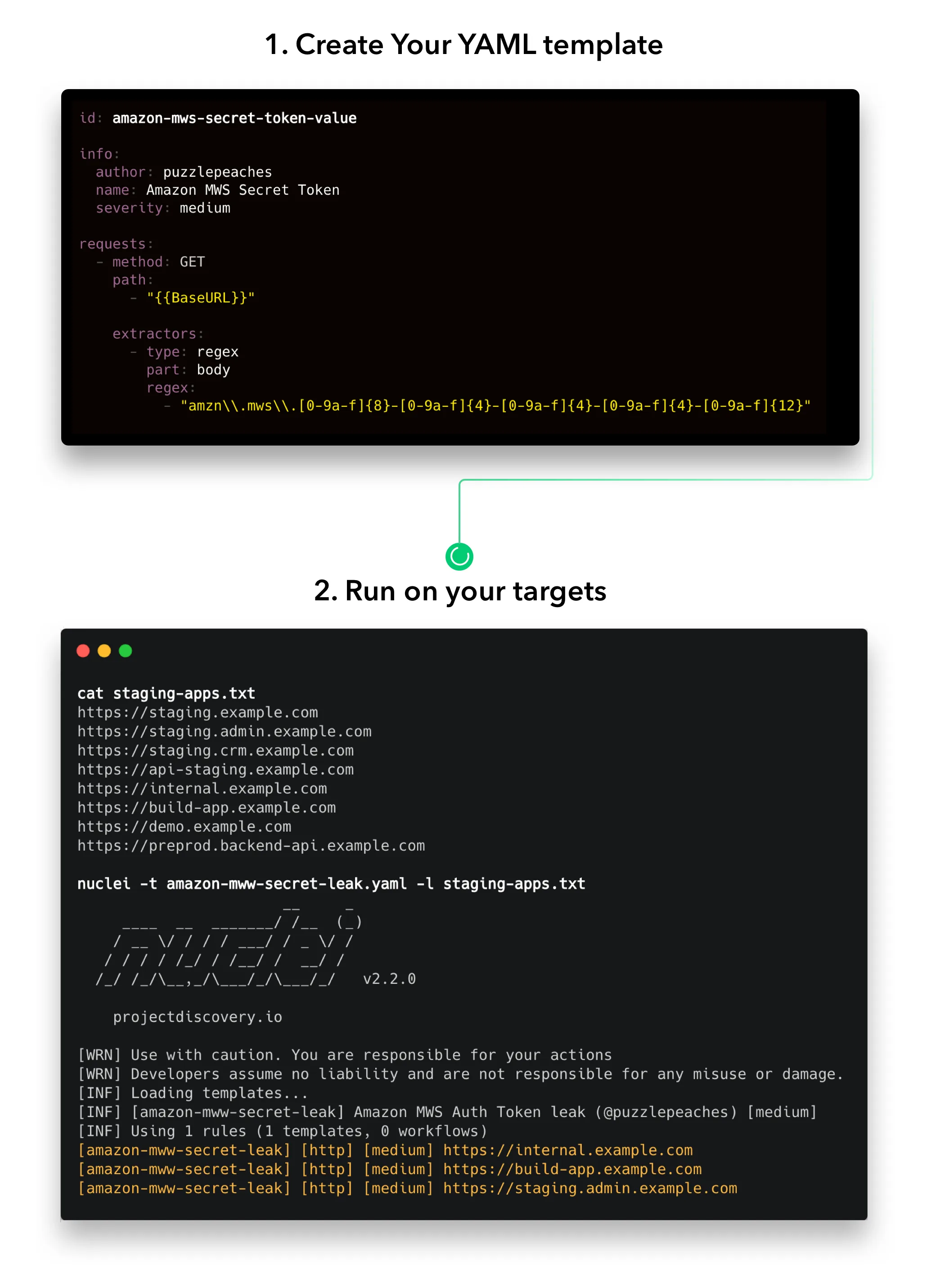
Best for: Security teams that want fast, precise vulnerability scanning with community-maintained templates. License: Open-source (MIT) Key difference: Template-based approach means near-zero false positives for known issues. Multi-protocol scanning beyond HTTP.
5. StackHawk#
StackHawk wraps the ZAP scanning engine in a developer-friendly package built for CI/CD. The setup process is designed around YAML configuration files that define your application, authentication, and scan scope.
StackHawk reports a 20-minute timeline from signup to first scan running in a CI/CD pipeline.
The platform supports REST, GraphQL, SOAP, and gRPC API testing. HawkAI helps with API endpoint discovery, and there is LLM security testing for applications using AI features.
Native integrations exist for GitHub Actions, GitLab CI, Jenkins, CircleCI, and Azure DevOps.
Compared to Acunetix, StackHawk trades scanning depth for pipeline speed. Scan times typically run 3 to 10 minutes, which fits into PR workflows.
You will not get proof-based scanning or IAST-level code context, but you get consistent automated checks on every code change.
A 14-day free trial makes it possible to evaluate the tool before committing budget.
Best for: Development teams wanting DAST that fits naturally into CI/CD pipelines. License: Freemium (free for 1 app) Key difference: CI/CD-native design with YAML configuration. Built on ZAP but simpler to set up for pipeline use.
6. Detectify#
Detectify takes a different approach. Over 400 ethical hackers from the Detectify Crowdsource community contribute vulnerability modules, giving the scanner access to findings that automated tools miss.
This includes over 300 zero-day vulnerabilities discovered through the program before public disclosure.
Detectify also includes External Attack Surface Management (EASM). It discovers subdomains, identifies exposed services, and maps your internet-facing assets continuously.
This combination of DAST and attack surface management fills a gap that standalone scanners like Acunetix leave open.
The vulnerability module library contains over 1,765 tests, updated regularly as the crowdsource community submits new findings.
The downside is that Detectify does not offer the same depth of crawling and dynamic analysis as Acunetix for complex applications.
It works best for organizations that want broad coverage across many assets rather than deep testing of individual applications.
Best for: Teams that want crowdsourced vulnerability intelligence and external attack surface monitoring. License: Commercial Key difference: 400+ ethical hackers contribute vulnerability modules. Includes attack surface management beyond application scanning.
7. Bright Security#
Bright Security (formerly NeuraLegion) is a developer-first DAST tool that focuses heavily on low false positive rates.
The platform claims very low false positive rates, which reduces the triage burden that security teams deal with on tools that generate noisy results.
The scanner runs from a Docker container or CLI and integrates into CI/CD pipelines.
The vulnerability coverage spans OWASP Top 10, API Security Top 10, and the newer LLM Top 10 for AI-powered applications. Bright Security supports REST, GraphQL, SOAP, and WebSocket APIs, and can ingest OpenAPI/Swagger specifications for automated API discovery.
Compared to Acunetix, Bright Security is lighter weight. It does not have proof-based scanning or an IAST agent, but it offsets that with fast scan times and a simpler integration path for development teams.
The focus on low false positive rates means developers are more likely to act on findings rather than ignoring noisy scan results. A freemium tier lets you test the tool before purchasing.
Best for: Developer teams wanting low false positive rates without security expertise. License: Freemium Key difference: Claims very low false positive rates. Covers OWASP Top 10, API Top 10, and LLM Top 10.
8. Qualys WAS#
Qualys Web Application Scanning is the enterprise DAST offering within the broader Qualys Cloud Platform. For organizations already using Qualys for vulnerability management, network scanning, or compliance, adding WAS provides a unified view of application and infrastructure risk through the TruRisk scoring system.
Qualys WAS is deployed across large enterprise environments. AI-driven scan optimization adjusts crawling behavior based on application structure, and PII exposure detection identifies personal data leaks that standard DAST scanners do not flag.
Qualys WAS supports progressive scanning, which distributes scan workload to minimize impact on production environments.
Where Acunetix targets small and mid-sized teams, Qualys WAS is built for large enterprise portfolios.
The integration with Qualys VMDR, Policy Compliance, and other platform modules works well for security teams that manage thousands of assets. On its own, it is capable but expensive. The real value comes from the platform ecosystem.
Best for: Enterprise security teams managing large application portfolios within the Qualys ecosystem. License: Commercial Key difference: Part of Qualys Cloud Platform with TruRisk scoring. Scales to hundreds of thousands of scans.
Feature Comparison#
| Feature | Acunetix | Invicti | Burp Suite | ZAP | Nuclei | StackHawk | Detectify | Qualys WAS |
|---|---|---|---|---|---|---|---|---|
| License | Commercial | Commercial | Freemium | Free | Free (MIT) | Freemium | Commercial | Commercial |
| Proof-based scanning | Yes | Yes | No | No | No | No | No | No |
| IAST agent | AcuSensor | Yes | No | No | No | No | No | No |
| API scanning | REST, SOAP, GraphQL | REST, SOAP, GraphQL | REST, GraphQL, SOAP | REST, GraphQL, SOAP | Multi-protocol | REST, GraphQL, SOAP, gRPC | Limited | REST, GraphQL, SOAP |
| CI/CD integration | API-based | Yes | Enterprise only | Good | Excellent | Excellent | Yes | Yes |
| Manual testing | Business Logic Recorder | Limited | Best in class | Full proxy | No | No | No | No |
| SPA support | Full JS rendering | Full JS rendering | Yes | AJAX Spider | Limited | Yes | Yes | Yes |
| Self-hosted | Yes | Yes | Yes | Yes | Yes | No | No | No |
| Attack surface mgmt | No | No | No | No | No | No | Yes | No |
| Free tier | No | No | Community edition | Full tool | Full tool | 1 app | No | No |
When to Stay with Acunetix#
Acunetix still makes sense in several scenarios:
- Proof-based scanning matters to your workflow. Acunetix confirms vulnerabilities by safely exploiting them, which eliminates false positive triage. Few alternatives offer this. Only Invicti shares the same proof-based engine.
- You need IAST alongside DAST. The AcuSensor agent provides code-level visibility during scans that pure DAST tools cannot match. It identifies the exact line of code causing a vulnerability, which speeds up remediation.
- Ease of use is a priority. Acunetix’s guided workflow requires less security expertise than ZAP or Burp Suite. Teams without dedicated security engineers benefit from this approach, since the scanner handles most configuration decisions automatically.
- You scan complex multi-step workflows. The Business Logic Recorder handles checkout flows, registration sequences, and admin operations that automated crawlers miss. If your application relies on multi-step transactions, this feature saves significant setup time compared to scripting authentication in other tools.
- Your team size fits Acunetix’s pricing. For organizations with 5 to 20 web applications, Acunetix hits a good balance of capability and cost between free tools and enterprise platforms like Invicti or Qualys WAS.
A few more reasons to stay put. If your stack runs on Active Directory or SSO with deep group-based access rules, Acunetix’s authenticated-scan setup absorbs that complexity without me writing custom session scripts.
Compliance contexts such as PCI DSS, HIPAA, or NIST SP 800-53 reporting are baked into the report templates, which saves audit prep time.
Larger organizations that already manage Acunetix and Invicti as a paired stack benefit from a unified vulnerability data model — moving one app between them does not require re-onboarding.
And if your AppSec program is consolidating into ASPM-style portfolio management, the Invicti+Kondukto integration keeps Acunetix’s findings visible in the same posture view rather than splintering across tools.
For more AppSec Santa comparisons, see the full DAST tools category.
Frequently Asked Questions
What is the best free alternative to Acunetix?
How does Acunetix compare to Invicti?
Is Acunetix worth the price compared to free DAST tools?
Which Acunetix alternative is best for CI/CD pipelines?
Can I migrate from Acunetix to Invicti easily?

Written & maintained by
Suphi CankurtEight years on the vendor side of application-security sales — thousands of evaluations and demos. I started AppSec Santa in 2022 to put that insider view to work for buyers. Independent of any vendor, paid by none, and honest about what fits whom.